THE ADVENTURE COLLECTIVE® · Independent discovery and booking for outdoor travel

Walk the tip of Italy’s heel on a private two-hour tour of Santa Maria di Leuca—where the Adriatic and Ionian meet. Explore the basilica of Finibus Terrae, a commanding lighthouse, neoclassical villas and seaside viewpoints with a local guide.
Walk the tip of Italy’s heel on a private two-hour tour of Santa Maria di Leuca—where the Adriatic and Ionian meet. Explore the basilica of Finibus Terrae, a commanding lighthouse, neoclassical villas and seaside viewpoints with a local guide.
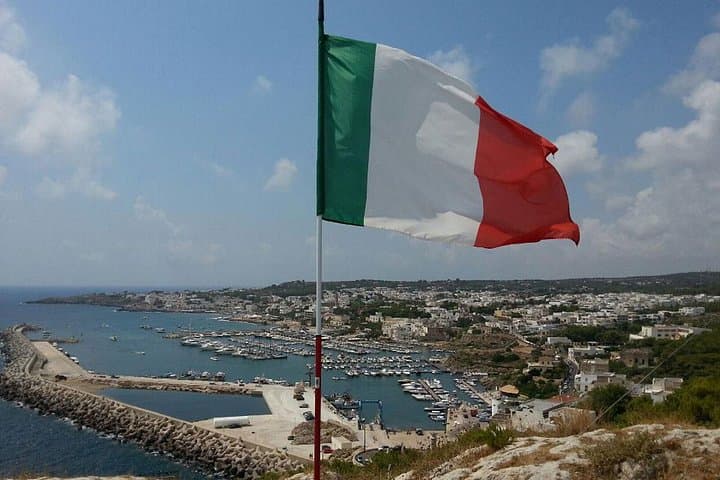
The town opens like a map folded at the edge of the world: white villas step down to a harbor split where the Adriatic and the Ionian seem to argue over which will claim the shore. On a two-hour private walking tour you move through that argument—seafront promenades, a tall lighthouse watching both currents, and narrow streets that smell faintly of salt and lemon.
Verified experiences and guided adventures in the surrounding area.
Operated by ITALYGONIA TRAVEL · Santa Maria di Leuca, Apulia
The town opens like a map folded at the edge of the world: white villas step down to a harbor split where the Adriatic and the Ionian seem to argue over which will claim the shore. On a two-hour private walking tour you move through that argument—seafront promenades, a tall lighthouse watching both currents, and narrow streets that smell faintly of salt and lemon.
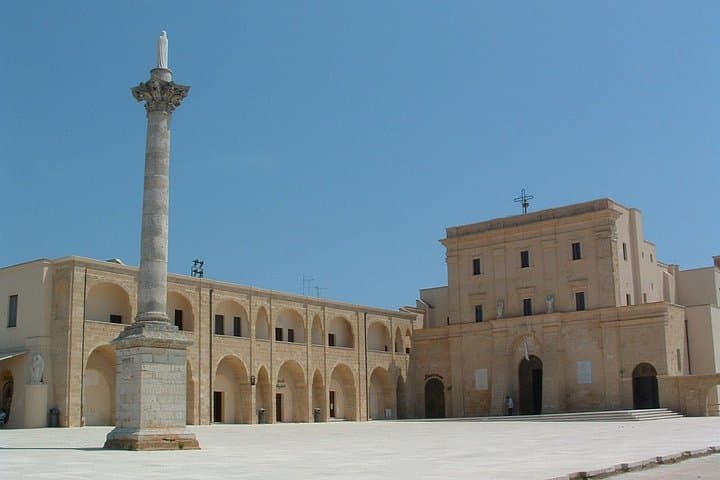
Leuca’s story is plain in stone. The basilica of Santa Maria de Finibus Terrae, consecrated in 1755, marks a long tradition of pilgrimage to what Romans called the land’s end. Nineteenth-century villas and the Corinthian column recall a 19th-century push toward seaside leisure; the Monumental Waterfall, completed in 1939, signals modern engineering where the Apulian aqueduct meets the sea. Geology here is coastal limestone: cliffs, small grottoes and sculpted headlands that suggest slow, patient shaping by waves and wind.
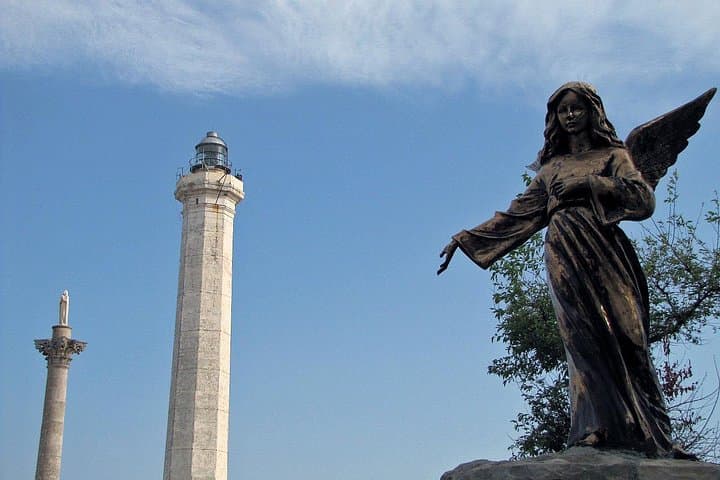
Culturally the town is seafood, evening passeggiata and a lighthouse that still commands the port at over 48 meters. Expect paved promenades, short flights of steps and cobbled alleys rather than long climbs—easy walking but watch for uneven surfaces.
Practical guide: plan morning or late-afternoon tours to avoid midday heat, bring sun protection and a refillable bottle, and wear grippy shoes for cobbles. The private format means you can linger at viewpoints like Punta Ristola or ask your guide about local fishing traditions and chapel plaques.
This is a compact, coastal taste of Salento—historical, maritime and quietly dramatic.
This private walking tour lasts about two hours and covers the town center, the seafront, and the basilica area.
The guide will lead you to the basilica, but formal entrance may depend on opening hours and local rules; donations or small fees can apply.
Yes—it's rated easy and suitable for all fitness levels, though cobbles and steps require basic mobility.
As a private tour, guides can usually adjust the pace and focus—food, history, or coastal viewpoints—if you request it when booking.
ITALYGONIA TRAVEL operates guided outdoor trips and adventures with an emphasis on safety, stewardship, and memorable experiences.
The town opens like a map folded at the edge of the world: white villas step down to a harbor split where the Adriatic and the Ionian seem to argue over which will claim the shore. On a two-hour private walking tour you move through that argument—seafront promenades, a tall lighthouse watching both currents, and narrow streets that smell faintly of salt and lemon.
The town opens like a map folded at the edge of the world: white villas step down to a harbor split where the Adriatic and the Ionian seem to argue over which will claim the shore. On a two-hour private walking tour you move through that argument—seafront promenades, a tall lighthouse watching both currents, and narrow streets that smell faintly of salt and lemon.
Leuca’s story is plain in stone. The basilica of Santa Maria de Finibus Terrae, consecrated in 1755, marks a long tradition of pilgrimage to what Romans called the land’s end. Nineteenth-century villas and the Corinthian column recall a 19th-century push toward seaside leisure; the Monumental Waterfall, completed in 1939, signals modern engineering where the Apulian aqueduct meets the sea. Geology here is coastal limestone: cliffs, small grottoes and sculpted headlands that suggest slow, patient shaping by waves and wind.
Culturally the town is seafood, evening passeggiata and a lighthouse that still commands the port at over 48 meters. Expect paved promenades, short flights of steps and cobbled alleys rather than long climbs—easy walking but watch for uneven surfaces.
Practical guide: plan morning or late-afternoon tours to avoid midday heat, bring sun protection and a refillable bottle, and wear grippy shoes for cobbles. The private format means you can linger at viewpoints like Punta Ristola or ask your guide about local fishing traditions and chapel plaques.
This is a compact, coastal taste of Salento—historical, maritime and quietly dramatic.