THE ADVENTURE COLLECTIVE® · Independent discovery and booking for outdoor travel

A focused 3–4 hour walking tour through Santiago’s historic core — from Plaza de Armas to Cerro Santa Lucia and Lastarria. Expect a mix of colonial plazas, museum panoramas and leafy parkways with concise, walkable distances.
A focused 3–4 hour walking tour through Santiago’s historic core — from Plaza de Armas to Cerro Santa Lucia and Lastarria. Expect a mix of colonial plazas, museum panoramas and leafy parkways with concise, walkable distances.
You step off the pavement into Plaza de Armas and the city exhales around you: vendors arranging street-press coffee, the Metropolitan Cathedral framing a broad sky, and the Mapocho River daring you to look toward the Andes where the skyline tightens.
Verified experiences and guided adventures in the surrounding area.
Operated by TourGo · Santiago, Santiago Metropolitan Region
You step off the pavement into Plaza de Armas and the city exhales around you: vendors arranging street-press coffee, the Metropolitan Cathedral framing a broad sky, and the Mapocho River daring you to look toward the Andes where the skyline tightens.
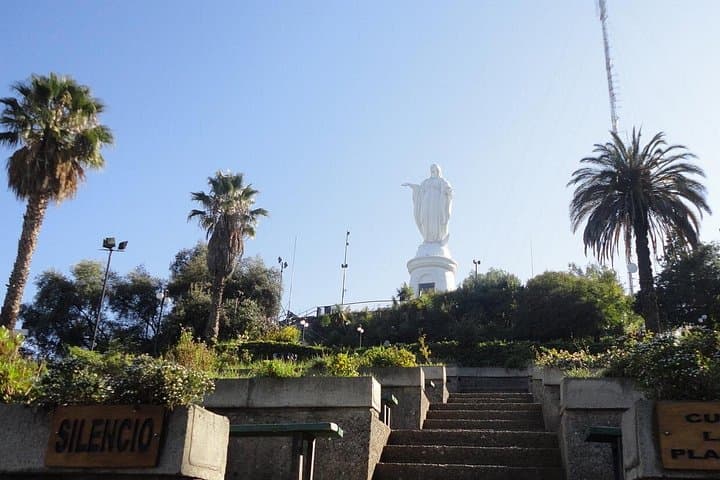
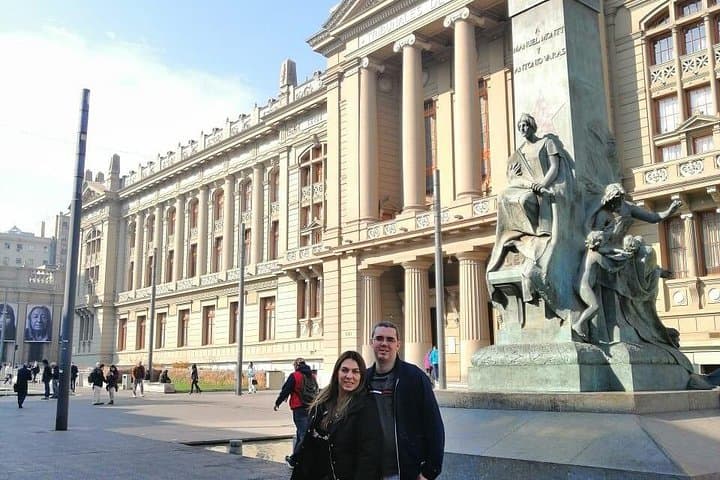
This three-to-four hour walking tour threads Santiago’s colonial grid and modern boulevards. You move from Paris-London Street and Paseo Bandera to the leafy sweep of Parque Forestal, with short stops at the Pre-Colombian Museum and the panoramic terraces of Palacio de la Justicia. Cerro Santa Lucia offers a brief, 60–80 m climb and a compact viewpoint—an urban hill that once shaped colonial defenses.
Founded by Pedro de Valdivia in 1541 on the alluvial plain of the Central Valley, Santiago grew around Spanish plazas and indigenous trade routes. The city’s geology is plain-to-mountain — flat downtown streets giving way to volcanic outcrops and Andean foothills that seem to push the skyline eastward.
Cultural notes: Lastarria hums with cafés, galleries and street musicians; artisans and political history thread through Paseo Bandera. Expect a mix of Spanish colonial architecture, modernist bank towers, and public art.
Practical guidance: the route covers roughly 4–6 km of pavement with short stair climbs—comfortable walking shoes and sun protection are essential. Bring a transit card (BIP) for easy returns, hydrate for dry afternoons, and schedule morning tours to avoid heat and peak pollution. Keep valuables secure in crowded plazas and enjoy the city’s layered history one block at a time.
The tour lasts about 3–4 hours and covers roughly 4–6 km of mostly flat pavement with a short climb at Cerro Santa Lucia.
Mobile tickets are accepted; you can also show a printed ticket if you prefer.
Yes — the tour is labeled easy and suitable for most fitness levels; families and older adults should be able to participate, though Cerro Santa Lucia includes stairs.
Guides usually operate in Spanish and often in English; meeting points are central (Plaza de Armas area) — confirm exact location and language when booking.
TourGo operates guided outdoor trips and adventures with an emphasis on safety, stewardship, and memorable experiences.
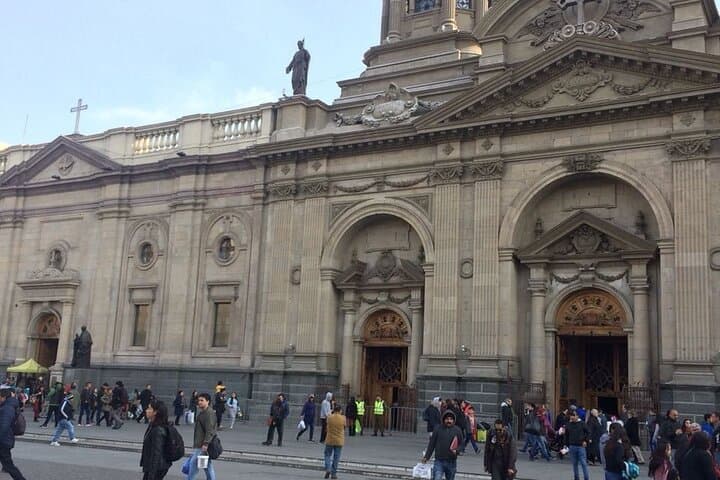

You step off the pavement into Plaza de Armas and the city exhales around you: vendors arranging street-press coffee, the Metropolitan Cathedral framing a broad sky, and the Mapocho River daring you to look toward the Andes where the skyline tightens.
You step off the pavement into Plaza de Armas and the city exhales around you: vendors arranging street-press coffee, the Metropolitan Cathedral framing a broad sky, and the Mapocho River daring you to look toward the Andes where the skyline tightens.
This three-to-four hour walking tour threads Santiago’s colonial grid and modern boulevards. You move from Paris-London Street and Paseo Bandera to the leafy sweep of Parque Forestal, with short stops at the Pre-Colombian Museum and the panoramic terraces of Palacio de la Justicia. Cerro Santa Lucia offers a brief, 60–80 m climb and a compact viewpoint—an urban hill that once shaped colonial defenses.
Founded by Pedro de Valdivia in 1541 on the alluvial plain of the Central Valley, Santiago grew around Spanish plazas and indigenous trade routes. The city’s geology is plain-to-mountain — flat downtown streets giving way to volcanic outcrops and Andean foothills that seem to push the skyline eastward.
Cultural notes: Lastarria hums with cafés, galleries and street musicians; artisans and political history thread through Paseo Bandera. Expect a mix of Spanish colonial architecture, modernist bank towers, and public art.
Practical guidance: the route covers roughly 4–6 km of pavement with short stair climbs—comfortable walking shoes and sun protection are essential. Bring a transit card (BIP) for easy returns, hydrate for dry afternoons, and schedule morning tours to avoid heat and peak pollution. Keep valuables secure in crowded plazas and enjoy the city’s layered history one block at a time.