THE ADVENTURE COLLECTIVE® · Independent discovery and booking for outdoor travel

Spend a full day exploring Santo Antão’s dramatic ridges, crater farms and coastal towns by car or on foot. Choose a relaxed highlights drive or a guided trek through old cobbled trails and finish with a taste of local grogue.
Spend a full day exploring Santo Antão’s dramatic ridges, crater farms and coastal towns by car or on foot. Choose a relaxed highlights drive or a guided trek through old cobbled trails and finish with a taste of local grogue.
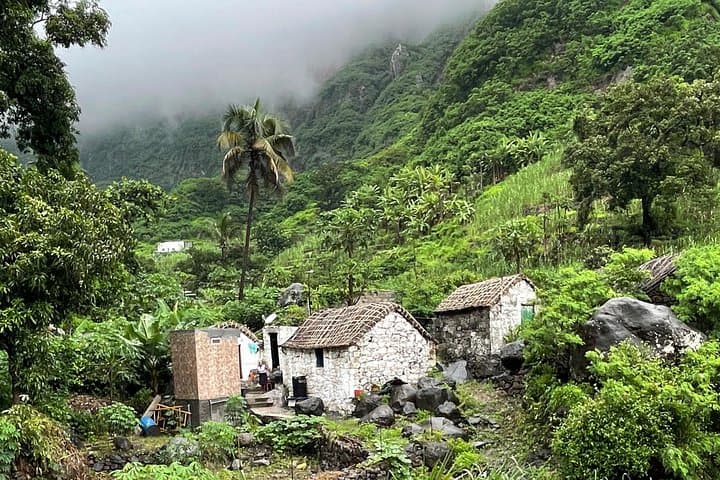
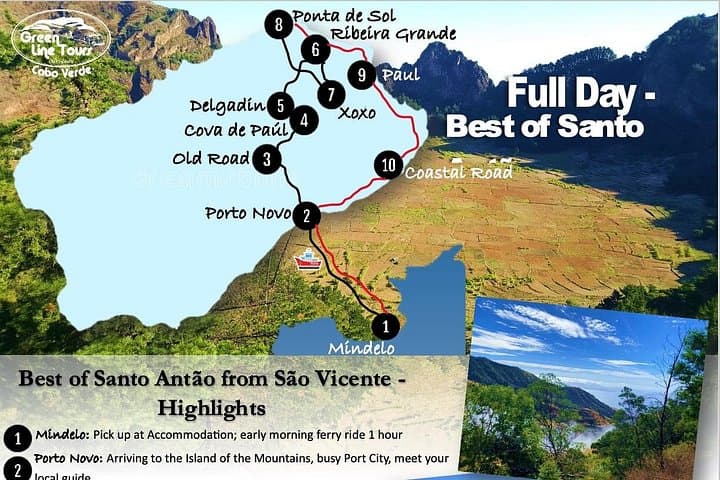
You step off the ferry into Porto Novo and the island greets you with sharp wind, stone roads and the scent of eucalyptus. From the harbor the guide slips the van up narrow switchbacks; the mountains of Santo Antão rise like cut green scars, valleys pushing fog through their teeth. In a single day you move between microclimates—pine-scented highlands above Pico d Cruz, the crater of Cova with its patchwork farms, and the tropical gardens of Ribeira de Torre.
Verified experiences and guided adventures in the surrounding area.
Operated by Green Line Tours Cabo Verde · Porto Novo, Santo Antão
You step off the ferry into Porto Novo and the island greets you with sharp wind, stone roads and the scent of eucalyptus. From the harbor the guide slips the van up narrow switchbacks; the mountains of Santo Antão rise like cut green scars, valleys pushing fog through their teeth. In a single day you move between microclimates—pine-scented highlands above Pico d Cruz, the crater of Cova with its patchwork farms, and the tropical gardens of Ribeira de Torre.
Santo Antão’s human story is written in terraces and cobbled mule tracks. Volcanic rock and wind-shaped ridges create steep valleys that have supported banana, sugarcane and coffee gardens for generations. The island’s grogue distilleries, small and pungent, capture a local craft passed down from colonial times and shaped by scarcity and invention.
Culturally, villages are pragmatic: churches, communal water tanks, and market tables where fishermen and farmers trade. Geology is immediate—the crater walls of Cova, the basalt cliffs along Janela and the coastal tunnels on the new road are reminders of volcanic force meeting ocean.
Practicalities: tours run 7–11 hours, and options include an all-drive highlights route or guided treks on old cobblestone trails. Wear sturdy shoes, bring sun protection and a light windproof layer; water and snacks are essential. Ferry crossings between Mindelo and Porto Novo take about an hour—keep a jacket for deck wind and binoculars for dolphin sightings. Book morning departures to maximize daylight and avoid rushed stops if you want to hike short stretches.
There are tour options that include roundtrip ferry tickets from São Vicente (Mindelo); if you start from Porto Novo the ferry is not required.
Trekking choices range from gentle walks along cobbled paths to steeper sections; guides will match routes to your fitness—overall rated moderate at most.
Yes—shared itineraries include a lunch stop in Povoação and a visit to a local grogue distillery with a tasting opportunity.
Local professional guides commonly speak English, French, Spanish and Portuguese; open-group tours may provide multilingual support.
Green Line Tours Cabo Verde operates guided outdoor trips and adventures with an emphasis on safety, stewardship, and memorable experiences.
You step off the ferry into Porto Novo and the island greets you with sharp wind, stone roads and the scent of eucalyptus. From the harbor the guide slips the van up narrow switchbacks; the mountains of Santo Antão rise like cut green scars, valleys pushing fog through their teeth. In a single day you move between microclimates—pine-scented highlands above Pico d Cruz, the crater of Cova with its patchwork farms, and the tropical gardens of Ribeira de Torre.
You step off the ferry into Porto Novo and the island greets you with sharp wind, stone roads and the scent of eucalyptus. From the harbor the guide slips the van up narrow switchbacks; the mountains of Santo Antão rise like cut green scars, valleys pushing fog through their teeth. In a single day you move between microclimates—pine-scented highlands above Pico d Cruz, the crater of Cova with its patchwork farms, and the tropical gardens of Ribeira de Torre.
Santo Antão’s human story is written in terraces and cobbled mule tracks. Volcanic rock and wind-shaped ridges create steep valleys that have supported banana, sugarcane and coffee gardens for generations. The island’s grogue distilleries, small and pungent, capture a local craft passed down from colonial times and shaped by scarcity and invention.
Culturally, villages are pragmatic: churches, communal water tanks, and market tables where fishermen and farmers trade. Geology is immediate—the crater walls of Cova, the basalt cliffs along Janela and the coastal tunnels on the new road are reminders of volcanic force meeting ocean.
Practicalities: tours run 7–11 hours, and options include an all-drive highlights route or guided treks on old cobblestone trails. Wear sturdy shoes, bring sun protection and a light windproof layer; water and snacks are essential. Ferry crossings between Mindelo and Porto Novo take about an hour—keep a jacket for deck wind and binoculars for dolphin sightings. Book morning departures to maximize daylight and avoid rushed stops if you want to hike short stretches.