THE ADVENTURE COLLECTIVE® · Independent discovery and booking for outdoor travel

Strap into a 350cc ATV and race through volcanic ridges to Akrotiri, Red Beach and Greece’s oldest lighthouse. This 3–4 hour tour blends geology, Bronze Age history and coastal views with practical safety and local insight.
Strap into a 350cc ATV and race through volcanic ridges to Akrotiri, Red Beach and Greece’s oldest lighthouse. This 3–4 hour tour blends geology, Bronze Age history and coastal views with practical safety and local insight.
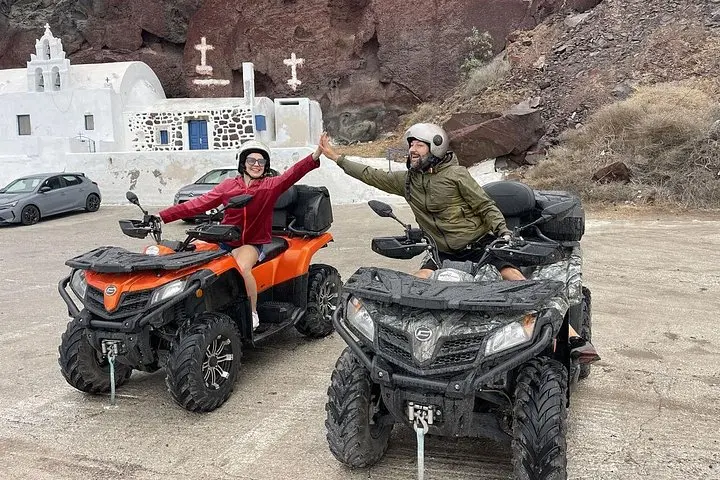
Dust from volcanic track and sea salt hang in the air as you climb onto a 350cc ATV outside Fira. The island unfolds in wide arcs — white villages perched above caldera cliffs, black-and-red volcanic outcrops, and the sea cutting bright against the horizon. The engine hums; the guide points the way and the island’s layered past begins to move beneath you.
Verified experiences and guided adventures in the surrounding area.
Operated by Moto Thira · Fira, South Aegean
Dust from volcanic track and sea salt hang in the air as you climb onto a 350cc ATV outside Fira. The island unfolds in wide arcs — white villages perched above caldera cliffs, black-and-red volcanic outcrops, and the sea cutting bright against the horizon. The engine hums; the guide points the way and the island’s layered past begins to move beneath you.
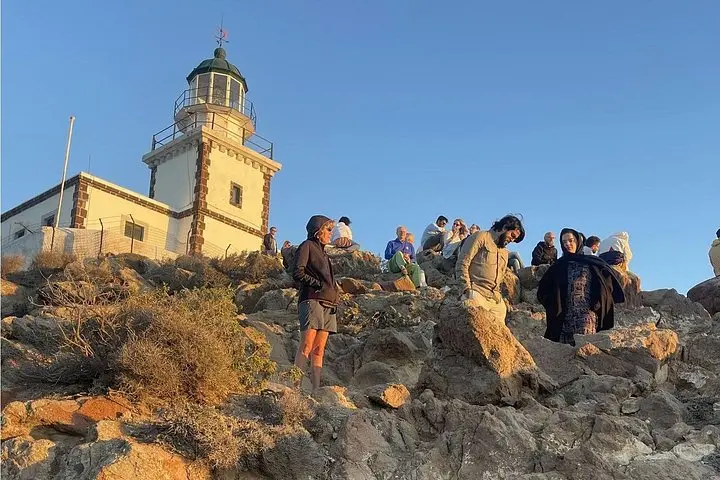
This route threads through Akrotiri village and the archaeological site known as the "Pompeii of the Aegean," a Bronze Age settlement buried by the Minoan eruption around 1600 BCE. Geology here is vivid: oxidized scoria creates the Red Beach cliffs, and the old lighthouse, built in 1892, stands on basalt that speaks to repeated eruptions and sea-driven erosion. Local culture appears in small workshops—Tsabouna makers and chapel-lined lanes—and in pockets of dry-stone vineyards growing assyrtiko grapes on wind-sheared terraces.
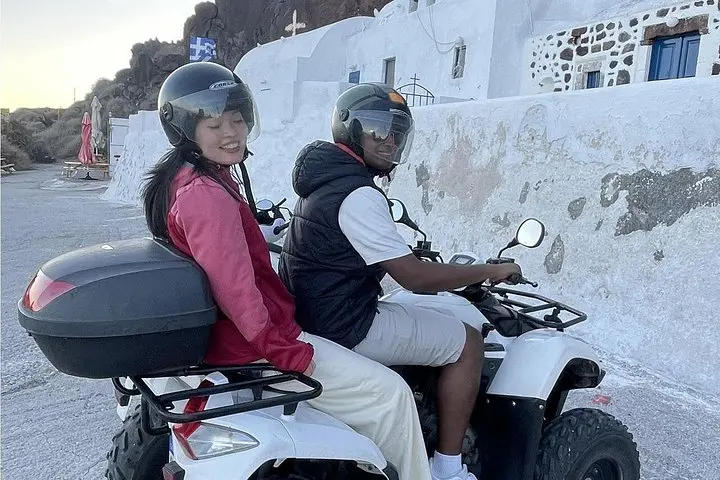
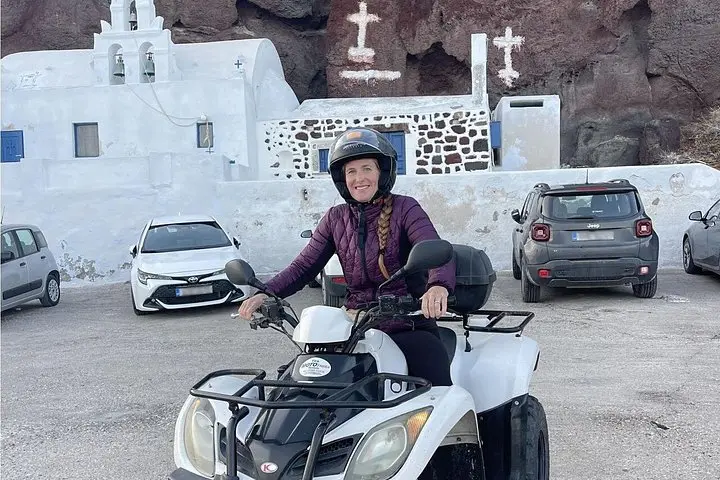
Practically, expect roughly 3–4 hours on and off the ATV with short stops for photos and site visits. Operators supply helmets, a briefing, and fuel; drivers must be at least 20 and carry a valid car license. Stay hydrated and wear closed-toe shoes; dust and sun exposure are constant variables. Respect the archaeological site rules (guides usually cannot accompany you inside) and stick to allowed tracks to limit erosion. Timing rides for late afternoon softens the heat and brings strong caldera light for photos.
The payoff is immediate: a compact, kinetic tour of Santorini’s geology, history, and coastal panoramas that lets you cover ground a foot tour can’t reach, with the practical edge of clear safety briefings and predictable logistics.
Yes — drivers must be at least 20 years old and present a valid car driving license; training and a safety briefing are provided.
Yes — helmets are included by the operator and must be worn at all times while riding.
Admission fees for the Akrotiri archaeological site are included, but the guide cannot accompany you inside the excavation area.
Passengers over 10 years old may ride, but the tour is not recommended for people with spinal issues or late-stage pregnancy.
Moto Thira operates guided outdoor trips and adventures with an emphasis on safety, stewardship, and memorable experiences.
Dust from volcanic track and sea salt hang in the air as you climb onto a 350cc ATV outside Fira. The island unfolds in wide arcs — white villages perched above caldera cliffs, black-and-red volcanic outcrops, and the sea cutting bright against the horizon. The engine hums; the guide points the way and the island’s layered past begins to move beneath you.
Dust from volcanic track and sea salt hang in the air as you climb onto a 350cc ATV outside Fira. The island unfolds in wide arcs — white villages perched above caldera cliffs, black-and-red volcanic outcrops, and the sea cutting bright against the horizon. The engine hums; the guide points the way and the island’s layered past begins to move beneath you.
This route threads through Akrotiri village and the archaeological site known as the "Pompeii of the Aegean," a Bronze Age settlement buried by the Minoan eruption around 1600 BCE. Geology here is vivid: oxidized scoria creates the Red Beach cliffs, and the old lighthouse, built in 1892, stands on basalt that speaks to repeated eruptions and sea-driven erosion. Local culture appears in small workshops—Tsabouna makers and chapel-lined lanes—and in pockets of dry-stone vineyards growing assyrtiko grapes on wind-sheared terraces.
Practically, expect roughly 3–4 hours on and off the ATV with short stops for photos and site visits. Operators supply helmets, a briefing, and fuel; drivers must be at least 20 and carry a valid car license. Stay hydrated and wear closed-toe shoes; dust and sun exposure are constant variables. Respect the archaeological site rules (guides usually cannot accompany you inside) and stick to allowed tracks to limit erosion. Timing rides for late afternoon softens the heat and brings strong caldera light for photos.
The payoff is immediate: a compact, kinetic tour of Santorini’s geology, history, and coastal panoramas that lets you cover ground a foot tour can’t reach, with the practical edge of clear safety briefings and predictable logistics.