THE ADVENTURE COLLECTIVE® · Independent discovery and booking for outdoor travel

Walk the volcanic rim from Fira to Oia on a four‑hour guided caldera hike that mixes geology, village life and sweeping Aegean views. Expect narrow lava paths, blue‑domed photo stops and local stories about the Thera eruption.
Walk the volcanic rim from Fira to Oia on a four‑hour guided caldera hike that mixes geology, village life and sweeping Aegean views. Expect narrow lava paths, blue‑domed photo stops and local stories about the Thera eruption.
You step off the whitewashed alleyways of Fira and the island’s edge takes over—rock that leans toward the sea, stairs carved into lava, and a trail that has been walked for centuries. The Aegean opens to your left in a slab of cobalt; to your right, cave houses press into the volcanic cliff like rooms hewn from memory. A guide nods, and the group moves along the caldera rim where every turn frames a different version of Santorini’s volcanic drama.
Verified experiences and guided adventures in the surrounding area.
Operated by SantoriniExperts · Fira, South Aegean
You step off the whitewashed alleyways of Fira and the island’s edge takes over—rock that leans toward the sea, stairs carved into lava, and a trail that has been walked for centuries. The Aegean opens to your left in a slab of cobalt; to your right, cave houses press into the volcanic cliff like rooms hewn from memory. A guide nods, and the group moves along the caldera rim where every turn frames a different version of Santorini’s volcanic drama.
The route follows a historic mule track that links Fira, Firostefani and Imerovigli before loosening into the famous postcard slopes of Oia. Geology writes itself in the layers beneath your boots: ash and pumice from the Bronze Age Thera eruption—an event that reconfigured these islands and fed legends about a lost city. Venetian ruins on Skaros Rock and the squat, blue-domed churches are quieter storytellers; the cave homes (yposkafa) tell of how residents adapted to living on the edge.
This is a sensory trail: wind that shapes the bougainvillea, gulls that wheel like punctuation, and the sea daring you to keep pace. The path narrows in places and drops gentle elevation with stretches of steep steps; you’ll pass old chapels, terraces of vines, and postcard viewlines where the caldera seems to gaze back. Guides weave local lore—who kept goats on the rim, how freshwater was once harvested, and why the cliffs bear the scars of one of Europe’s largest volcanic events.
Practicality rules here as much as romance. The advertised four-hour duration covers roughly 8–10 km of rim walking depending on exact route, with intermittent climbs and uneven volcanic rock underfoot. Wear sturdy shoes, carry sun protection and at least one liter of water (two if you’re hiking in high summer), and be ready for gusty conditions that demand a light windbreaker. The trail runs in most weather, but heat and strong winds change the rhythm; mornings and late afternoons are quieter and cooler, while sunset in Oia fills the path with gawkers and photographers.
For travelers, this hike is an efficient way to read Santorini’s geology, architecture and living traditions in a single line of trail. It’s social—small-group dynamics make space for questions and photos—yet it also gives room for quiet stretches where the island feels like it’s speaking to you directly. Finish in Oia with time to explore the alleys, or descend to Ammoudi Bay for sea-level contrast after you’ve walked the cliff’s edge.
Whether you’re after geology, history, or a coastal hike with panoramic payoff, the Fira-to-Oia caldera rim walk is a compact, character-rich way to experience Santorini beyond the postcard.
The guided route covers roughly 8–10 km and is scheduled as a four‑hour tour, including short stops for views and villages.
Minimum age is typically 12; younger children may struggle with steps and exposed sections—check with the operator.
A moderate fitness level is recommended; the trail includes uneven terrain and some stair sections but no technical climbing.
A local English‑speaking guide, bottled water and snacks are included; check specifics with your booking source.
The caldera rim path is public, but a guided small‑group tour guarantees route knowledge, historical context and safety; reservations recommended in high season.
The operator may cancel for strong winds or storms—refunds are typically available if canceled at least 24 hours in advance.
SantoriniExperts operates guided outdoor trips and adventures with an emphasis on safety, stewardship, and memorable experiences.
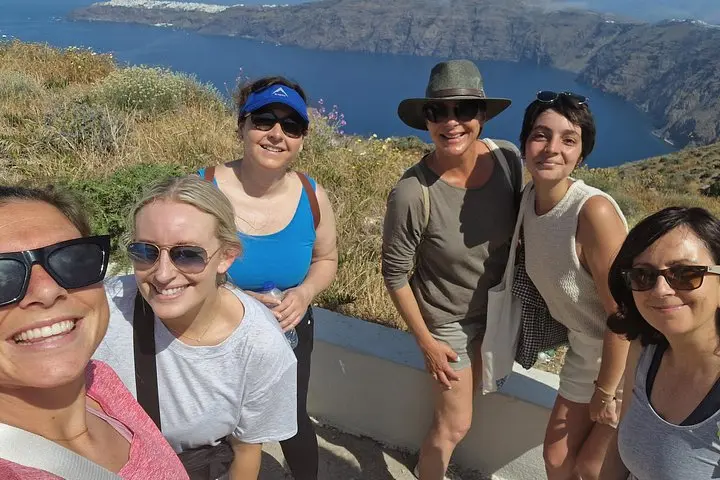
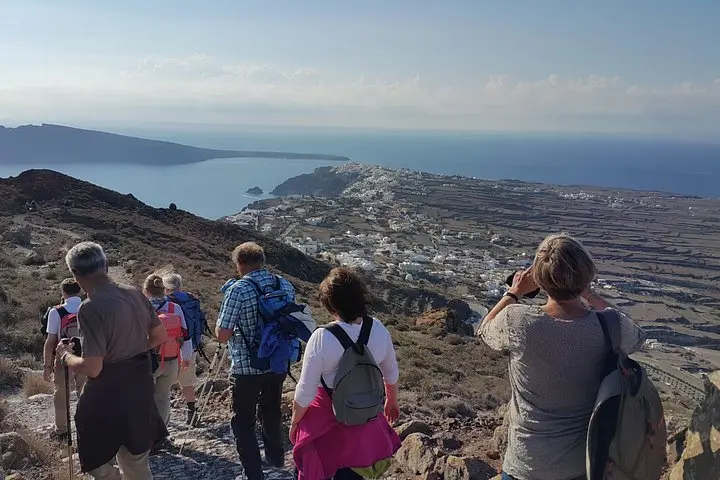
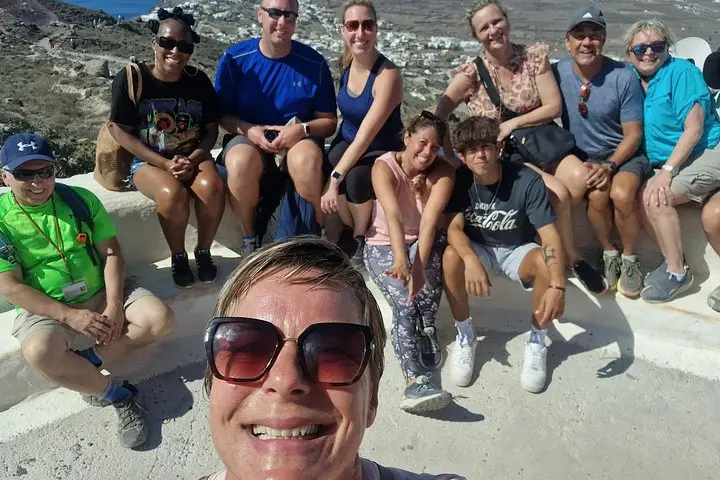
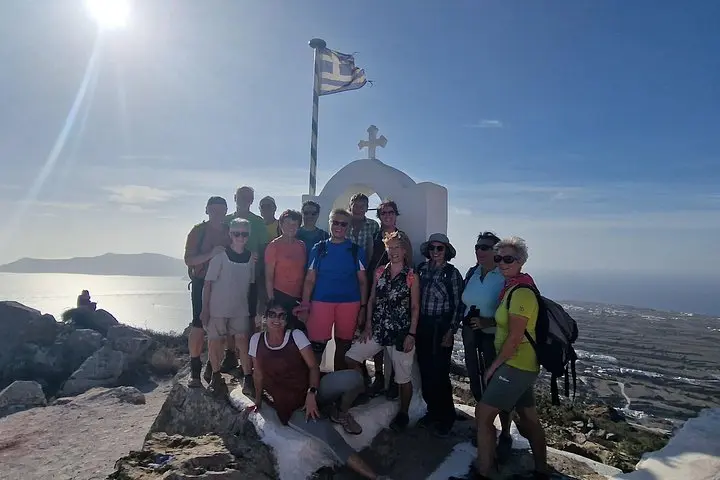
You step off the whitewashed alleyways of Fira and the island’s edge takes over—rock that leans toward the sea, stairs carved into lava, and a trail that has been walked for centuries. The Aegean opens to your left in a slab of cobalt; to your right, cave houses press into the volcanic cliff like rooms hewn from memory. A guide nods, and the group moves along the caldera rim where every turn frames a different version of Santorini’s volcanic drama.
You step off the whitewashed alleyways of Fira and the island’s edge takes over—rock that leans toward the sea, stairs carved into lava, and a trail that has been walked for centuries. The Aegean opens to your left in a slab of cobalt; to your right, cave houses press into the volcanic cliff like rooms hewn from memory. A guide nods, and the group moves along the caldera rim where every turn frames a different version of Santorini’s volcanic drama.
The route follows a historic mule track that links Fira, Firostefani and Imerovigli before loosening into the famous postcard slopes of Oia. Geology writes itself in the layers beneath your boots: ash and pumice from the Bronze Age Thera eruption—an event that reconfigured these islands and fed legends about a lost city. Venetian ruins on Skaros Rock and the squat, blue-domed churches are quieter storytellers; the cave homes (yposkafa) tell of how residents adapted to living on the edge.
This is a sensory trail: wind that shapes the bougainvillea, gulls that wheel like punctuation, and the sea daring you to keep pace. The path narrows in places and drops gentle elevation with stretches of steep steps; you’ll pass old chapels, terraces of vines, and postcard viewlines where the caldera seems to gaze back. Guides weave local lore—who kept goats on the rim, how freshwater was once harvested, and why the cliffs bear the scars of one of Europe’s largest volcanic events.
Practicality rules here as much as romance. The advertised four-hour duration covers roughly 8–10 km of rim walking depending on exact route, with intermittent climbs and uneven volcanic rock underfoot. Wear sturdy shoes, carry sun protection and at least one liter of water (two if you’re hiking in high summer), and be ready for gusty conditions that demand a light windbreaker. The trail runs in most weather, but heat and strong winds change the rhythm; mornings and late afternoons are quieter and cooler, while sunset in Oia fills the path with gawkers and photographers.
For travelers, this hike is an efficient way to read Santorini’s geology, architecture and living traditions in a single line of trail. It’s social—small-group dynamics make space for questions and photos—yet it also gives room for quiet stretches where the island feels like it’s speaking to you directly. Finish in Oia with time to explore the alleys, or descend to Ammoudi Bay for sea-level contrast after you’ve walked the cliff’s edge.
Whether you’re after geology, history, or a coastal hike with panoramic payoff, the Fira-to-Oia caldera rim walk is a compact, character-rich way to experience Santorini beyond the postcard.