THE ADVENTURE COLLECTIVE® · Independent discovery and booking for outdoor travel

Spend ten hours moving from high ridge monasteries to prehistoric streets, clifftop towns and the Red Beach. This full‑day loop covers Prophet Elias, Pyrgos, Akrotiri, Fira and Oia — perfect for first‑time visitors who want a compact primer on Santorini’s geology, history and photo ops.
Spend ten hours moving from high ridge monasteries to prehistoric streets, clifftop towns and the Red Beach. This full‑day loop covers Prophet Elias, Pyrgos, Akrotiri, Fira and Oia — perfect for first‑time visitors who want a compact primer on Santorini’s geology, history and photo ops.
A morning wind pushes salt and volcanic dust across the caldera as the tour bus climbs to Prophet Elias, Santorini’s high point. Visitors step out onto a ridge where the monastery watches over a stitched ribbon of white houses clinging to a 400‑metre drop — the island’s dramatic volcanic rim offering a raw, immediate sense of place.
Verified experiences and guided adventures in the surrounding area.
Operated by TravelPath AllcreteTours · Fira (Thira), South Aegean
A morning wind pushes salt and volcanic dust across the caldera as the tour bus climbs to Prophet Elias, Santorini’s high point. Visitors step out onto a ridge where the monastery watches over a stitched ribbon of white houses clinging to a 400‑metre drop — the island’s dramatic volcanic rim offering a raw, immediate sense of place.
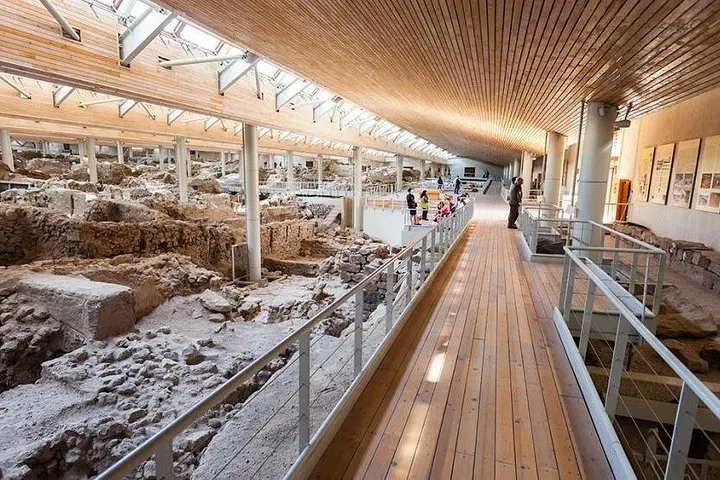
The day moves through layers of history. Pyrgos, with its narrow lanes and Venetian ruins, shows the island’s medieval chapter. At Akrotiri, the excavations reveal a Bronze Age port town frozen by the Theran eruption around the mid‑2nd millennium BC; archaeologists still unearth household pottery and fresco fragments that hint at a connected Aegean economy.
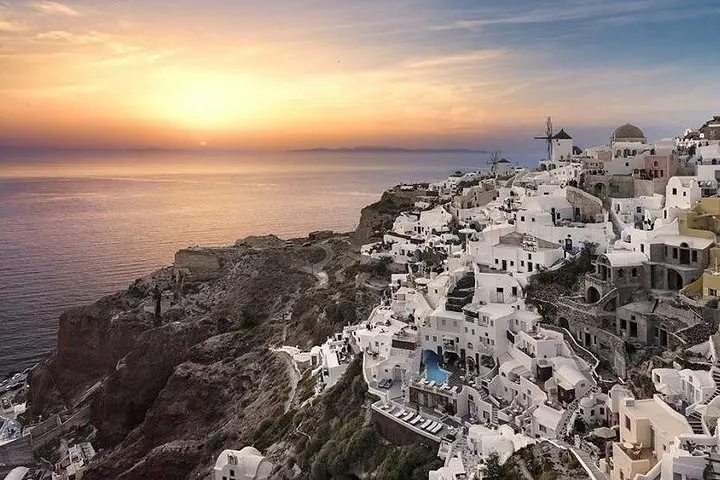
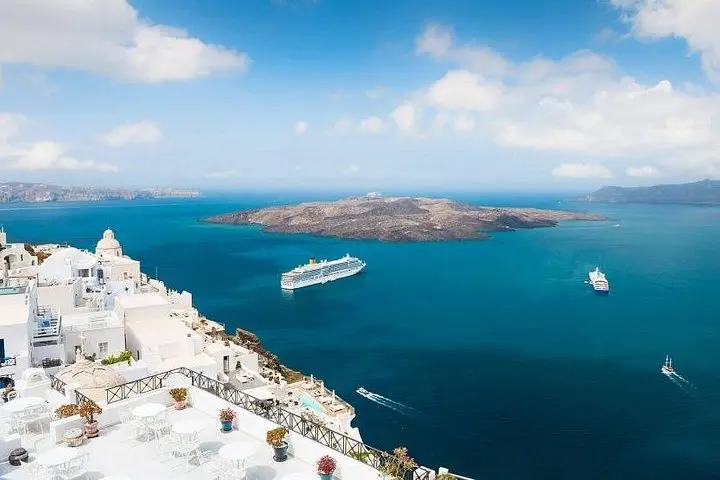
Geology is visible everywhere: red and black cliffs, pumice beaches, and the caldera’s crescent that tells of explosive fire and collapse. Culture arrives in Fira’s clifftop cafés where Santorinian cuisine leans on local tomato paste, capers, and fava beans, then in Oia where the island times its day by sunset — a slow theatrical close over the Aegean.
Practical rhythm: expect multiple short stops, some steps and narrow streets, and two longer pauses — Akrotiri for the dig and Fira for lunch and photos. Sunscreen, refillable water, and solid walking shoes make the day easier; plan Oia timing tightly if you want front-row views. The tour runs about ten hours with air-conditioned transport between sites, so pack layers for wind on the caldera rim and arrive ready to trade history and geology for a sunset that pulls the day together.
No — the tour notes that access to the Akrotiri archaeological site is not included; bring cash or card for entrance if you plan to go inside.
The tour runs approximately 10 hours and includes air‑conditioned vehicle transport between stops.
The itinerary is rated easy overall but includes steps and uneven ground in villages and at archaeological sites; it may be challenging for those with limited mobility.
Yes — the schedule includes a longer stop in Fira for food, photos and shopping, plus shorter photo breaks at other points.
TravelPath AllcreteTours operates guided outdoor trips and adventures with an emphasis on safety, stewardship, and memorable experiences.

A morning wind pushes salt and volcanic dust across the caldera as the tour bus climbs to Prophet Elias, Santorini’s high point. Visitors step out onto a ridge where the monastery watches over a stitched ribbon of white houses clinging to a 400‑metre drop — the island’s dramatic volcanic rim offering a raw, immediate sense of place.
A morning wind pushes salt and volcanic dust across the caldera as the tour bus climbs to Prophet Elias, Santorini’s high point. Visitors step out onto a ridge where the monastery watches over a stitched ribbon of white houses clinging to a 400‑metre drop — the island’s dramatic volcanic rim offering a raw, immediate sense of place.
The day moves through layers of history. Pyrgos, with its narrow lanes and Venetian ruins, shows the island’s medieval chapter. At Akrotiri, the excavations reveal a Bronze Age port town frozen by the Theran eruption around the mid‑2nd millennium BC; archaeologists still unearth household pottery and fresco fragments that hint at a connected Aegean economy.
Geology is visible everywhere: red and black cliffs, pumice beaches, and the caldera’s crescent that tells of explosive fire and collapse. Culture arrives in Fira’s clifftop cafés where Santorinian cuisine leans on local tomato paste, capers, and fava beans, then in Oia where the island times its day by sunset — a slow theatrical close over the Aegean.
Practical rhythm: expect multiple short stops, some steps and narrow streets, and two longer pauses — Akrotiri for the dig and Fira for lunch and photos. Sunscreen, refillable water, and solid walking shoes make the day easier; plan Oia timing tightly if you want front-row views. The tour runs about ten hours with air-conditioned transport between sites, so pack layers for wind on the caldera rim and arrive ready to trade history and geology for a sunset that pulls the day together.