THE ADVENTURE COLLECTIVE® · Independent discovery and booking for outdoor travel

Classic one-day treks from Sapa link riverside terraces, ethnic villages and a cave visit with a local guide, lunch included. Choose your route on arrival and expect mixed trails, changing mountain weather, and returns to town by motorbike taxi or shared minivan.
Classic one-day treks from Sapa link riverside terraces, ethnic villages and a cave visit with a local guide, lunch included. Choose your route on arrival and expect mixed trails, changing mountain weather, and returns to town by motorbike taxi or shared minivan.
Morning mist threads through rice terraces as you step out of Sapa town and onto a path worn by generations. The guide’s map is an invitation: choose a route that threads Y Linh Ho’s riverside rice fields, climbs through Ma Tra’s verdant slopes, or winds past Ta Phin’s red Dao houses and a shallow cave. The day moves like the land — steady and observant — with rivers daring you to pause at low stone bridges and terraces pushing your eyes toward distant ridgelines.
Verified experiences and guided adventures in the surrounding area.
Operated by Asia Travel Legend · Sapa, Lao Cai
Morning mist threads through rice terraces as you step out of Sapa town and onto a path worn by generations. The guide’s map is an invitation: choose a route that threads Y Linh Ho’s riverside rice fields, climbs through Ma Tra’s verdant slopes, or winds past Ta Phin’s red Dao houses and a shallow cave. The day moves like the land — steady and observant — with rivers daring you to pause at low stone bridges and terraces pushing your eyes toward distant ridgelines.
The Hoang Lien range, carved from limestone and metamorphic bedrock, created the steep terraces local Hmong and Red Dao farmers tend today. French colonial developers stationing Sapa in the early 20th century left the grid of trails that now link villages. Cultural notes come hourly: woven jackets, steaming bowls of local pho, and children herd water buffalo along rutted trails.
Practically, expect mixed terrain — dirt tracks, stepped terraces and short rocky sections — over roughly 6–12 km and a few hundred meters of cumulative ascent depending on your chosen loop. Lunch in a local house or mountain restaurant is included; guides handle entrance fees and return transport to Sapa by motorbike taxi or shared minivan. Leave larger bags at the operator’s office and carry a daypack with water, rain layers and snacks.
Plan for changing mountain weather: start early, pace conservatively on descents, and tip guides when service and cultural interpretation deepen the day. In six hours you’ll pass terraces, caves and villages, returning to Sapa with both photos and context — and a clearer sense of how these highland communities live with the land.
Guides will meet you at your hotel in Sapa or at the operator’s office; you can leave luggage at the office before the trek.
Most itineraries last about 6–7 hours and are rated easy-to-moderate, covering 6–12 km with varied terrain and some short steep sections.
Lunch in a local restaurant or home is included; notify the operator of dietary restrictions when booking so they can arrange alternatives.
Return transport to Sapa is provided, typically by motorbike taxi for small groups or a shared minivan depending on group size.
Asia Travel Legend operates guided outdoor trips and adventures with an emphasis on safety, stewardship, and memorable experiences.
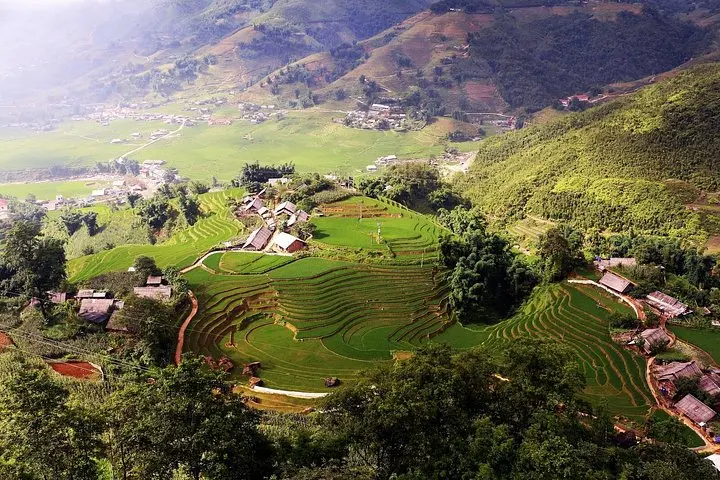
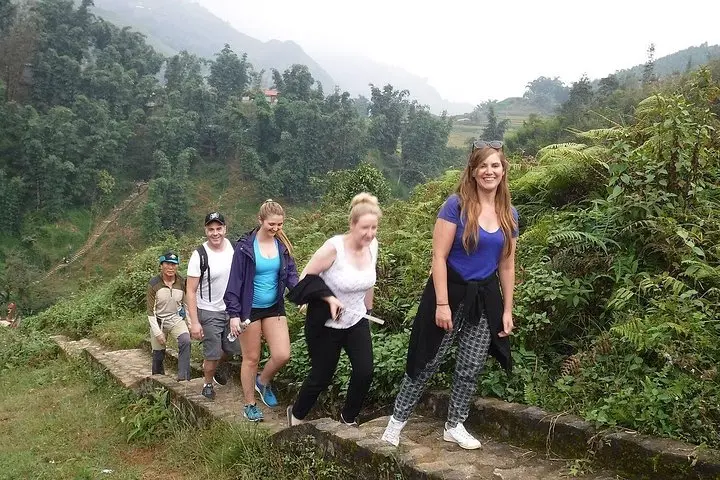

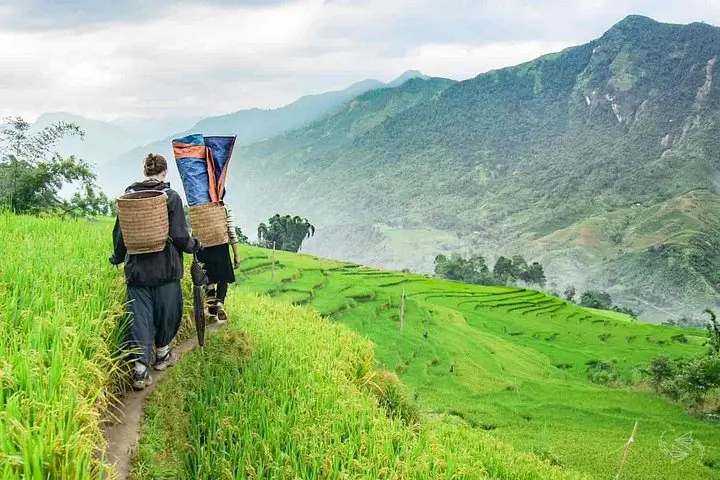
Morning mist threads through rice terraces as you step out of Sapa town and onto a path worn by generations. The guide’s map is an invitation: choose a route that threads Y Linh Ho’s riverside rice fields, climbs through Ma Tra’s verdant slopes, or winds past Ta Phin’s red Dao houses and a shallow cave. The day moves like the land — steady and observant — with rivers daring you to pause at low stone bridges and terraces pushing your eyes toward distant ridgelines.
Morning mist threads through rice terraces as you step out of Sapa town and onto a path worn by generations. The guide’s map is an invitation: choose a route that threads Y Linh Ho’s riverside rice fields, climbs through Ma Tra’s verdant slopes, or winds past Ta Phin’s red Dao houses and a shallow cave. The day moves like the land — steady and observant — with rivers daring you to pause at low stone bridges and terraces pushing your eyes toward distant ridgelines.
The Hoang Lien range, carved from limestone and metamorphic bedrock, created the steep terraces local Hmong and Red Dao farmers tend today. French colonial developers stationing Sapa in the early 20th century left the grid of trails that now link villages. Cultural notes come hourly: woven jackets, steaming bowls of local pho, and children herd water buffalo along rutted trails.
Practically, expect mixed terrain — dirt tracks, stepped terraces and short rocky sections — over roughly 6–12 km and a few hundred meters of cumulative ascent depending on your chosen loop. Lunch in a local house or mountain restaurant is included; guides handle entrance fees and return transport to Sapa by motorbike taxi or shared minivan. Leave larger bags at the operator’s office and carry a daypack with water, rain layers and snacks.
Plan for changing mountain weather: start early, pace conservatively on descents, and tip guides when service and cultural interpretation deepen the day. In six hours you’ll pass terraces, caves and villages, returning to Sapa with both photos and context — and a clearer sense of how these highland communities live with the land.