THE ADVENTURE COLLECTIVE® · Independent discovery and booking for outdoor travel

Walk through terraced rice fields, visit Black H’mong and Dzay villages, and sleep one night in a family homestay on this accessible two-day trek from Sapa. Expect easy to moderate trails, waterfalls, and strong cultural contact with local communities.
Walk through terraced rice fields, visit Black H’mong and Dzay villages, and sleep one night in a family homestay on this accessible two-day trek from Sapa. Expect easy to moderate trails, waterfalls, and strong cultural contact with local communities.
A high-mist morning opens above Sapa as walkers set off along carved stone steps that lead down from town into the Muong Hoa Valley. Rice terraces step away like a slow staircase, and the trail threads past wood houses, a small French-era hydroelectric relic, and waterfalls that push cool air into your face.
Verified experiences and guided adventures in the surrounding area.
Operated by Giang Ta Chai Village · Sapa, Lao Cai
A high-mist morning opens above Sapa as walkers set off along carved stone steps that lead down from town into the Muong Hoa Valley. Rice terraces step away like a slow staircase, and the trail threads past wood houses, a small French-era hydroelectric relic, and waterfalls that push cool air into your face.
This two-day route moves at an unhurried pace: Day 1 explores Cat Cat and Sin Chai (about 8 km of walking), ending with an overnight in a local homestay; Day 2 follows the Muong Hoa valley through Y Linh Ho, Lao Chai and Ta Van (roughly 12 km). The geology here is young folded mountains—steep slopes of shale and sandstone—shaped by monsoon rains. Culturally, this is Hmong and Dzay country: hill tribe homes, indigo textiles, and terraced fields managed by hand for generations.
Expect muddy sections after rain, stone staircases, and easy ascents rather than sustained climbs—the trail rating sits in the easy-to-moderate range (4–6/10). Practicalities: pack layers for fog and sun, bring cash for village purchases and tips, and carry a daypack with water and snacks. Homestays are simple: modest bedding, shared bathrooms, and family-style meals—respectful curiosity goes a long way.
Timing: start early to avoid mid-afternoon clouds and take breaks for photo vantage points above the valley. The trip is accessible to most hikers with basic fitness; no technical gear is required. In short, this itinerary balances cultural contact with scenic walking—ideal for anyone wanting an immersive, low-altitude trek in northern Vietnam.
Routes are rated easy-to-moderate (about 4–6/10); trails include village paths, stone steps and short ascents—no technical climbing required.
Homestays are simple family homes with modest bedding and shared facilities; meals are home-cooked and locally sourced.
Not recommended for travelers with serious spinal or cardiovascular issues, since trails include uneven steps and some sustained walking.
Breakfast, lunch and dinner are included on the itinerary, with local dishes served family-style at villages and the homestay.
Giang Ta Chai Village operates guided outdoor trips and adventures with an emphasis on safety, stewardship, and memorable experiences.
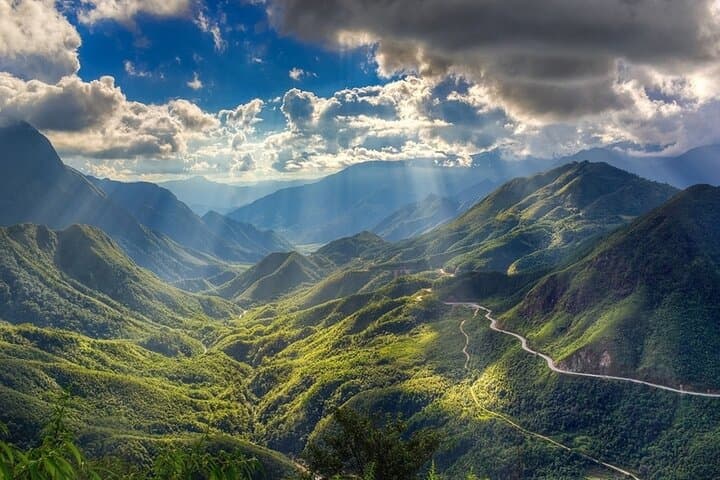

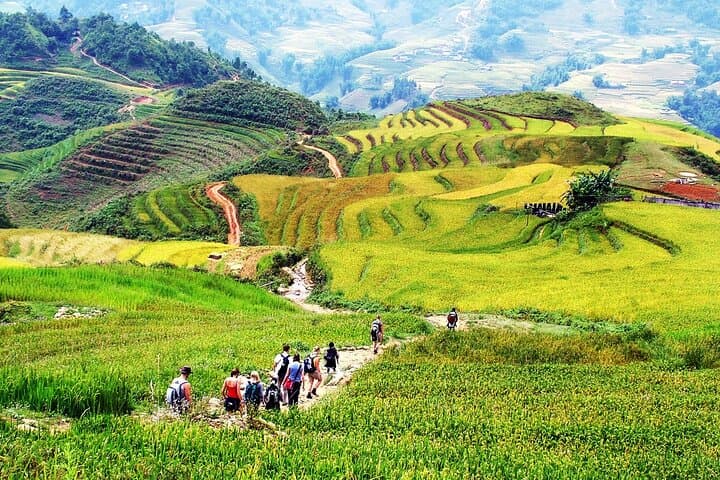

A high-mist morning opens above Sapa as walkers set off along carved stone steps that lead down from town into the Muong Hoa Valley. Rice terraces step away like a slow staircase, and the trail threads past wood houses, a small French-era hydroelectric relic, and waterfalls that push cool air into your face.
A high-mist morning opens above Sapa as walkers set off along carved stone steps that lead down from town into the Muong Hoa Valley. Rice terraces step away like a slow staircase, and the trail threads past wood houses, a small French-era hydroelectric relic, and waterfalls that push cool air into your face.
This two-day route moves at an unhurried pace: Day 1 explores Cat Cat and Sin Chai (about 8 km of walking), ending with an overnight in a local homestay; Day 2 follows the Muong Hoa valley through Y Linh Ho, Lao Chai and Ta Van (roughly 12 km). The geology here is young folded mountains—steep slopes of shale and sandstone—shaped by monsoon rains. Culturally, this is Hmong and Dzay country: hill tribe homes, indigo textiles, and terraced fields managed by hand for generations.
Expect muddy sections after rain, stone staircases, and easy ascents rather than sustained climbs—the trail rating sits in the easy-to-moderate range (4–6/10). Practicalities: pack layers for fog and sun, bring cash for village purchases and tips, and carry a daypack with water and snacks. Homestays are simple: modest bedding, shared bathrooms, and family-style meals—respectful curiosity goes a long way.
Timing: start early to avoid mid-afternoon clouds and take breaks for photo vantage points above the valley. The trip is accessible to most hikers with basic fitness; no technical gear is required. In short, this itinerary balances cultural contact with scenic walking—ideal for anyone wanting an immersive, low-altitude trek in northern Vietnam.