THE ADVENTURE COLLECTIVE® · Independent discovery and booking for outdoor travel

Two days in Sapa distill mountain scenery, ethnic villages and terraced fields into a compact, walkable itinerary. Expect short village hikes on day one and a longer 9 km trek through Muong Hoa valley on day two.
Two days in Sapa distill mountain scenery, ethnic villages and terraced fields into a compact, walkable itinerary. Expect short village hikes on day one and a longer 9 km trek through Muong Hoa valley on day two.
You step off the bus into thin mountain air and a town that opens onto tiers of green: rice terraces stair-stepping down toward the Muong Hoa valley, children in embroidered jackets darting through morning mist. The first afternoon peels away on a short descent to Cat Cat village—water thumps against a small French-era hydraulic station, and the trail threads bridges and carved stone steps before you climb back to Sapa town for a warm hotel night.
Verified experiences and guided adventures in the surrounding area.
Operated by BCFamilyTour.com · Sapa, Lao Cai
You step off the bus into thin mountain air and a town that opens onto tiers of green: rice terraces stair-stepping down toward the Muong Hoa valley, children in embroidered jackets darting through morning mist. The first afternoon peels away on a short descent to Cat Cat village—water thumps against a small French-era hydraulic station, and the trail threads bridges and carved stone steps before you climb back to Sapa town for a warm hotel night.
The next day unfolds along the Muong Hoa stream, through Y Linh Ho and Lao Chai to Ta Van. These valleys record both geology and human craft: folded limestone ridges of the Hoang Lien Son range hold glaciers’ ancient influence, while centuries of terrace farming shape the slope. H’mong, Dzao and Dzay villages still practice rice cultivation and weaving; markets and carved wooden homes reveal living cultural layers rather than static displays.
Trails range from paved village paths to steep, uneven dirt tracks—about 2.5 km for Cat Cat’s loop and roughly 9 km on the Y Linh Ho–Lao Chai–Ta Van route, with cumulative elevation changes on the order of a few hundred meters per day. Expect slippery sections after rain and short steep climbs.
Practical guidance: wear sturdy footwear with good grip, bring a waterproof layer and cash for village purchases, and plan for early starts to avoid midday washouts and bus schedules back to Hanoi. Hydrate and carry snacks for the longer trek; the local guide manages logistics, but basic hiking readiness will make the two-day Sapa experience more rewarding and respectful to the communities here.
No technical fitness is required, but you should be comfortable walking 2–4 hours on uneven terrain and able to manage some steep sections—those with mobility issues should consult the operator.
This itinerary includes one night in a hotel in Sapa on a double/twin/triple basis; homestays are available on other itineraries but not included here.
Yes—big luggage can be left at the hotel while you take a light daypack for trekking; confirm hotel storage with the guide.
The tour includes two lunches and one breakfast with local dishes plus bottled water; bring extra snacks for the longer trek if you prefer.
BCFamilyTour.com operates guided outdoor trips and adventures with an emphasis on safety, stewardship, and memorable experiences.

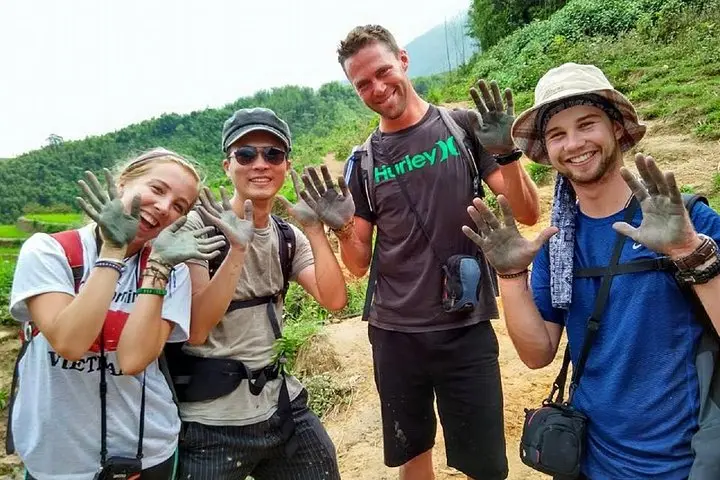


You step off the bus into thin mountain air and a town that opens onto tiers of green: rice terraces stair-stepping down toward the Muong Hoa valley, children in embroidered jackets darting through morning mist. The first afternoon peels away on a short descent to Cat Cat village—water thumps against a small French-era hydraulic station, and the trail threads bridges and carved stone steps before you climb back to Sapa town for a warm hotel night.
You step off the bus into thin mountain air and a town that opens onto tiers of green: rice terraces stair-stepping down toward the Muong Hoa valley, children in embroidered jackets darting through morning mist. The first afternoon peels away on a short descent to Cat Cat village—water thumps against a small French-era hydraulic station, and the trail threads bridges and carved stone steps before you climb back to Sapa town for a warm hotel night.
The next day unfolds along the Muong Hoa stream, through Y Linh Ho and Lao Chai to Ta Van. These valleys record both geology and human craft: folded limestone ridges of the Hoang Lien Son range hold glaciers’ ancient influence, while centuries of terrace farming shape the slope. H’mong, Dzao and Dzay villages still practice rice cultivation and weaving; markets and carved wooden homes reveal living cultural layers rather than static displays.
Trails range from paved village paths to steep, uneven dirt tracks—about 2.5 km for Cat Cat’s loop and roughly 9 km on the Y Linh Ho–Lao Chai–Ta Van route, with cumulative elevation changes on the order of a few hundred meters per day. Expect slippery sections after rain and short steep climbs.
Practical guidance: wear sturdy footwear with good grip, bring a waterproof layer and cash for village purchases, and plan for early starts to avoid midday washouts and bus schedules back to Hanoi. Hydrate and carry snacks for the longer trek; the local guide manages logistics, but basic hiking readiness will make the two-day Sapa experience more rewarding and respectful to the communities here.