THE ADVENTURE COLLECTIVE® · Independent discovery and booking for outdoor travel

Two days of terrace trails, mountain air and an overnight homestay in Ta Van. Hike 9 km on day one through Lao Chai and return via Giang Ta Chai’s ridgelines on day two—ideal for active travelers who want culture and landscape in one compact trip.
Two days of terrace trails, mountain air and an overnight homestay in Ta Van. Hike 9 km on day one through Lao Chai and return via Giang Ta Chai’s ridgelines on day two—ideal for active travelers who want culture and landscape in one compact trip.
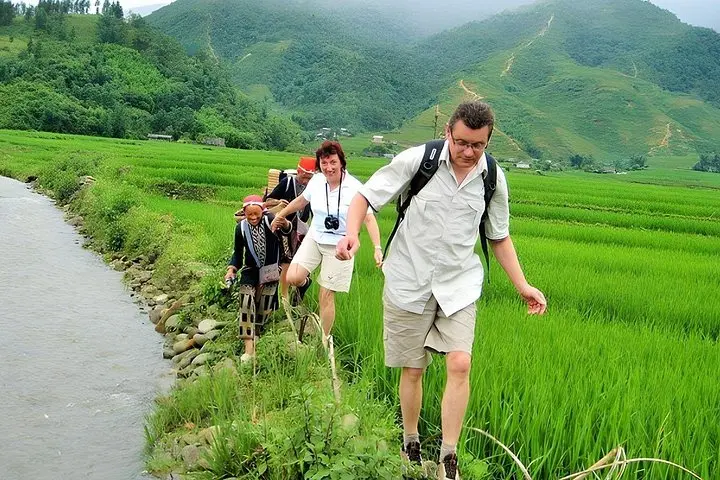
The bus lets you out into a thinner air and a wide sweep of carved green: terraces step down the valley, a stream threads silver through rice paddies, and the Hoang Lien Son range looms like a promise.
Verified experiences and guided adventures in the surrounding area.
Operated by VietnamVoyagers · Sapa, Lao Cai
The bus lets you out into a thinner air and a wide sweep of carved green: terraces step down the valley, a stream threads silver through rice paddies, and the Hoang Lien Son range looms like a promise.
Over two days you walk those terraces—Y Linh Ho into Lao Chai, then along the Muong Hoa stream to Ta Van—covering roughly 9 km on day one and another 4 km the second morning. The landscape records both geology and labor: steep, uplifted slopes folded by tectonics and shaped by generations of terracing. Sapa’s plateaus and sharp ridgelines were popularized in the French colonial era; today the hills are primarily home to H’Mong, Dzao and Giay communities whose textiles and homestay kitchens define much of the local culture.
You’ll sleep in a family bungalow in Ta Van, where wood smoke and a simple dinner anchor the evening. Water buffalo graze in the floodplains and mountain songbirds flit through bamboo; the valley’s stone markers and irrigation channels hint at a long agricultural history.
Practically: trails are dirt and can be slippery after rains—expect uneven footing, short steeps and frequent stream crossings. Guides lead the way, handle transport from Hanoi by air-conditioned or sleeper bus, and arrange meals. Bring layered clothing for cool mornings and wet weather, cash for small purchases and a modest level of fitness for sustained walking with some elevation changes. Start early for clearer views; afternoons often cloud in. This itinerary suits active travelers who want straightforward trekking, cultural contact and an authentic overnight in a hill-tribe village.
The tour includes transfer options by air-conditioned day bus or overnight sleeper bus from Hanoi to Sapa; pickup points are typically in or near the Old Quarter.
Sapa sits around 1,500 m; the hikes involve sustained walking and short climbs but are not technical—allow time to acclimatize, stay hydrated and pace yourself.
Homestays are basic bungalows run by local families—shared facilities, simple hot meals made from local ingredients, and blankets; bring a small towel and toiletries.
A cooking class is offered upon request for a small extra fee (about US$7); meals otherwise are provided as noted in the itinerary.
VietnamVoyagers operates guided outdoor trips and adventures with an emphasis on safety, stewardship, and memorable experiences.

The bus lets you out into a thinner air and a wide sweep of carved green: terraces step down the valley, a stream threads silver through rice paddies, and the Hoang Lien Son range looms like a promise.
The bus lets you out into a thinner air and a wide sweep of carved green: terraces step down the valley, a stream threads silver through rice paddies, and the Hoang Lien Son range looms like a promise.
Over two days you walk those terraces—Y Linh Ho into Lao Chai, then along the Muong Hoa stream to Ta Van—covering roughly 9 km on day one and another 4 km the second morning. The landscape records both geology and labor: steep, uplifted slopes folded by tectonics and shaped by generations of terracing. Sapa’s plateaus and sharp ridgelines were popularized in the French colonial era; today the hills are primarily home to H’Mong, Dzao and Giay communities whose textiles and homestay kitchens define much of the local culture.
You’ll sleep in a family bungalow in Ta Van, where wood smoke and a simple dinner anchor the evening. Water buffalo graze in the floodplains and mountain songbirds flit through bamboo; the valley’s stone markers and irrigation channels hint at a long agricultural history.
Practically: trails are dirt and can be slippery after rains—expect uneven footing, short steeps and frequent stream crossings. Guides lead the way, handle transport from Hanoi by air-conditioned or sleeper bus, and arrange meals. Bring layered clothing for cool mornings and wet weather, cash for small purchases and a modest level of fitness for sustained walking with some elevation changes. Start early for clearer views; afternoons often cloud in. This itinerary suits active travelers who want straightforward trekking, cultural contact and an authentic overnight in a hill-tribe village.