THE ADVENTURE COLLECTIVE® · Independent discovery and booking for outdoor travel

Leave Hanoi’s rush behind and spend two days walking rice terraces, visiting H’Mong and Tay villages, and overnighting in a local homestay at Ta Van. This compact trek combines cultural immersion with manageable trails and rich mountain scenery.
Leave Hanoi’s rush behind and spend two days walking rice terraces, visiting H’Mong and Tay villages, and overnighting in a local homestay at Ta Van. This compact trek combines cultural immersion with manageable trails and rich mountain scenery.
Morning light slips across the Muong Hoa valley as the minivan eases into Sapa town and the air sharpens with mountain cool. On this two-day loop, walkers trade Hanoi’s traffic for stepped rice fields, bamboo stands and the low, colorful chatter of H’Mong and Tay villages.
Verified experiences and guided adventures in the surrounding area.
Operated by Authentic MAI CHAU · Sapa, Lao Cai Province
Morning light slips across the Muong Hoa valley as the minivan eases into Sapa town and the air sharpens with mountain cool. On this two-day loop, walkers trade Hanoi’s traffic for stepped rice fields, bamboo stands and the low, colorful chatter of H’Mong and Tay villages.
The Hoang Lien Son range—tectonically young, folded and steep—has carved narrow terraces that local communities have farmed for generations. Along the trail, geology shows in slatey streambeds and soil-dark ridgelines while cultural markers appear in embroidered jackets and houses raised on stilts. The Dzay, Red Dzao and Black H’Mong peoples you meet are part of a living rural landscape; homestays in Ta Van let you experience evening meals cooked over wood stoves and a dorm bed beneath a mosquito net.
Day one is a roughly 9 km hike from Y Linh Ho through Lao Chai to Ta Van, following Muong Hoa stream and working up over terrace walls. Day two adds about 4 km through bamboo and paddies to Giang Ta Chai before returning to Sapa for onward transfer to Hanoi.
Expect uneven trails, short steep sections and frequent photo stops. Weather shifts quickly—mist can disguise a ridge one minute and clear the next—so pack rain protection and warm layers. Respect local customs when visiting villages: ask before photographing people and accept invitations to share food. Hydrate on the walk, wear broken-in boots, and plan travel time to and from Hanoi (roughly 6–7 hours each way by bus). This trip is compact but rooted in place—an accessible way to step into northern Vietnam’s mountain rhythms.
The route is rated moderate—expect 3–4 hours walking day one (≈9 km) with some steep, uneven sections and 1.5–2 hours day two (≈4 km). No technical climbing required.
Transfers Hanoi–Sapa–Hanoi by sleeper bus, local minivan transfers in Sapa, English-speaking guide, meals listed (1 breakfast, 2 lunches, 1 dinner), and homestay dorm bed with shared bathroom and hot water.
Accommodation is a basic single dorm bed with mosquito net in a shared homestay; facilities are communal and rustic by design.
Yes, but conditions vary: best clarity and harvest colors are Sept–Nov and Mar–May; the rainy season (Jun–Aug) has heavier showers, and Dec–Feb can be cold with occasional frost.
Authentic MAI CHAU operates guided outdoor trips and adventures with an emphasis on safety, stewardship, and memorable experiences.

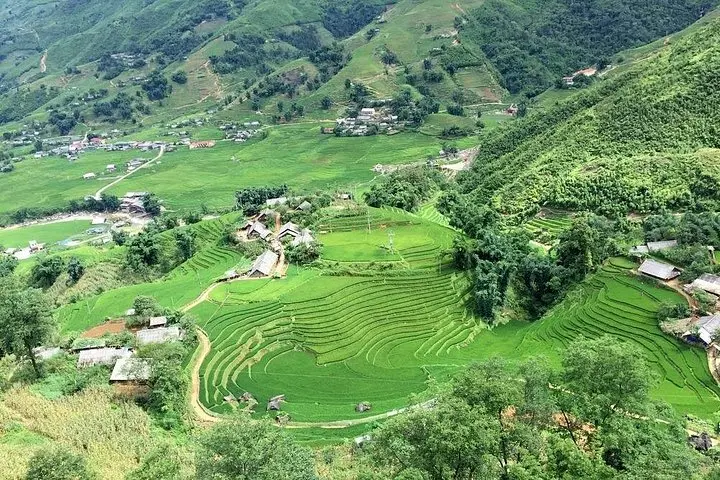
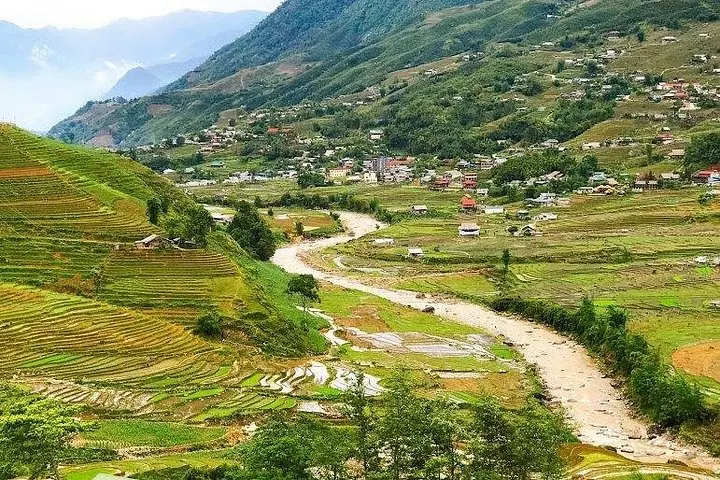

Morning light slips across the Muong Hoa valley as the minivan eases into Sapa town and the air sharpens with mountain cool. On this two-day loop, walkers trade Hanoi’s traffic for stepped rice fields, bamboo stands and the low, colorful chatter of H’Mong and Tay villages.
Morning light slips across the Muong Hoa valley as the minivan eases into Sapa town and the air sharpens with mountain cool. On this two-day loop, walkers trade Hanoi’s traffic for stepped rice fields, bamboo stands and the low, colorful chatter of H’Mong and Tay villages.
The Hoang Lien Son range—tectonically young, folded and steep—has carved narrow terraces that local communities have farmed for generations. Along the trail, geology shows in slatey streambeds and soil-dark ridgelines while cultural markers appear in embroidered jackets and houses raised on stilts. The Dzay, Red Dzao and Black H’Mong peoples you meet are part of a living rural landscape; homestays in Ta Van let you experience evening meals cooked over wood stoves and a dorm bed beneath a mosquito net.
Day one is a roughly 9 km hike from Y Linh Ho through Lao Chai to Ta Van, following Muong Hoa stream and working up over terrace walls. Day two adds about 4 km through bamboo and paddies to Giang Ta Chai before returning to Sapa for onward transfer to Hanoi.
Expect uneven trails, short steep sections and frequent photo stops. Weather shifts quickly—mist can disguise a ridge one minute and clear the next—so pack rain protection and warm layers. Respect local customs when visiting villages: ask before photographing people and accept invitations to share food. Hydrate on the walk, wear broken-in boots, and plan travel time to and from Hanoi (roughly 6–7 hours each way by bus). This trip is compact but rooted in place—an accessible way to step into northern Vietnam’s mountain rhythms.