THE ADVENTURE COLLECTIVE® · Independent discovery and booking for outdoor travel

Two days of terraces, village trails and an authentic Ta Van homestay: this short trek links Muong Hoa valley with H’mong and Red Dao villages. Practical route, cultural contact, and manageable daily mileage make it ideal for travelers who want a compact mountain experience.
Two days of terraces, village trails and an authentic Ta Van homestay: this short trek links Muong Hoa valley with H’mong and Red Dao villages. Practical route, cultural contact, and manageable daily mileage make it ideal for travelers who want a compact mountain experience.
A cool mist clings to the Hoàng Liên Sơn ridges as the group disembarks in Sapa and steps onto trails carved along endless rice terraces. Footfalls on stone paths, the murmur of a mountain stream, and the cadence of woven baskets create the first notes of a short but immersive trek. Over two days, walkers move from Muong Hoa valley up to Y Linh Ho and Lao Chai before dropping into Ta Van, where a homestay’s warm fire awaits.
Verified experiences and guided adventures in the surrounding area.
Operated by Chat Tourist · Sapa, Lào Cai Province
A cool mist clings to the Hoàng Liên Sơn ridges as the group disembarks in Sapa and steps onto trails carved along endless rice terraces. Footfalls on stone paths, the murmur of a mountain stream, and the cadence of woven baskets create the first notes of a short but immersive trek. Over two days, walkers move from Muong Hoa valley up to Y Linh Ho and Lao Chai before dropping into Ta Van, where a homestay’s warm fire awaits.
This landscape was shaped by uplifted limestone and shale, then sculpted by generations of farmers into steep terraces that follow contour lines like handwriting across the slopes. The region hosts Red Dao, Black H’mong and Tay communities whose embroidery, stilt houses and seasonal festivals are living cultural features you’ll encounter along the route.
Expect single-track trails, stone stairways and small bridges crossing tributary streams. Day one covers roughly 9 km of rolling climbs and descents; day two links Giang Ta Chai and neighboring Red Dao villages with another 8–10 km of walking. Trails can be muddy after rain and the altitude reaches around 1,500–1,800 m, so mornings can be foggy and afternoons clear.
Practical tips: travel light, bring a waterproof layer, and carry small-denomination dong for village purchases. The homestay includes dinner and breakfast, and guides arrange cooking demonstrations and cultural introductions. Transport uses an overnight sleeper bus between Hanoi and Sapa; prepare for long transfers but rewarding mountain scenery.
Each day involves 8–10 km of walking over mixed stone and dirt paths with moderate elevation change—suitable for most active travelers.
Basic public or homestay toilets are available in villages; carry tissues and hand sanitizer as supplies may be limited.
Local guides are English-speaking; hosts may have limited English but guides facilitate communication and cultural exchange.
Yes—vegetarian, vegan and common dietary needs can be arranged if noted when booking.
Chat Tourist operates guided outdoor trips and adventures with an emphasis on safety, stewardship, and memorable experiences.

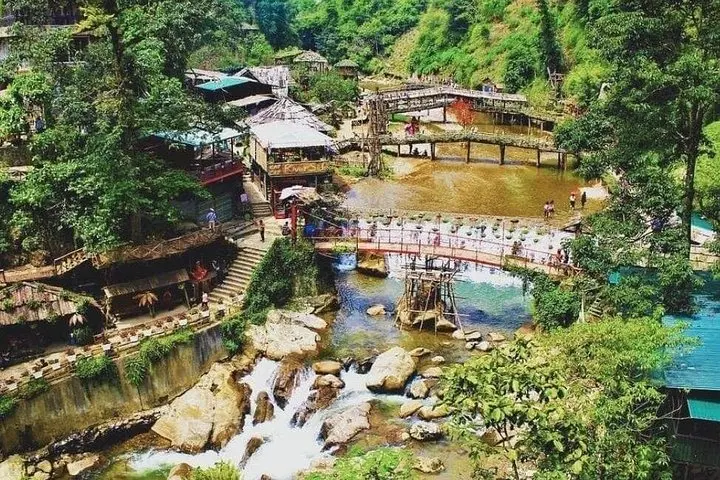


A cool mist clings to the Hoàng Liên Sơn ridges as the group disembarks in Sapa and steps onto trails carved along endless rice terraces. Footfalls on stone paths, the murmur of a mountain stream, and the cadence of woven baskets create the first notes of a short but immersive trek. Over two days, walkers move from Muong Hoa valley up to Y Linh Ho and Lao Chai before dropping into Ta Van, where a homestay’s warm fire awaits.
A cool mist clings to the Hoàng Liên Sơn ridges as the group disembarks in Sapa and steps onto trails carved along endless rice terraces. Footfalls on stone paths, the murmur of a mountain stream, and the cadence of woven baskets create the first notes of a short but immersive trek. Over two days, walkers move from Muong Hoa valley up to Y Linh Ho and Lao Chai before dropping into Ta Van, where a homestay’s warm fire awaits.
This landscape was shaped by uplifted limestone and shale, then sculpted by generations of farmers into steep terraces that follow contour lines like handwriting across the slopes. The region hosts Red Dao, Black H’mong and Tay communities whose embroidery, stilt houses and seasonal festivals are living cultural features you’ll encounter along the route.
Expect single-track trails, stone stairways and small bridges crossing tributary streams. Day one covers roughly 9 km of rolling climbs and descents; day two links Giang Ta Chai and neighboring Red Dao villages with another 8–10 km of walking. Trails can be muddy after rain and the altitude reaches around 1,500–1,800 m, so mornings can be foggy and afternoons clear.
Practical tips: travel light, bring a waterproof layer, and carry small-denomination dong for village purchases. The homestay includes dinner and breakfast, and guides arrange cooking demonstrations and cultural introductions. Transport uses an overnight sleeper bus between Hanoi and Sapa; prepare for long transfers but rewarding mountain scenery.