THE ADVENTURE COLLECTIVE® · Independent discovery and booking for outdoor travel

Two days of valley trails, ethnic villages, and rice terraces around Sapa—overnight comfort in a 4★ hotel combined with guided hikes to Cat Cat, Lao Chai and Ta Van. Expect 4–10 km of walking per day across stone steps, dirt trails and broodingly beautiful views.
Two days of valley trails, ethnic villages, and rice terraces around Sapa—overnight comfort in a 4★ hotel combined with guided hikes to Cat Cat, Lao Chai and Ta Van. Expect 4–10 km of walking per day across stone steps, dirt trails and broodingly beautiful views.
Dawn breaks over the Hoang Lien Son as the cabin bus eases into Sapa town—clouds hanging low, terraces peeling away into the valley like a stacked staircase. You step off, tighten your pack, and head downhill: first toward Cat Cat, where a broken French-era hydroelectric ruin and a cool waterfall mark the village entrance.
Verified experiences and guided adventures in the surrounding area.
Operated by Authentic SAPA · Sapa, Lào Cai
Dawn breaks over the Hoang Lien Son as the cabin bus eases into Sapa town—clouds hanging low, terraces peeling away into the valley like a stacked staircase. You step off, tighten your pack, and head downhill: first toward Cat Cat, where a broken French-era hydroelectric ruin and a cool waterfall mark the village entrance.
This two-day itinerary threads through Muong Hoa Valley, a landscape carved by human hands and glacial action: terraced rice fields, steep limestone ridges, and old shale soils that hold rain and history. Sapa town sits around 1,500–1,600 m; the trails drop 200–500 m into valley villages and climb back in short bursts. The route passes Black Hmong and Dzay communities whose woven indigo and bamboo house styles reflect centuries of upland life.
On day one expect roughly 4 km of descent on packed dirt and stone steps to Cat Cat, with slippery sections after rain; day two stretches 8–10 km through Y Linh Ho, Lao Chai and Ta Van across narrow trails and leveled footpaths beside rice terraces. Guides explain local farming rhythms and seasonal planting; local markets and homestays offer glimpses of daily trade.
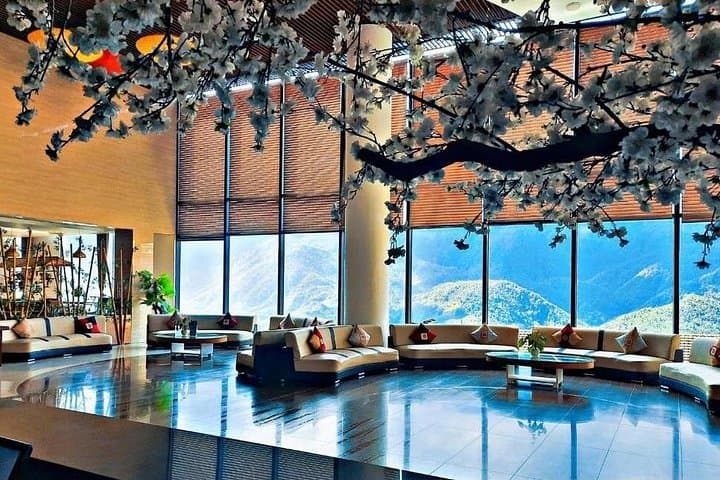
Practical side: bring waterproof footwear and a lightweight rain shell, carry at least 2 liters of water, and budget cash for village purchases. Early mornings and late afternoons deliver the best light and cooler temperatures—plan photography then. The tour uses minivan transfers and includes a 4-star Sapa hotel overnight, meals, and guided trekking—ideal for travelers with moderate fitness seeking cultural trails without technical climbing.
Expect about 4 km on day one (Cat Cat descent) and 8–10 km on day two across Muong Hoa Valley; total hiking time around 6–8 hours over two days.
No technical climbing is required—trails are dirt, village paths and stone steps, but can be steep and slippery after rain.
Round-trip cabin bus transfer Hanoi–Sapa, guided trekking, meals listed, entrance fees, minivan transfers in Sapa, and one-night stay in a 4★ hotel.
Not recommended for those with significant spinal, heart, or mobility issues; the itinerary involves uneven terrain and sustained walking.
Authentic SAPA operates guided outdoor trips and adventures with an emphasis on safety, stewardship, and memorable experiences.



Dawn breaks over the Hoang Lien Son as the cabin bus eases into Sapa town—clouds hanging low, terraces peeling away into the valley like a stacked staircase. You step off, tighten your pack, and head downhill: first toward Cat Cat, where a broken French-era hydroelectric ruin and a cool waterfall mark the village entrance.
Dawn breaks over the Hoang Lien Son as the cabin bus eases into Sapa town—clouds hanging low, terraces peeling away into the valley like a stacked staircase. You step off, tighten your pack, and head downhill: first toward Cat Cat, where a broken French-era hydroelectric ruin and a cool waterfall mark the village entrance.
This two-day itinerary threads through Muong Hoa Valley, a landscape carved by human hands and glacial action: terraced rice fields, steep limestone ridges, and old shale soils that hold rain and history. Sapa town sits around 1,500–1,600 m; the trails drop 200–500 m into valley villages and climb back in short bursts. The route passes Black Hmong and Dzay communities whose woven indigo and bamboo house styles reflect centuries of upland life.
On day one expect roughly 4 km of descent on packed dirt and stone steps to Cat Cat, with slippery sections after rain; day two stretches 8–10 km through Y Linh Ho, Lao Chai and Ta Van across narrow trails and leveled footpaths beside rice terraces. Guides explain local farming rhythms and seasonal planting; local markets and homestays offer glimpses of daily trade.
Practical side: bring waterproof footwear and a lightweight rain shell, carry at least 2 liters of water, and budget cash for village purchases. Early mornings and late afternoons deliver the best light and cooler temperatures—plan photography then. The tour uses minivan transfers and includes a 4-star Sapa hotel overnight, meals, and guided trekking—ideal for travelers with moderate fitness seeking cultural trails without technical climbing.