THE ADVENTURE COLLECTIVE® · Independent discovery and booking for outdoor travel

Walk Muong Hoa valley from Y Linh Ho to Ta Van on a two-day group trek that ends in a village homestay. Expect terraced ricefields, ethnic village life, and moderate trails with panoramic mountain views.
Walk Muong Hoa valley from Y Linh Ho to Ta Van on a two-day group trek that ends in a village homestay. Expect terraced ricefields, ethnic village life, and moderate trails with panoramic mountain views.
Dawn lifts like a veil over the Hoàng Liên Sơn as the sleeper bus unspools from Hanoi into a landscape of terraces and limestone ribs. By midafternoon you step onto narrow tracks that skirt rice benches, the valley's irrigation channels whispering as if daring you to keep pace. The trail follows Muong Hoa valley—first to Y Linh Ho and Lao Chai, then down to Ta Van—each village framed by tiered fields and smoke from kitchen stoves.
Verified experiences and guided adventures in the surrounding area.
Operated by Iztrip · Sapa, Lao Cai
Dawn lifts like a veil over the Hoàng Liên Sơn as the sleeper bus unspools from Hanoi into a landscape of terraces and limestone ribs. By midafternoon you step onto narrow tracks that skirt rice benches, the valley's irrigation channels whispering as if daring you to keep pace. The trail follows Muong Hoa valley—first to Y Linh Ho and Lao Chai, then down to Ta Van—each village framed by tiered fields and smoke from kitchen stoves.
This route runs in the shadow of Fan Si Pan, the highest peak in Indochina, and through farmland carved over generations by Hmong, Red Dao and Tay communities. The terraces are both cultural record and working geology—stone banks holding soil on steep slopes, shaped by monsoon rhythms. Villages keep strong textile traditions and communal homestays that offer a direct view into daily life: weaving, local markets and shared meals.
Practical guide: expect roughly 9 km walking on day one (undulating dirt paths and stone steps) and about 8 km on day two. Elevation around Sapa sits near 1,600 m; trails are moderate with short, sometimes steep pitches—suitable for anyone in reasonable shape. Pack a waterproof layer, sturdy soles, cash for village purchases, and modest clothing to respect local customs. Hydrate and start early to avoid afternoon cloud and rain. The homestay night is basic but warm: bring a small towel and spare socks.
This two-day loop is ideal for travelers wanting tactile contact with highland life—minimal logistics, maximum cultural exchange.
Trails are moderate: day one is about 9 km with undulating terrain; day two around 8 km. Short steep pitches occur but no technical climbing.
Homestays are basic and clean with shared facilities; hosts provide dinner and breakfast and often simple bedding—bring a small towel and warm layer.
No technical experience required. Good balance and steady fitness help, and lightweight day hiking is sufficient.
The tour includes sleeper-bus transfers between Hanoi and Sapa and local vehicle transfers; pick-up points are in Hanoi Old Quarter per booking details.
Iztrip operates guided outdoor trips and adventures with an emphasis on safety, stewardship, and memorable experiences.



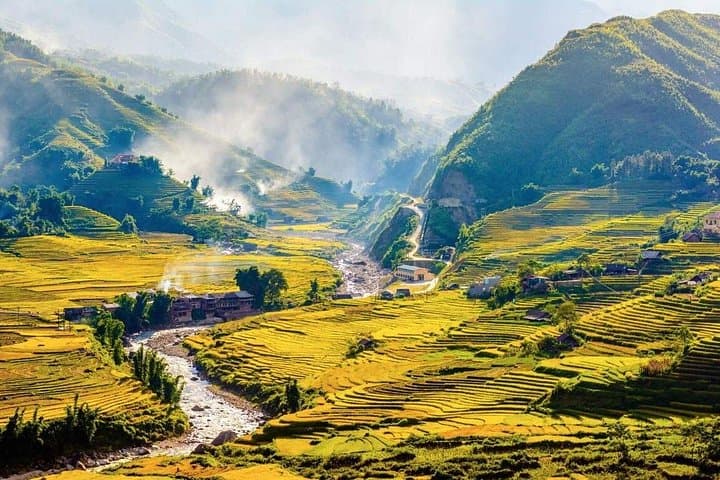
Dawn lifts like a veil over the Hoàng Liên Sơn as the sleeper bus unspools from Hanoi into a landscape of terraces and limestone ribs. By midafternoon you step onto narrow tracks that skirt rice benches, the valley's irrigation channels whispering as if daring you to keep pace. The trail follows Muong Hoa valley—first to Y Linh Ho and Lao Chai, then down to Ta Van—each village framed by tiered fields and smoke from kitchen stoves.
Dawn lifts like a veil over the Hoàng Liên Sơn as the sleeper bus unspools from Hanoi into a landscape of terraces and limestone ribs. By midafternoon you step onto narrow tracks that skirt rice benches, the valley's irrigation channels whispering as if daring you to keep pace. The trail follows Muong Hoa valley—first to Y Linh Ho and Lao Chai, then down to Ta Van—each village framed by tiered fields and smoke from kitchen stoves.
This route runs in the shadow of Fan Si Pan, the highest peak in Indochina, and through farmland carved over generations by Hmong, Red Dao and Tay communities. The terraces are both cultural record and working geology—stone banks holding soil on steep slopes, shaped by monsoon rhythms. Villages keep strong textile traditions and communal homestays that offer a direct view into daily life: weaving, local markets and shared meals.
Practical guide: expect roughly 9 km walking on day one (undulating dirt paths and stone steps) and about 8 km on day two. Elevation around Sapa sits near 1,600 m; trails are moderate with short, sometimes steep pitches—suitable for anyone in reasonable shape. Pack a waterproof layer, sturdy soles, cash for village purchases, and modest clothing to respect local customs. Hydrate and start early to avoid afternoon cloud and rain. The homestay night is basic but warm: bring a small towel and spare socks.
This two-day loop is ideal for travelers wanting tactile contact with highland life—minimal logistics, maximum cultural exchange.