THE ADVENTURE COLLECTIVE® · Independent discovery and booking for outdoor travel

Walk the Muong Hoa valley with a Black Hmong guide, crossing rivers, rice terraces and small villages. Expect a six‑hour cultural trek that ends with lunch in a Hmong family home and insights into traditional weaving.
Walk the Muong Hoa valley with a Black Hmong guide, crossing rivers, rice terraces and small villages. Expect a six‑hour cultural trek that ends with lunch in a Hmong family home and insights into traditional weaving.
Mist lifts off the Muong Hoa valley as you step from Sapa’s quieter streets onto a soil-sweet path. A local Black Hmong tracker leads the way—compact, sure-footed—pointing out a vantage that frames Fansipan’s serrated silhouette. The trail drops and rises through stepped rice terraces, threaded by clear streams and wooden bridges where laundry hangs like flags.
Verified experiences and guided adventures in the surrounding area.
Operated by DN Tour · Sapa, Lao Cai
Mist lifts off the Muong Hoa valley as you step from Sapa’s quieter streets onto a soil-sweet path. A local Black Hmong tracker leads the way—compact, sure-footed—pointing out a vantage that frames Fansipan’s serrated silhouette. The trail drops and rises through stepped rice terraces, threaded by clear streams and wooden bridges where laundry hangs like flags.
The walk passes Y Linh Ho and Lao Chai Sang, villages shaped by centuries of upland wet-rice agriculture and Hmong weaving traditions. Geologically, the valley is a carved amphitheater of metamorphic ridges and alluvial floors—soil that holds millennia of terrace walls and generations of labor. Culturally, visits are personal: lunch in a family home, demonstrations of indigo dyeing and hand-stitched garments, and conversations about seasonal planting and market cycles.
Expect singletrack that alternates between firm dirt, stone steps and muddy sections after rain; total distance covers several kilometers over roughly six hours with repeated short climbs and descents. The guide’s inclusion of a return by motorbike or car makes for a flexible day.
Practical tips: wear grippy, broken-in hiking shoes, carry 1–2 liters of water, and pack a lightweight rain layer—weather shifts quickly at elevation. Start early to avoid midday haze and give yourself time for unplanned stops—photographs, market stalls, or a quiet tea with a host family.
This is a cultural trekking day—moderate in effort, rich in local contact and landscape variety, suited to travelers who want honest encounters with hill-tribe life and the region’s sweeping mountain rice-scapes.
The experience is about 5–6 hours total with mostly moderate terrain—short steep sections and uneven steps; suitable for most active travelers.
Yes, lunch is included and is served in a local Hmong family home in Lao Chai Sang, offering traditional dishes and a cultural exchange.
A local guide is recommended—track knowledge, village introductions and language skills (English/German) are included with this host.
The cancellation policy requires 24-hour notice for a full refund; weather is variable so bring layers and waterproofs as the guide will adapt the plan if needed.
DN Tour operates guided outdoor trips and adventures with an emphasis on safety, stewardship, and memorable experiences.
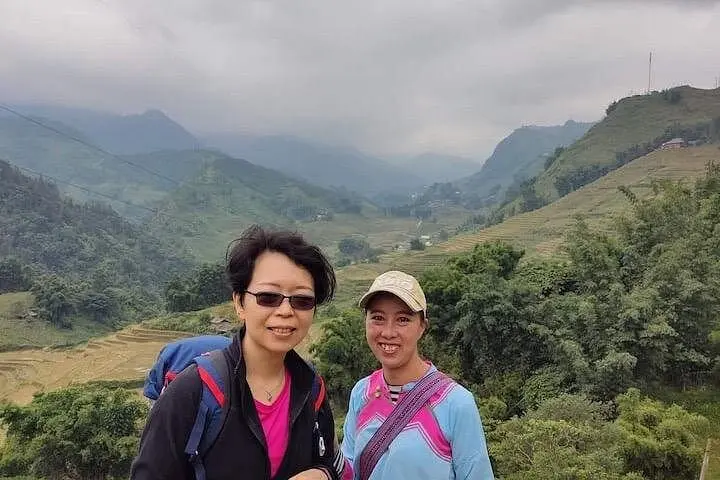

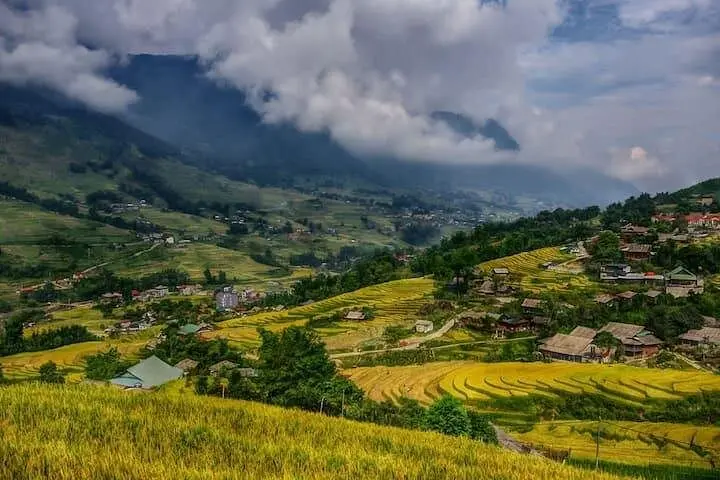
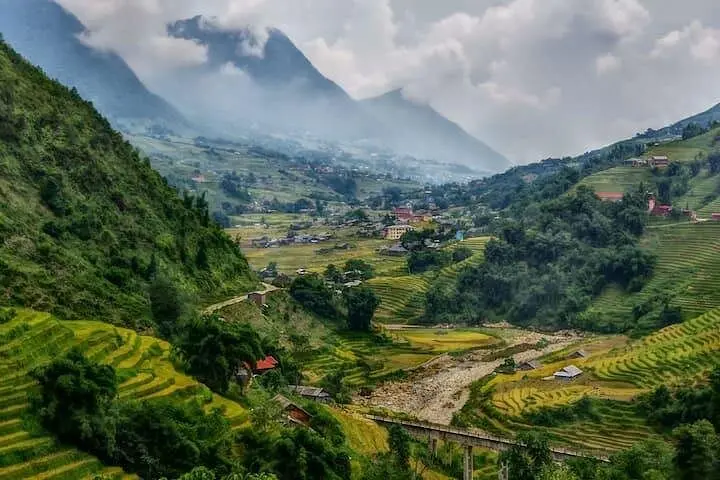
Mist lifts off the Muong Hoa valley as you step from Sapa’s quieter streets onto a soil-sweet path. A local Black Hmong tracker leads the way—compact, sure-footed—pointing out a vantage that frames Fansipan’s serrated silhouette. The trail drops and rises through stepped rice terraces, threaded by clear streams and wooden bridges where laundry hangs like flags.
Mist lifts off the Muong Hoa valley as you step from Sapa’s quieter streets onto a soil-sweet path. A local Black Hmong tracker leads the way—compact, sure-footed—pointing out a vantage that frames Fansipan’s serrated silhouette. The trail drops and rises through stepped rice terraces, threaded by clear streams and wooden bridges where laundry hangs like flags.
The walk passes Y Linh Ho and Lao Chai Sang, villages shaped by centuries of upland wet-rice agriculture and Hmong weaving traditions. Geologically, the valley is a carved amphitheater of metamorphic ridges and alluvial floors—soil that holds millennia of terrace walls and generations of labor. Culturally, visits are personal: lunch in a family home, demonstrations of indigo dyeing and hand-stitched garments, and conversations about seasonal planting and market cycles.
Expect singletrack that alternates between firm dirt, stone steps and muddy sections after rain; total distance covers several kilometers over roughly six hours with repeated short climbs and descents. The guide’s inclusion of a return by motorbike or car makes for a flexible day.
Practical tips: wear grippy, broken-in hiking shoes, carry 1–2 liters of water, and pack a lightweight rain layer—weather shifts quickly at elevation. Start early to avoid midday haze and give yourself time for unplanned stops—photographs, market stalls, or a quiet tea with a host family.
This is a cultural trekking day—moderate in effort, rich in local contact and landscape variety, suited to travelers who want honest encounters with hill-tribe life and the region’s sweeping mountain rice-scapes.