THE ADVENTURE COLLECTIVE® · Independent discovery and booking for outdoor travel

Walk from Sapa into the Muong Hoa valley with a local guide, crossing terraced rice paddies and visiting Hmong, Giay and Dao villages. This full-day hike mixes cultural insight, geology and steady trail time—ideal for travelers who want a hands-on introduction to northern Vietnam’s highland life.
Walk from Sapa into the Muong Hoa valley with a local guide, crossing terraced rice paddies and visiting Hmong, Giay and Dao villages. This full-day hike mixes cultural insight, geology and steady trail time—ideal for travelers who want a hands-on introduction to northern Vietnam’s highland life.
Mist lifts from the Muong Hoa valley as you step off the minibus in Sapa, the town’s cool air sharpening the scent of wet earth and rice straw. A local guide falls into step beside you, and the track slips away from town into carved terraces where thin footpaths thread between paddies. The trail drops and winds—stone steps, soft mud, and narrow bridges—so the mountains feel like a living map, pushing you forward with each bend.
Verified experiences and guided adventures in the surrounding area.
Operated by Lisa Vietnam Travel · Sapa, Lao Cai
Mist lifts from the Muong Hoa valley as you step off the minibus in Sapa, the town’s cool air sharpening the scent of wet earth and rice straw. A local guide falls into step beside you, and the track slips away from town into carved terraces where thin footpaths thread between paddies. The trail drops and winds—stone steps, soft mud, and narrow bridges—so the mountains feel like a living map, pushing you forward with each bend.
This one-day trek follows traditional paths cut into the Hoang Lien Son foothills, taking in Y Linh Ho, Lao Chai and Ta Van. Geologically the range is young and rugged; terraced fields sit on steep slopes of slate and schist. Culturally, the trail crosses villages of Hmong, Giay and Dao peoples—expect woven textiles, house stilt architecture and seasonal rice work that has shaped the valley for generations. Local guides point out communal houses, simple legends and how water is moved from spring to paddy.
Practically, the route covers roughly 10–12 km with an overall descent from Sapa (≈1,600 m) into the valley (≈1,000–1,200 m) and scattered short climbs—plan on 6–7 hours including lunch in Ta Van. Footwear with grip, a light rain shell and layered insulation are essential: weather swings fast here. Bring water, small cash for village purchases and respect private land—ask before photographing. The guide will manage navigation and entrance fees; your job is to walk, watch, and listen as the valley keeps its stories moving underfoot.
The loop covers about 10–12 km with a net descent into Muong Hoa valley and short climbs—expect 6–7 hours at a moderate pace.
Yes, a local guide and entrance fees noted in the itinerary are included; lunch and bottled water are provided as listed.
Lunch is served in Ta Van village; small shops and basic toilet facilities are available in main villages but carry hand sanitizer and small change.
The tour is marketed as suitable for general fitness levels, but it’s not recommended for travelers with spinal or serious cardiovascular conditions; young children should be able to walk several hours.
Lisa Vietnam Travel operates guided outdoor trips and adventures with an emphasis on safety, stewardship, and memorable experiences.
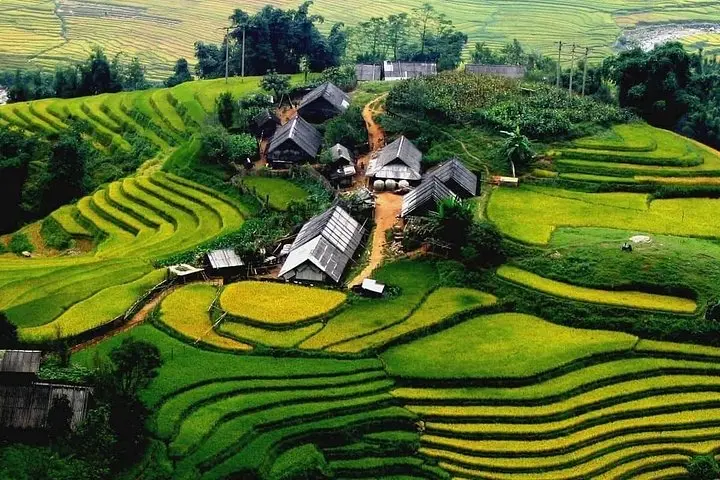
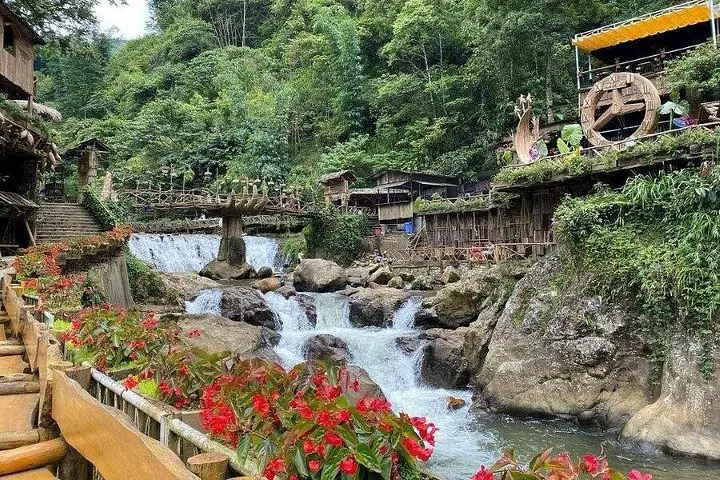

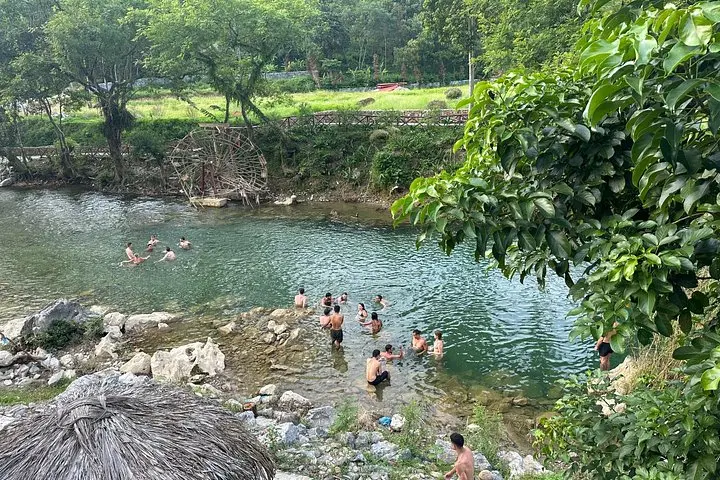
Mist lifts from the Muong Hoa valley as you step off the minibus in Sapa, the town’s cool air sharpening the scent of wet earth and rice straw. A local guide falls into step beside you, and the track slips away from town into carved terraces where thin footpaths thread between paddies. The trail drops and winds—stone steps, soft mud, and narrow bridges—so the mountains feel like a living map, pushing you forward with each bend.
Mist lifts from the Muong Hoa valley as you step off the minibus in Sapa, the town’s cool air sharpening the scent of wet earth and rice straw. A local guide falls into step beside you, and the track slips away from town into carved terraces where thin footpaths thread between paddies. The trail drops and winds—stone steps, soft mud, and narrow bridges—so the mountains feel like a living map, pushing you forward with each bend.
This one-day trek follows traditional paths cut into the Hoang Lien Son foothills, taking in Y Linh Ho, Lao Chai and Ta Van. Geologically the range is young and rugged; terraced fields sit on steep slopes of slate and schist. Culturally, the trail crosses villages of Hmong, Giay and Dao peoples—expect woven textiles, house stilt architecture and seasonal rice work that has shaped the valley for generations. Local guides point out communal houses, simple legends and how water is moved from spring to paddy.
Practically, the route covers roughly 10–12 km with an overall descent from Sapa (≈1,600 m) into the valley (≈1,000–1,200 m) and scattered short climbs—plan on 6–7 hours including lunch in Ta Van. Footwear with grip, a light rain shell and layered insulation are essential: weather swings fast here. Bring water, small cash for village purchases and respect private land—ask before photographing. The guide will manage navigation and entrance fees; your job is to walk, watch, and listen as the valley keeps its stories moving underfoot.