THE ADVENTURE COLLECTIVE® · Independent discovery and booking for outdoor travel

Ride the overnight train from Hanoi, then walk down through Muong Hoa’s terraces to Black H’mong and Dzay villages. This private 2‑day route mixes French colonial relics, waterfalls, and panoramic views of Fansipan with village homestays and local meals.
Ride the overnight train from Hanoi, then walk down through Muong Hoa’s terraces to Black H’mong and Dzay villages. This private 2‑day route mixes French colonial relics, waterfalls, and panoramic views of Fansipan with village homestays and local meals.
You step off the soft‑sleeper train into a cool, thin air that immediately sharpens the senses—Sapa’s ridgelines slice the horizon and terraced rice fields cascade down toward the Muong Hoa valley. The first day drops you from town into the warm, cultivated slope of Y Linh Ho and Lao Chai, where Black H’mong and Dzay families tend fields and lacquered buffalo graze as trails thread through rice benches.
Verified experiences and guided adventures in the surrounding area.
Operated by Vietnam Blue Tours · Sapa, Lao Cai Province
You step off the soft‑sleeper train into a cool, thin air that immediately sharpens the senses—Sapa’s ridgelines slice the horizon and terraced rice fields cascade down toward the Muong Hoa valley. The first day drops you from town into the warm, cultivated slope of Y Linh Ho and Lao Chai, where Black H’mong and Dzay families tend fields and lacquered buffalo graze as trails thread through rice benches.
The highland sits around 1,600 m above sea level, carved from uplifted limestone and metamorphic bedrock; seasonal streams have traced the terraces visitors now follow. Cat Cat village bears a visible layer of colonial history: the French-era hydroelectric ruins and footbridges beside a small waterfall are reminders of early infrastructure in the valley.
Culturally, expect strong minority traditions—textiles, wooden stilt houses, and locally prepared meals that punctuate long walking days. The trek is practical in layout: 8–10 km of guided walking across the Muong Hoa valley on day two and short descents into village cores on day three, returning to Sapa by jeep and a late-afternoon luxury bus to Hanoi.
Plan for changeable weather, uneven stone steps, and frequent short climbs; a moderate fitness level is advised. Carry cash for family‑run homestays, bring rain layers and sturdy footwear, and allow quiet time at viewpoints to absorb the scale of Fansipan, the “roof of Indochina,” to the southwest. Respect household etiquette in villages and pack out waste—Sapa’s beauty depends on low‑impact visits.
The sleeper train takes about 8 hours; boarding typically begins late evening with arrival early morning in Lao Cai.
No special permit is required for the public village trails on standard guided routes, but respect private farmland and follow your guide’s directions.
Moderate fitness: expect sustained walking on uneven, sometimes steep terrain for several hours each day, with short vehicle transfers.
Tap water is not recommended; use bottled or treated water for drinking and bring a reusable bottle if you plan to refill from vetted sources.
Vietnam Blue Tours operates guided outdoor trips and adventures with an emphasis on safety, stewardship, and memorable experiences.
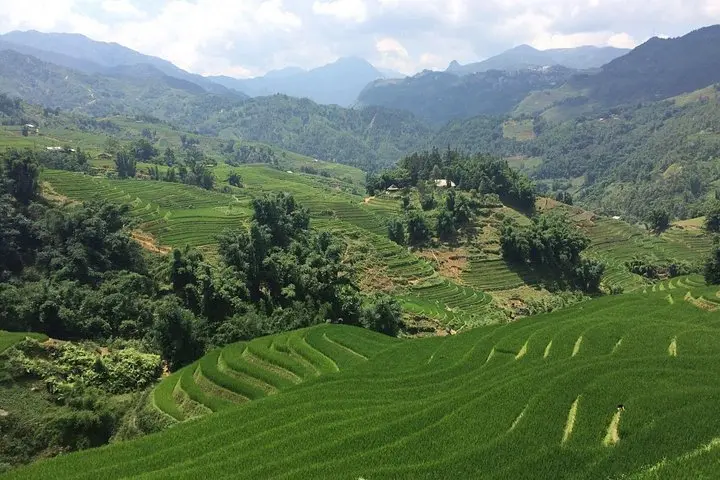
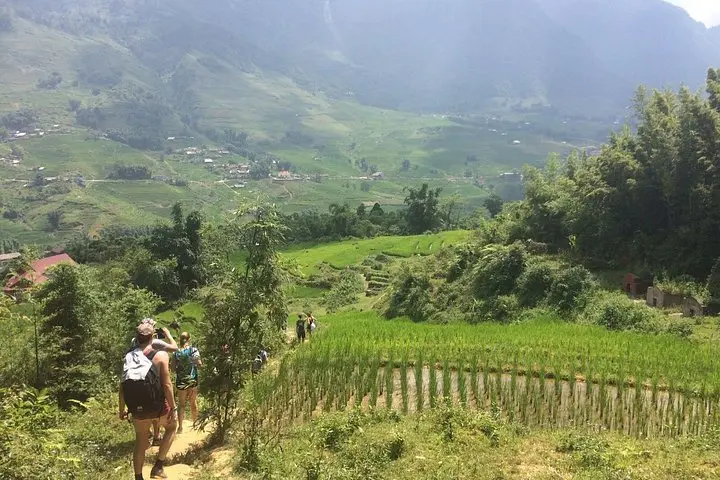
You step off the soft‑sleeper train into a cool, thin air that immediately sharpens the senses—Sapa’s ridgelines slice the horizon and terraced rice fields cascade down toward the Muong Hoa valley. The first day drops you from town into the warm, cultivated slope of Y Linh Ho and Lao Chai, where Black H’mong and Dzay families tend fields and lacquered buffalo graze as trails thread through rice benches.
You step off the soft‑sleeper train into a cool, thin air that immediately sharpens the senses—Sapa’s ridgelines slice the horizon and terraced rice fields cascade down toward the Muong Hoa valley. The first day drops you from town into the warm, cultivated slope of Y Linh Ho and Lao Chai, where Black H’mong and Dzay families tend fields and lacquered buffalo graze as trails thread through rice benches.
The highland sits around 1,600 m above sea level, carved from uplifted limestone and metamorphic bedrock; seasonal streams have traced the terraces visitors now follow. Cat Cat village bears a visible layer of colonial history: the French-era hydroelectric ruins and footbridges beside a small waterfall are reminders of early infrastructure in the valley.
Culturally, expect strong minority traditions—textiles, wooden stilt houses, and locally prepared meals that punctuate long walking days. The trek is practical in layout: 8–10 km of guided walking across the Muong Hoa valley on day two and short descents into village cores on day three, returning to Sapa by jeep and a late-afternoon luxury bus to Hanoi.
Plan for changeable weather, uneven stone steps, and frequent short climbs; a moderate fitness level is advised. Carry cash for family‑run homestays, bring rain layers and sturdy footwear, and allow quiet time at viewpoints to absorb the scale of Fansipan, the “roof of Indochina,” to the southwest. Respect household etiquette in villages and pack out waste—Sapa’s beauty depends on low‑impact visits.