THE ADVENTURE COLLECTIVE® · Independent discovery and booking for outdoor travel

Two days of highland trekking from Hanoi to Sapa: sleeper-bus transfer, Cat Cat waterfall, Muong Hoa Valley’s terraced rice fields and an overnight homestay with ethnic village visits. Practical route notes and what to expect on the trails.
Two days of highland trekking from Hanoi to Sapa: sleeper-bus transfer, Cat Cat waterfall, Muong Hoa Valley’s terraced rice fields and an overnight homestay with ethnic village visits. Practical route notes and what to expect on the trails.
A damp morning in Sapa often starts with mist clinging to the terraces and the first call of village roosters. You arrive by overnight sleeper bus from Hanoi, step down into crisp mountain air at ~1,500 m, and trade traffic noise for narrow trails that thread between rice paddies and wooden stilt houses. The first afternoon drops into Cat Cat Village where a French-built hydro plant and a seasonal waterfall punctuate the walk; the next day you follow the Muong Hoa Valley on a roughly 12 km trek through Y Linh Ho, Lao Chai and Ta Van, finishing with a homestay among the Dzay people.
Verified experiences and guided adventures in the surrounding area.
Operated by Vietnam Daily Tourist · Sapa, Lao Cai Province
A damp morning in Sapa often starts with mist clinging to the terraces and the first call of village roosters. You arrive by overnight sleeper bus from Hanoi, step down into crisp mountain air at ~1,500 m, and trade traffic noise for narrow trails that thread between rice paddies and wooden stilt houses. The first afternoon drops into Cat Cat Village where a French-built hydro plant and a seasonal waterfall punctuate the walk; the next day you follow the Muong Hoa Valley on a roughly 12 km trek through Y Linh Ho, Lao Chai and Ta Van, finishing with a homestay among the Dzay people.
Geology here is folded metamorphic rock carved by monsoon-fed streams; terraces are human-made contours that read like a slow, agricultural map. Sapa’s history mixes French colonial infrastructure with long-settled ethnic minority cultures — Black H’Mong, Red Dao and Dzay — whose traditional dress and craftwork remain visible on trails and at village performances. Local customs include the Red Dao medicinal leaf baths used to ease aching legs after a day on steep paths.
Practical guidance: expect muddy, uneven trails and frequent short, steep sections; carry a daypack with rain protection, water and small change for village purchases. Trekking distances are moderate (up to 12 km on day two) and can take 3–5 hours depending on pace and stops. Aim to walk early in the day to avoid afternoon showers, respect private yards and always ask before photographing people. Whether you sleep in a simple homestay or a Sapa hotel, layers and a quiet curiosity will make the trip both comfortable and culturally rewarding.
Day one includes a short 2–3 km walk around Cat Cat Village; day two covers about 10–12 km through Muong Hoa Valley with several stops and about 3–5 hours of walking.
Homestays are simple family cottages offering local meals and shared facilities; hotel options in Sapa town are available for those preferring private rooms and en-suite bathrooms.
Yes—operators state vegetarian, vegan, gluten-free and other dietary needs can be arranged with advance notice.
Late September to October (harvest season) displays golden terraces; early summer shows bright greens, while winter has more muted tones and clearer skies.
Vietnam Daily Tourist operates guided outdoor trips and adventures with an emphasis on safety, stewardship, and memorable experiences.
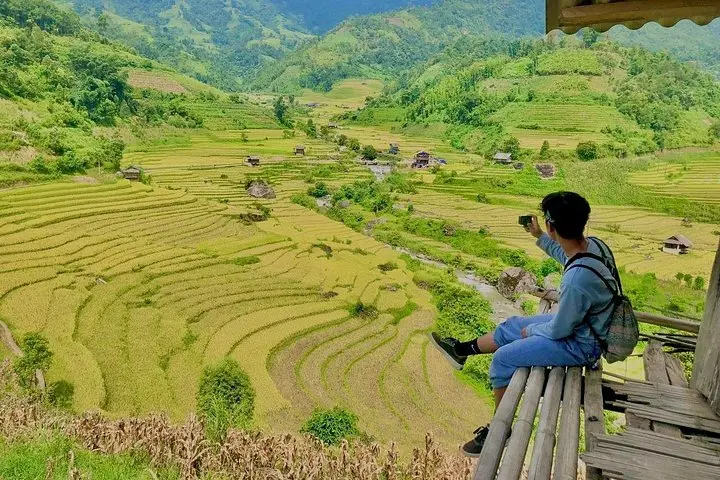



A damp morning in Sapa often starts with mist clinging to the terraces and the first call of village roosters. You arrive by overnight sleeper bus from Hanoi, step down into crisp mountain air at ~1,500 m, and trade traffic noise for narrow trails that thread between rice paddies and wooden stilt houses. The first afternoon drops into Cat Cat Village where a French-built hydro plant and a seasonal waterfall punctuate the walk; the next day you follow the Muong Hoa Valley on a roughly 12 km trek through Y Linh Ho, Lao Chai and Ta Van, finishing with a homestay among the Dzay people.
A damp morning in Sapa often starts with mist clinging to the terraces and the first call of village roosters. You arrive by overnight sleeper bus from Hanoi, step down into crisp mountain air at ~1,500 m, and trade traffic noise for narrow trails that thread between rice paddies and wooden stilt houses. The first afternoon drops into Cat Cat Village where a French-built hydro plant and a seasonal waterfall punctuate the walk; the next day you follow the Muong Hoa Valley on a roughly 12 km trek through Y Linh Ho, Lao Chai and Ta Van, finishing with a homestay among the Dzay people.
Geology here is folded metamorphic rock carved by monsoon-fed streams; terraces are human-made contours that read like a slow, agricultural map. Sapa’s history mixes French colonial infrastructure with long-settled ethnic minority cultures — Black H’Mong, Red Dao and Dzay — whose traditional dress and craftwork remain visible on trails and at village performances. Local customs include the Red Dao medicinal leaf baths used to ease aching legs after a day on steep paths.
Practical guidance: expect muddy, uneven trails and frequent short, steep sections; carry a daypack with rain protection, water and small change for village purchases. Trekking distances are moderate (up to 12 km on day two) and can take 3–5 hours depending on pace and stops. Aim to walk early in the day to avoid afternoon showers, respect private yards and always ask before photographing people. Whether you sleep in a simple homestay or a Sapa hotel, layers and a quiet curiosity will make the trip both comfortable and culturally rewarding.