THE ADVENTURE COLLECTIVE® · Independent discovery and booking for outdoor travel

Walk terraces carved into steep slopes, sleep in a stilt homestay and meet Black H’mong, Giay and Red Dao communities on a compact 2‑day trek through Muong Hoa Valley. Practical, culture‑forward hiking with close-up valley vistas.
Walk terraces carved into steep slopes, sleep in a stilt homestay and meet Black H’mong, Giay and Red Dao communities on a compact 2‑day trek through Muong Hoa Valley. Practical, culture‑forward hiking with close-up valley vistas.
Dawn light slides across layered rice terraces and the Muong Hoa River threads the valley like a cool vein. On this two‑day trek you step off the road and into the daily life of Black H’mong, Giay and Red Dao villages — narrow dirt paths, terraced paddies cut into the hillside, and the steady clack of wooden looms in stilt houses.
Verified experiences and guided adventures in the surrounding area.
Operated by Fantasea Tours · Sapa, Lào Cai Province
Dawn light slides across layered rice terraces and the Muong Hoa River threads the valley like a cool vein. On this two‑day trek you step off the road and into the daily life of Black H’mong, Giay and Red Dao villages — narrow dirt paths, terraced paddies cut into the hillside, and the steady clack of wooden looms in stilt houses.
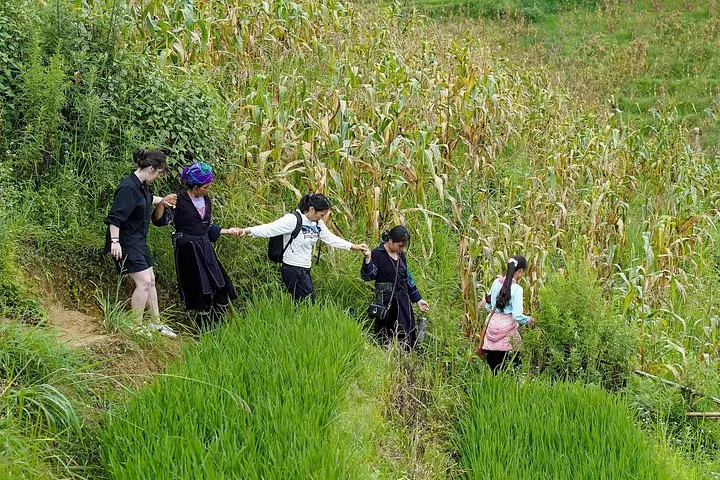
The region’s human story is recent in landscape terms: terraces here have been reworked for roughly a century, while ethnic groups have shaped local customs and dress for generations. Geologically, Sapa sits on weathered limestone and shale slopes high above the lowlands; frequent mist and steep contours create sudden vistas and slick trail sections. Culturally, expect clear markers of identity — indigo-dyed clothing of the Black H’mong, the red embroidery of the Red Dao, and the quieter, rice‑focused life of the Giay.
Practically: the trek covers moderate daily distances over uneven village paths, crossing small streams and bamboo groves en route to Y Linh Ho, Lao Chai, Ta Van and Giang Ta Chai. Accommodations are a traditional stilt homestay with shared facilities and home‑cooked meals; bring modest cash and a readiness to remove shoes indoors.
Plan for changeable weather, start early to avoid afternoon rain, and hike light — the best photos come from patient observation rather than speed. Respect household routines, ask before photographing people, and leave no trace: small actions preserve both the views and the communities that maintain them.
The itinerary includes two lunches, one dinner and one breakfast, typically home‑cooked dishes prepared by your homestay hosts.
Trails are mainly village tracks and farm paths with some short climbs; a moderate fitness level is recommended but no technical climbing skills are required.
Basic toilet facilities are provided at the homestay and some village stops; expect squat or western options and limited hot water in rural houses.
Yes — round‑trip air‑conditioned bus transport between Hanoi and Sapa is included in the tour price.
Fantasea Tours operates guided outdoor trips and adventures with an emphasis on safety, stewardship, and memorable experiences.
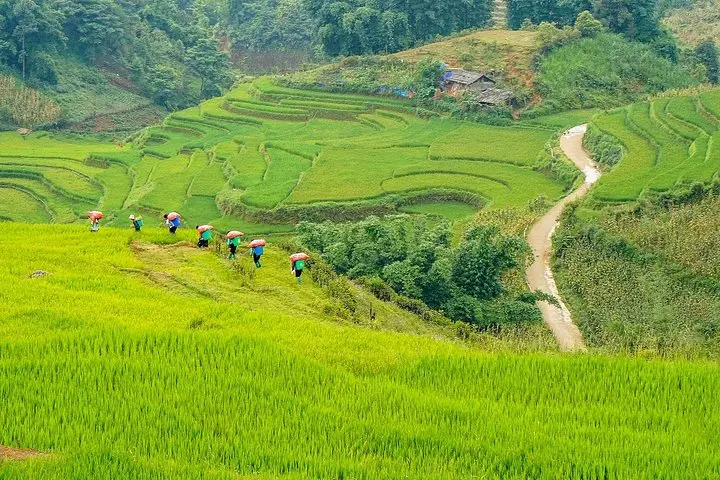
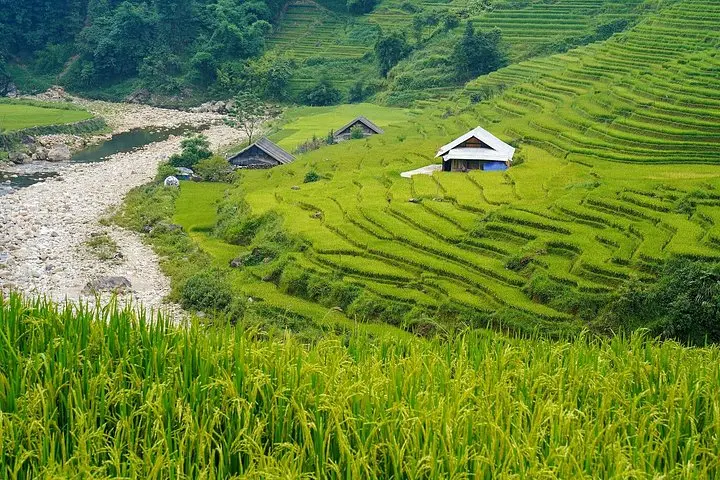
Dawn light slides across layered rice terraces and the Muong Hoa River threads the valley like a cool vein. On this two‑day trek you step off the road and into the daily life of Black H’mong, Giay and Red Dao villages — narrow dirt paths, terraced paddies cut into the hillside, and the steady clack of wooden looms in stilt houses.
Dawn light slides across layered rice terraces and the Muong Hoa River threads the valley like a cool vein. On this two‑day trek you step off the road and into the daily life of Black H’mong, Giay and Red Dao villages — narrow dirt paths, terraced paddies cut into the hillside, and the steady clack of wooden looms in stilt houses.
The region’s human story is recent in landscape terms: terraces here have been reworked for roughly a century, while ethnic groups have shaped local customs and dress for generations. Geologically, Sapa sits on weathered limestone and shale slopes high above the lowlands; frequent mist and steep contours create sudden vistas and slick trail sections. Culturally, expect clear markers of identity — indigo-dyed clothing of the Black H’mong, the red embroidery of the Red Dao, and the quieter, rice‑focused life of the Giay.
Practically: the trek covers moderate daily distances over uneven village paths, crossing small streams and bamboo groves en route to Y Linh Ho, Lao Chai, Ta Van and Giang Ta Chai. Accommodations are a traditional stilt homestay with shared facilities and home‑cooked meals; bring modest cash and a readiness to remove shoes indoors.
Plan for changeable weather, start early to avoid afternoon rain, and hike light — the best photos come from patient observation rather than speed. Respect household routines, ask before photographing people, and leave no trace: small actions preserve both the views and the communities that maintain them.