THE ADVENTURE COLLECTIVE® · Independent discovery and booking for outdoor travel

Two days of highland trails, rice terraces and a homestay in Ta Van—this compact trek from Hanoi threads Muong Hoa Valley’s villages and waterfall walks with easy-to-manage mileage. Great for travelers who want cultural contact plus scenic hiking without technical climbing.
Two days of highland trails, rice terraces and a homestay in Ta Van—this compact trek from Hanoi threads Muong Hoa Valley’s villages and waterfall walks with easy-to-manage mileage. Great for travelers who want cultural contact plus scenic hiking without technical climbing.
A gray-green dawn spills over the Hoang Lien range as the limousine car eases into Sapa’s high valley. You step out into thin air and terraces that slope like layered stairs toward the Muong Hoa River. The trail follows the river’s voice, passing carved rice paddies, bamboo groves and low stone houses where smoke curls from kitchens and children wave.
Verified experiences and guided adventures in the surrounding area.
Operated by Crossing Vietnam Tour · Sapa, Lao Cai
A gray-green dawn spills over the Hoang Lien range as the limousine car eases into Sapa’s high valley. You step out into thin air and terraces that slope like layered stairs toward the Muong Hoa River. The trail follows the river’s voice, passing carved rice paddies, bamboo groves and low stone houses where smoke curls from kitchens and children wave.
This route sits on the southern flank of the Hoang Lien Son massif, a young mountain chain of uplifted limestone and metamorphic bedrock that traps clouds and creates Sapa’s frequent mist. The valley has been farmed for generations by H’mong, Zay and Dao communities; homestays in Ta Van offer direct cultural exchange with families who maintain traditional weaving, farming calendars and tonal languages.
Expect steady, walkable paths: terraced fields, packed-earth village lanes and some compacted mountain trail. Highlights include rice terraces near Lao Chai, the wooden footbridges into Ta Van, and a short waterfall walk beyond the village. The homestay night is simple—shared meals, a low-slung mattress and local conversation.
Practical guidance: bring layered insulation for cold mornings at 1,500–1,600 m, waterproof footwear and local currency for small purchases. Acclimatize slowly after the overnight Hanoi transfer; fog can reduce visibility mid-winter. Plan for 4–6 hours of walking spread over the trek days with several short stops for photography and cultural visits. Travel light, keep water and snacks accessible, and respect private property and local customs when entering village homes.
The walking is moderate—mostly village paths and terraced fields with occasional slopes; no technical climbing is required.
Homestays in Ta Van are family-run, basic but clean, with shared facilities and home-cooked meals that introduce local cuisine.
No special permits are required for the standard Muong Hoa valley routes included on this itinerary.
The tour includes a round-trip limousine transfer from Hanoi, though exact pickup locations and times are provided at booking.
Crossing Vietnam Tour operates guided outdoor trips and adventures with an emphasis on safety, stewardship, and memorable experiences.
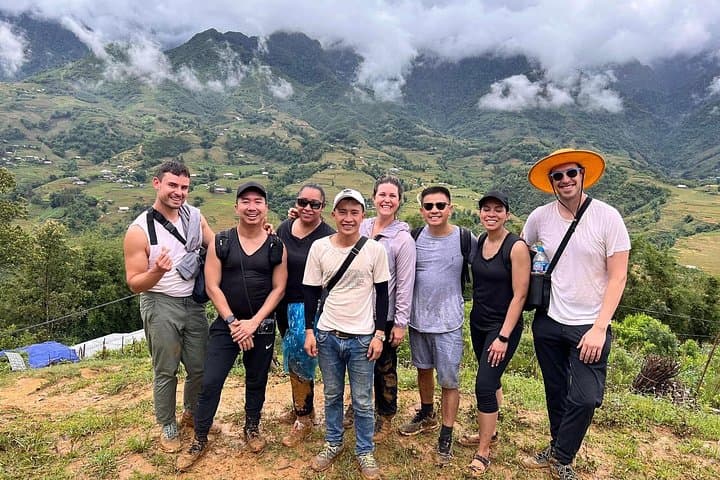


A gray-green dawn spills over the Hoang Lien range as the limousine car eases into Sapa’s high valley. You step out into thin air and terraces that slope like layered stairs toward the Muong Hoa River. The trail follows the river’s voice, passing carved rice paddies, bamboo groves and low stone houses where smoke curls from kitchens and children wave.
A gray-green dawn spills over the Hoang Lien range as the limousine car eases into Sapa’s high valley. You step out into thin air and terraces that slope like layered stairs toward the Muong Hoa River. The trail follows the river’s voice, passing carved rice paddies, bamboo groves and low stone houses where smoke curls from kitchens and children wave.
This route sits on the southern flank of the Hoang Lien Son massif, a young mountain chain of uplifted limestone and metamorphic bedrock that traps clouds and creates Sapa’s frequent mist. The valley has been farmed for generations by H’mong, Zay and Dao communities; homestays in Ta Van offer direct cultural exchange with families who maintain traditional weaving, farming calendars and tonal languages.
Expect steady, walkable paths: terraced fields, packed-earth village lanes and some compacted mountain trail. Highlights include rice terraces near Lao Chai, the wooden footbridges into Ta Van, and a short waterfall walk beyond the village. The homestay night is simple—shared meals, a low-slung mattress and local conversation.
Practical guidance: bring layered insulation for cold mornings at 1,500–1,600 m, waterproof footwear and local currency for small purchases. Acclimatize slowly after the overnight Hanoi transfer; fog can reduce visibility mid-winter. Plan for 4–6 hours of walking spread over the trek days with several short stops for photography and cultural visits. Travel light, keep water and snacks accessible, and respect private property and local customs when entering village homes.