THE ADVENTURE COLLECTIVE® · Independent discovery and booking for outdoor travel

Step from the gravel of Jökulsárlón into a blue cathedral carved inside Vatnajökull. This extra-small-group tour combines a short 4x4 ride, a guided glacier walk and 30–45 minutes inside a sapphire ice cave for a concentrated, unforgettable Arctic experience.
Step from the gravel of Jökulsárlón into a blue cathedral carved inside Vatnajökull. This extra-small-group tour combines a short 4x4 ride, a guided glacier walk and 30–45 minutes inside a sapphire ice cave for a concentrated, unforgettable Arctic experience.
You meet on the black-sand shoulder of the Jökulsárlón parking lot as a low, cold light spreads across the lagoon. A white or red Land Rover Defender idles, its diesel growl swallowed by a landscape that feels older than maps. The truck rides rough up gravel roads for about 35 minutes, and when the glacier first rises into view it does so like a living thing—blue veins under compacted white, edges serrated by melt and wind.
Verified experiences and guided adventures in the surrounding area.
Operated by Melrakki Adventures · Jökulsárlón, Austurland
You meet on the black-sand shoulder of the Jökulsárlón parking lot as a low, cold light spreads across the lagoon. A white or red Land Rover Defender idles, its diesel growl swallowed by a landscape that feels older than maps. The truck rides rough up gravel roads for about 35 minutes, and when the glacier first rises into view it does so like a living thing—blue veins under compacted white, edges serrated by melt and wind.
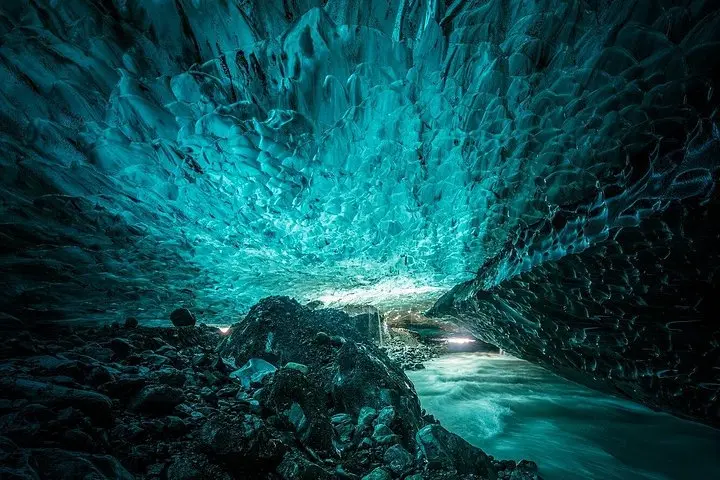
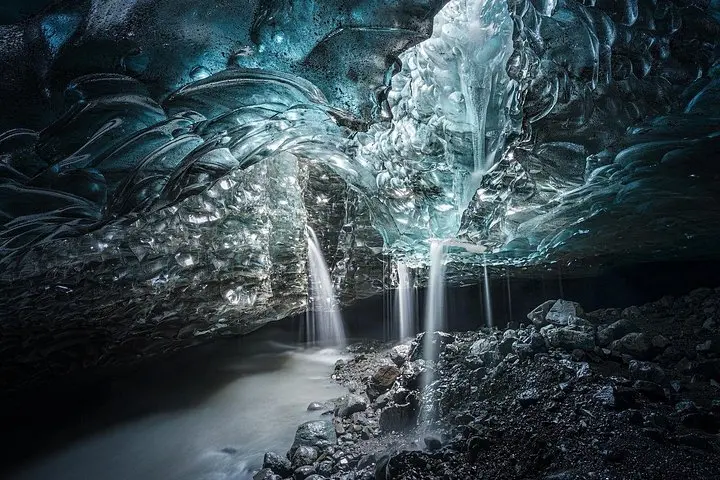
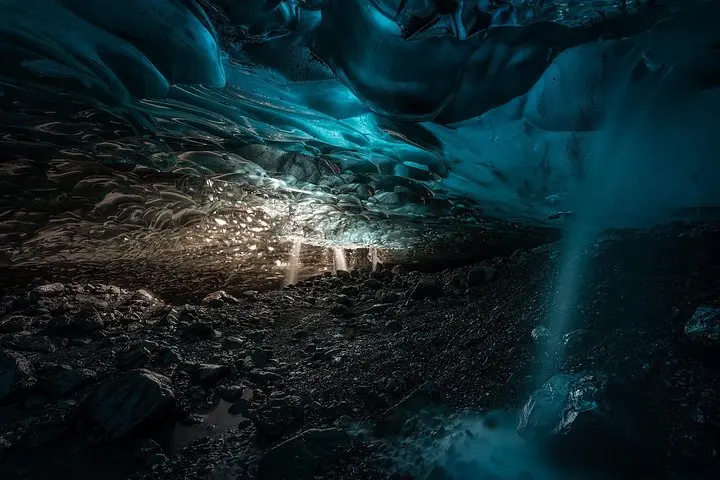
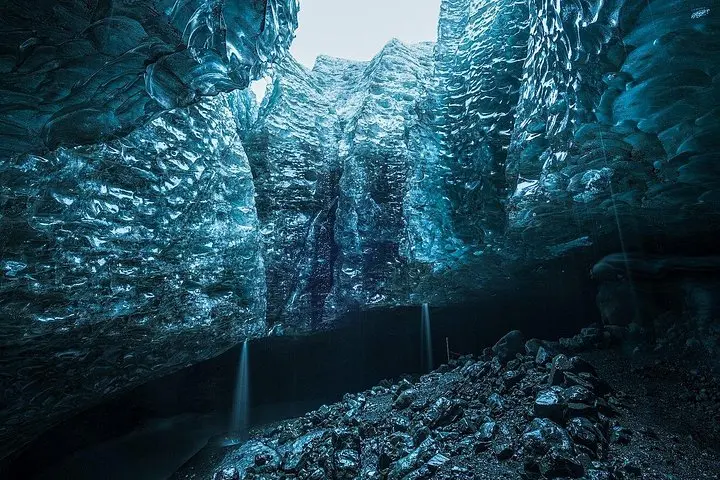
On the edge of Vatnajökull you trade the truck for crampons. A 20-minute walk takes you from moraine to ice, then 45 minutes of guided glacier travel brings you to the cave entrance: a throat in the glacier that opens into intense cobalt. Inside, light filters through ice like stained glass; columns and archways sculpted by flowing meltwater and centuries of pressure. Guides give time—typically 30–45 minutes—to photograph, examine air pockets and stratified layers, and to learn the slow geology that makes the cave blue.
Vatnajökull is Europe’s largest ice cap and a record of Iceland’s climate in motion. The caves themselves are transient; they appear where melt channels carve weaknesses and often collapse or shift seasonally. Historically, the area around Jökulsárlón was farmed and traversed by coastal communities, but the lagoon only opened in the 20th century as the glacier receded. That movement is visible here—ice calves off into the lagoon and seals come to investigate the floating fragments.
Practicalities are concrete: this is a guided, small-group trip (max ~8), so expect close instruction and hands-on crampon practice. The tour requires a moderate level of fitness and is not recommended for pregnant guests or people with serious spinal or heart problems. Dress in layers, bring waterproof outerwear, and secure, ankle-supporting boots—crampons are provided along with helmets and safety gear. Guides will navigate crevasses and teach safe footing; always follow their direction.
Timing matters: mornings and late afternoons reduce glare and crowds; cloudy days can deepen the blue light inside the cave. Photography is rewarded—use a wide-angle lens, steady yourself on low shutter speeds, and brace for contrast between bright ice and shadow.
For anyone who wants the visceral feel of ice—crunching underfoot, light refracting through ancient compressed snow—this short, concentrated experience on Vatnajökull delivers. It’s an elemental encounter with a changing landscape: beautiful, fragile, and governed by the slow, persistent work of melt and motion.
From the glacier parking you’ll walk about 20 minutes to the ice edge, then roughly 45 minutes across the glacier to the cave entrance—times vary with conditions.
Yes; all required safety equipment including crampons, helmets and basic glacier gear are provided by the operator.
This is an extra-small group tour with a maximum of approximately 8 guests for more attentive guiding.
Ice caves are seasonal and dynamic; guides choose the safest accessible cave, but exact features and crowding can vary and cannot be guaranteed.
Children can join if they meet the operator’s age and physical requirements—check with the supplier when booking as policies vary.
The operator may cancel for unsafe conditions; full refunds are typically available if the tour is canceled at least 24 hours before departure.
Melrakki Adventures operates guided outdoor trips and adventures with an emphasis on safety, stewardship, and memorable experiences.
You meet on the black-sand shoulder of the Jökulsárlón parking lot as a low, cold light spreads across the lagoon. A white or red Land Rover Defender idles, its diesel growl swallowed by a landscape that feels older than maps. The truck rides rough up gravel roads for about 35 minutes, and when the glacier first rises into view it does so like a living thing—blue veins under compacted white, edges serrated by melt and wind.
You meet on the black-sand shoulder of the Jökulsárlón parking lot as a low, cold light spreads across the lagoon. A white or red Land Rover Defender idles, its diesel growl swallowed by a landscape that feels older than maps. The truck rides rough up gravel roads for about 35 minutes, and when the glacier first rises into view it does so like a living thing—blue veins under compacted white, edges serrated by melt and wind.
On the edge of Vatnajökull you trade the truck for crampons. A 20-minute walk takes you from moraine to ice, then 45 minutes of guided glacier travel brings you to the cave entrance: a throat in the glacier that opens into intense cobalt. Inside, light filters through ice like stained glass; columns and archways sculpted by flowing meltwater and centuries of pressure. Guides give time—typically 30–45 minutes—to photograph, examine air pockets and stratified layers, and to learn the slow geology that makes the cave blue.
Vatnajökull is Europe’s largest ice cap and a record of Iceland’s climate in motion. The caves themselves are transient; they appear where melt channels carve weaknesses and often collapse or shift seasonally. Historically, the area around Jökulsárlón was farmed and traversed by coastal communities, but the lagoon only opened in the 20th century as the glacier receded. That movement is visible here—ice calves off into the lagoon and seals come to investigate the floating fragments.
Practicalities are concrete: this is a guided, small-group trip (max ~8), so expect close instruction and hands-on crampon practice. The tour requires a moderate level of fitness and is not recommended for pregnant guests or people with serious spinal or heart problems. Dress in layers, bring waterproof outerwear, and secure, ankle-supporting boots—crampons are provided along with helmets and safety gear. Guides will navigate crevasses and teach safe footing; always follow their direction.
Timing matters: mornings and late afternoons reduce glare and crowds; cloudy days can deepen the blue light inside the cave. Photography is rewarded—use a wide-angle lens, steady yourself on low shutter speeds, and brace for contrast between bright ice and shadow.
For anyone who wants the visceral feel of ice—crunching underfoot, light refracting through ancient compressed snow—this short, concentrated experience on Vatnajökull delivers. It’s an elemental encounter with a changing landscape: beautiful, fragile, and governed by the slow, persistent work of melt and motion.