THE ADVENTURE COLLECTIVE® · Independent discovery and booking for outdoor travel

Spend a full day tracing the arc of ancient Egyptian life: Memphis’s ruined colossi, Saqqara’s Step Pyramid, then the sensory maze of Khan El Khalili. This private tour pairs an Egyptologist guide with an air‑conditioned car and included lunch for a smooth, historically rich day.
Spend a full day tracing the arc of ancient Egyptian life: Memphis’s ruined colossi, Saqqara’s Step Pyramid, then the sensory maze of Khan El Khalili. This private tour pairs an Egyptologist guide with an air‑conditioned car and included lunch for a smooth, historically rich day.
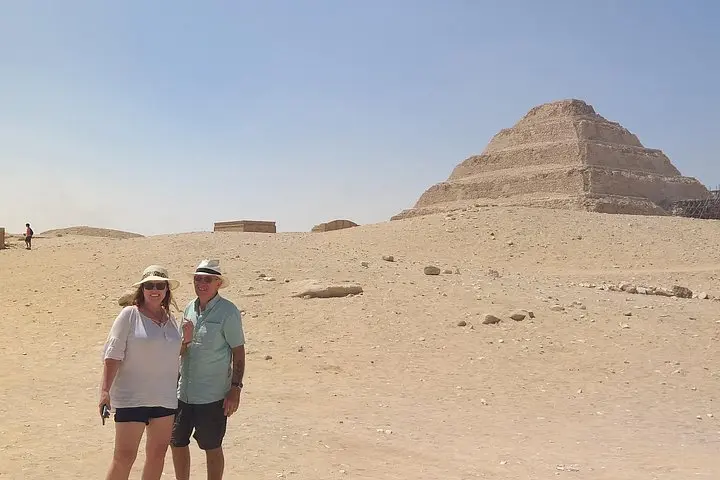
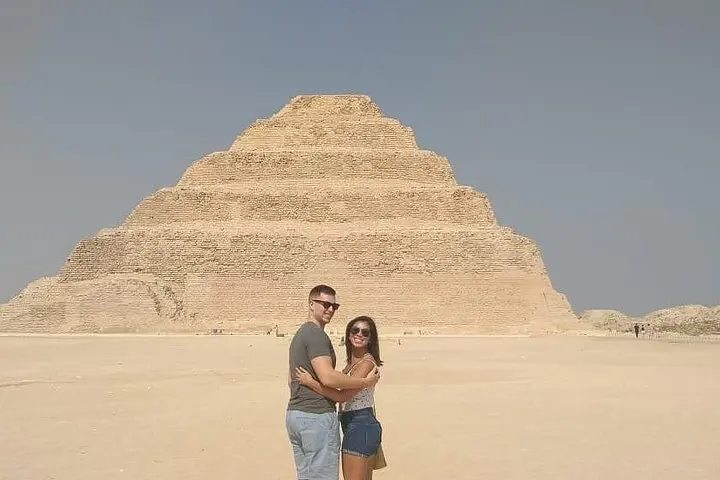
Morning light slices across the low desert as your private car leaves Cairo’s denser streets and the Nile’s ribbon thins into open sky. By the time you reach Saqqara, the Step Pyramid rises from a pale limestone plain like an ancient idea given shape; wind pushes dust across the tomb-lined landscape and the guide’s voice pulls history into the present.
Verified experiences and guided adventures in the surrounding area.
Operated by Misk Tours · Cairo, Cairo
Morning light slices across the low desert as your private car leaves Cairo’s denser streets and the Nile’s ribbon thins into open sky. By the time you reach Saqqara, the Step Pyramid rises from a pale limestone plain like an ancient idea given shape; wind pushes dust across the tomb-lined landscape and the guide’s voice pulls history into the present.
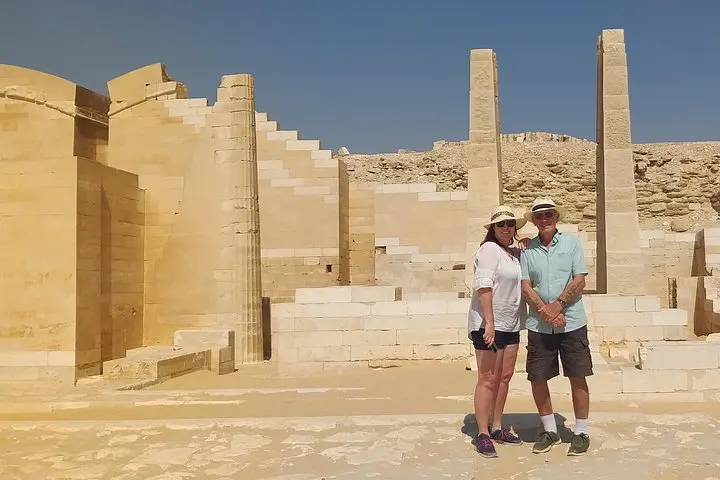
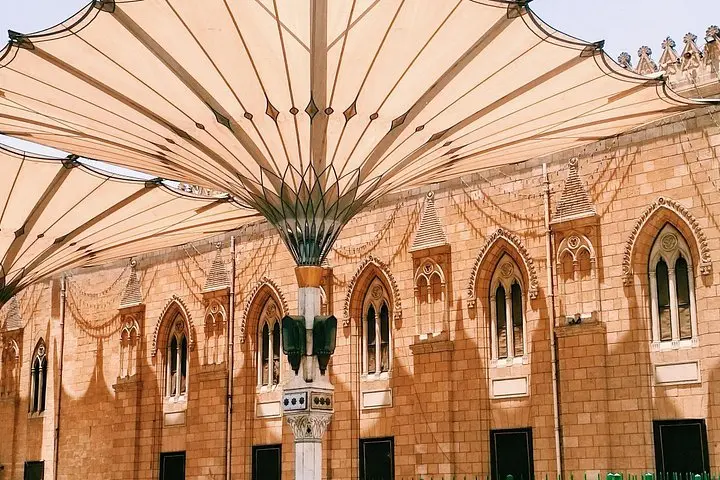
The itinerary threads three distinct chapters: Memphis, Egypt’s Old Kingdom capital where alabaster fragments and the broken colossus of Ramses II hint at a lost urban core; Saqqara, home to Djoser’s Step Pyramid — often called the world’s first large-scale stone construction — carved from local limestone and revealing early experiments in monumental building; and Khan El Khalili, Cairo’s labyrinthine bazaar founded in the 14th century, where spices, metalwork and coffeehouses still steer daily life.
Geology matters here: the necropolis sits on sedimentary limestone and marl capped by desert sand, which preserved tombs and gave ancient builders quarry material nearby. Culture is tactile — bargaining language, the clink of teacups, and an Egyptologist’s precise stories that animate the stones.
Practical guide: the tour runs roughly 6–8 hours with modest walking on uneven surfaces and some stairs at museum displays. Dress for sun, bring layered protection for dusty winds, and carry small bills for souvenirs. Lunch and entrance admissions are included; start early to dodge midday heat. Move deliberately, respect ropes and signage, and let the guide map the details — this one-day loop condenses millennia into a single, steady day of discoveries.
Yes — the tour includes hotel pickup and drop-off in Cairo as part of the private transfer.
According to the itinerary, admissions to listed sites and a midday lunch are included in the booking price.
Walking is moderate and on uneven ground; you’ll cover short distances around ruins and through the bazaar but no long hikes.
The trip is advertised as suitable for all fitness levels, but some sites have steps and uneven surfaces; contact the operator if mobility assistance is required.
Misk Tours operates guided outdoor trips and adventures with an emphasis on safety, stewardship, and memorable experiences.
Morning light slices across the low desert as your private car leaves Cairo’s denser streets and the Nile’s ribbon thins into open sky. By the time you reach Saqqara, the Step Pyramid rises from a pale limestone plain like an ancient idea given shape; wind pushes dust across the tomb-lined landscape and the guide’s voice pulls history into the present.
Morning light slices across the low desert as your private car leaves Cairo’s denser streets and the Nile’s ribbon thins into open sky. By the time you reach Saqqara, the Step Pyramid rises from a pale limestone plain like an ancient idea given shape; wind pushes dust across the tomb-lined landscape and the guide’s voice pulls history into the present.
The itinerary threads three distinct chapters: Memphis, Egypt’s Old Kingdom capital where alabaster fragments and the broken colossus of Ramses II hint at a lost urban core; Saqqara, home to Djoser’s Step Pyramid — often called the world’s first large-scale stone construction — carved from local limestone and revealing early experiments in monumental building; and Khan El Khalili, Cairo’s labyrinthine bazaar founded in the 14th century, where spices, metalwork and coffeehouses still steer daily life.
Geology matters here: the necropolis sits on sedimentary limestone and marl capped by desert sand, which preserved tombs and gave ancient builders quarry material nearby. Culture is tactile — bargaining language, the clink of teacups, and an Egyptologist’s precise stories that animate the stones.
Practical guide: the tour runs roughly 6–8 hours with modest walking on uneven surfaces and some stairs at museum displays. Dress for sun, bring layered protection for dusty winds, and carry small bills for souvenirs. Lunch and entrance admissions are included; start early to dodge midday heat. Move deliberately, respect ropes and signage, and let the guide map the details — this one-day loop condenses millennia into a single, steady day of discoveries.