THE ADVENTURE COLLECTIVE® · Independent discovery and booking for outdoor travel

Cover Sarajevo’s cultural crossroads in two hours: from Sebilj fountain and Kazandžiluk to the Latin Bridge and Gazi Husrev-bey Mosque. A local guide connects architecture, history, and everyday life on a compact, walkable route.
Cover Sarajevo’s cultural crossroads in two hours: from Sebilj fountain and Kazandžiluk to the Latin Bridge and Gazi Husrev-bey Mosque. A local guide connects architecture, history, and everyday life on a compact, walkable route.
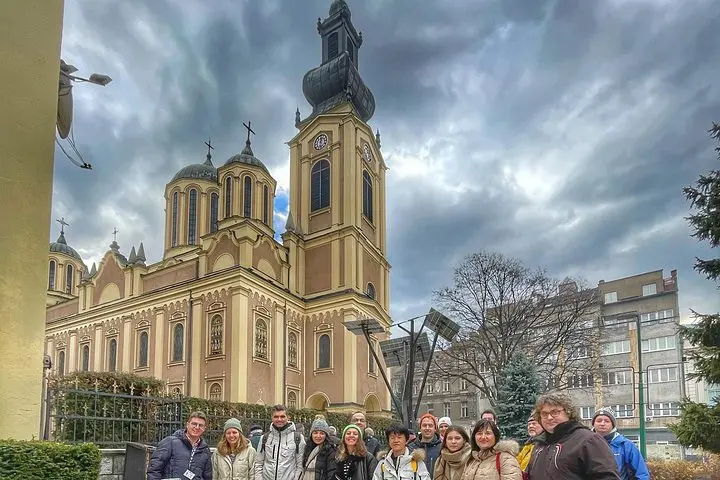
You step out under a cool Sarajevo sky and the city introduces itself in layered voices: the call of a mosque, church bells across the square, the soft clink of a coppersmith’s hammer down Kazandžiluk. The Miljacka river threads the valley and dares you toward the Latin Bridge, where a single event reshaped the 20th century.
Verified experiences and guided adventures in the surrounding area.
Operated by Meet Bosnia Travel · Sarajevo, Sarajevo Canton
You step out under a cool Sarajevo sky and the city introduces itself in layered voices: the call of a mosque, church bells across the square, the soft clink of a coppersmith’s hammer down Kazandžiluk. The Miljacka river threads the valley and dares you toward the Latin Bridge, where a single event reshaped the 20th century.
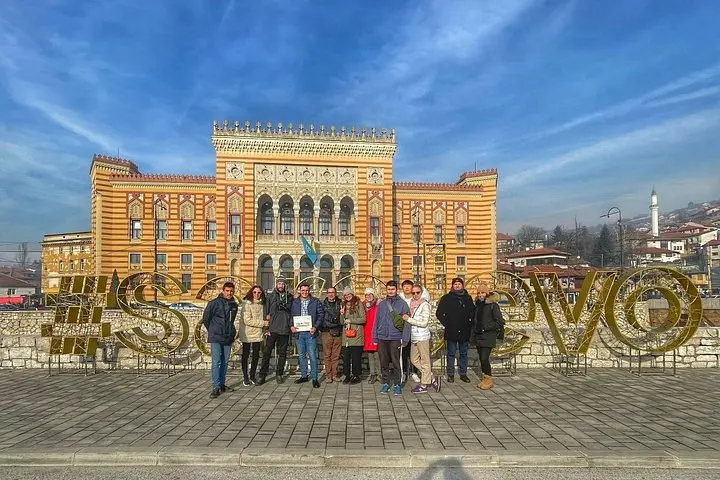
In two hours a local guide moves the past into focus. Ottoman bazaars and Austro-Hungarian façades sit shoulder to shoulder; Sebilj fountain still cools faces like a public clock for the old quarter. You’ll pass the Gazi Husrev-bey Mosque and its adjacent clock tower, the restored City Hall from the Habsburg era, and the compact Jewish Museum housed in a former synagogue. Scattered marble “Sarajevo Roses” mark wartime history with restrained gravity; the Markale market still trades in fresh produce and local life.
This is a cultural circuit as much as a walk: craftspeople in the copper street, caravanserai courtyards that once hosted traders, and stories of coexistence and conflict that shaped a city where East meets West.
Practical guidance: wear sturdy walking shoes and bring a small bottle of water; streets are mostly paved but uneven in places. Respectful dress is recommended when approaching religious sites. Tours move at a steady urban pace—arrive 10–15 minutes early at the meeting point, and plan for stairs and narrow alleys. Public transit and taxis are readily available if you want to explore longer after the tour.
The tour is listed as wheelchair accessible, but note that some streets and historic spots have uneven paving; contact the operator ahead to confirm site access.
This walking tour focuses on exterior visits and stories; museum entrances like the Jewish Museum are optional and typically not included.
Guides may be multi-lingual; check booking details for language availability or request a specific language when reserving.
Yes—infants can sit on laps and the pace is family-friendly, though narrow streets and crowds may make strollers awkward.
Meet Bosnia Travel operates guided outdoor trips and adventures with an emphasis on safety, stewardship, and memorable experiences.
You step out under a cool Sarajevo sky and the city introduces itself in layered voices: the call of a mosque, church bells across the square, the soft clink of a coppersmith’s hammer down Kazandžiluk. The Miljacka river threads the valley and dares you toward the Latin Bridge, where a single event reshaped the 20th century.
You step out under a cool Sarajevo sky and the city introduces itself in layered voices: the call of a mosque, church bells across the square, the soft clink of a coppersmith’s hammer down Kazandžiluk. The Miljacka river threads the valley and dares you toward the Latin Bridge, where a single event reshaped the 20th century.
In two hours a local guide moves the past into focus. Ottoman bazaars and Austro-Hungarian façades sit shoulder to shoulder; Sebilj fountain still cools faces like a public clock for the old quarter. You’ll pass the Gazi Husrev-bey Mosque and its adjacent clock tower, the restored City Hall from the Habsburg era, and the compact Jewish Museum housed in a former synagogue. Scattered marble “Sarajevo Roses” mark wartime history with restrained gravity; the Markale market still trades in fresh produce and local life.
This is a cultural circuit as much as a walk: craftspeople in the copper street, caravanserai courtyards that once hosted traders, and stories of coexistence and conflict that shaped a city where East meets West.
Practical guidance: wear sturdy walking shoes and bring a small bottle of water; streets are mostly paved but uneven in places. Respectful dress is recommended when approaching religious sites. Tours move at a steady urban pace—arrive 10–15 minutes early at the meeting point, and plan for stairs and narrow alleys. Public transit and taxis are readily available if you want to explore longer after the tour.