THE ADVENTURE COLLECTIVE® · Independent discovery and booking for outdoor travel

A full-day clockwise loop from Sarajevo through Herzegovina’s karst ridges, Blagaj’s Buna spring, Počitelj’s hilltop fort, and Mostar’s UNESCO Stari Most. Expect short walks, historic sites, and about 10–11 hours on the road with frequent photo stops.
A full-day clockwise loop from Sarajevo through Herzegovina’s karst ridges, Blagaj’s Buna spring, Počitelj’s hilltop fort, and Mostar’s UNESCO Stari Most. Expect short walks, historic sites, and about 10–11 hours on the road with frequent photo stops.
You step into the cool, mineral-scented breath of the Buna river at Blagaj and the water seems to dare you to follow it upstream. On this full-day loop from Sarajevo, the road carves through karst hills and olive-scrub slopes until historic towns appear—stone houses clinging to river bends, clock towers watching the valley.
Verified experiences and guided adventures in the surrounding area.
Operated by Toureedoo - Sarajevo City Tours · Mostar, Herzegovina-Neretva Canton
You step into the cool, mineral-scented breath of the Buna river at Blagaj and the water seems to dare you to follow it upstream. On this full-day loop from Sarajevo, the road carves through karst hills and olive-scrub slopes until historic towns appear—stone houses clinging to river bends, clock towers watching the valley.
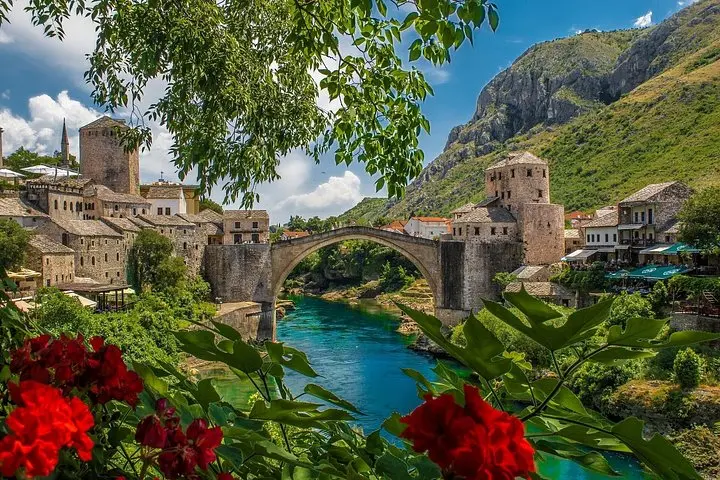
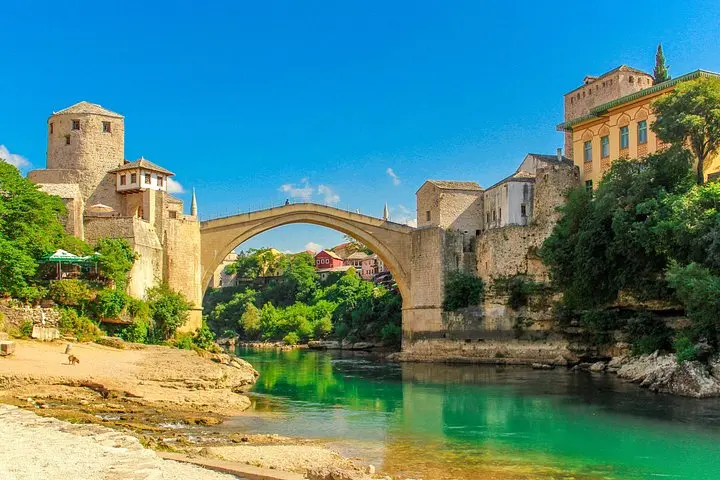
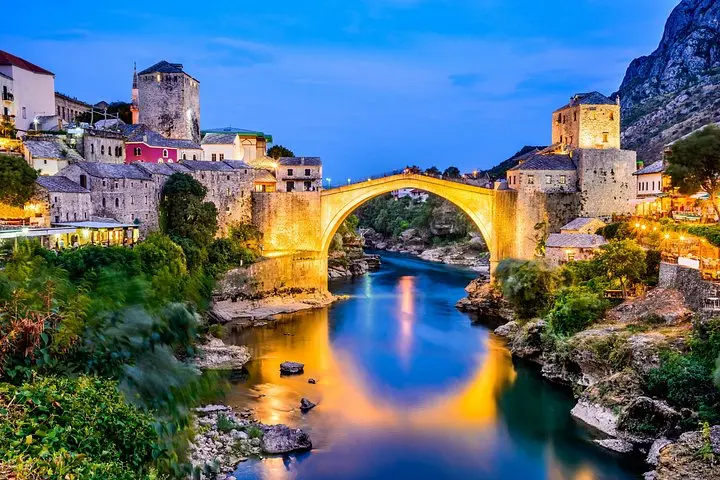
The day moves from Ottoman-era bridges and mosques to 20th-century scars: Jablanica’s WWII Neretva battle sites and the austere concrete remnants that frame its man-made lake. Mostar’s Stari Most—reconstructed after the 1990s conflict and now UNESCO-listed—anchors the itinerary, a single-arch span that channels both engineering history and local diving tradition. Geologically, the Buna spring is a classic karst resurgence, its crystal flow fed by limestone aquifers that shape much of Herzegovina’s landscape.
Culturally the region is a patchwork of Ottoman and Austro-Hungarian layers; guides usually point out Ottoman fortifications in Počitelj and tell stories of dervish orders at Blagaj Tekke. The tour’s pace is largely roadside with short walking sections—cobbled streets, staircases, and an uphill approach to Počitelj’s tower—suitable for most travelers.
Practical notes: expect about 2–2.5 hours driving each way from Sarajevo with stops totaling roughly 10–11 hours for the day. Wear grippy shoes for cobbles and a light layer for riverside breezes; bring water and sun protection. Photography windows are frequent—arrive early in Mostar for softer light—and carry some local currency for small museum or refreshment purchases.
The direct drive is about 130 km and typically takes 2–2.5 hours each way depending on traffic and stops.
Yes—this itinerary is described as suitable for all fitness levels with mostly short walks; transport is by air-conditioned vehicle.
The tour lists admissions as not included; small local fees or optional museum tickets may be payable on-site.
Logistics note wheelchair accessibility for transport and some locations, but cobbled streets and stairs at certain sites may limit full access—check with the operator when booking.
Toureedoo - Sarajevo City Tours operates guided outdoor trips and adventures with an emphasis on safety, stewardship, and memorable experiences.
You step into the cool, mineral-scented breath of the Buna river at Blagaj and the water seems to dare you to follow it upstream. On this full-day loop from Sarajevo, the road carves through karst hills and olive-scrub slopes until historic towns appear—stone houses clinging to river bends, clock towers watching the valley.
You step into the cool, mineral-scented breath of the Buna river at Blagaj and the water seems to dare you to follow it upstream. On this full-day loop from Sarajevo, the road carves through karst hills and olive-scrub slopes until historic towns appear—stone houses clinging to river bends, clock towers watching the valley.
The day moves from Ottoman-era bridges and mosques to 20th-century scars: Jablanica’s WWII Neretva battle sites and the austere concrete remnants that frame its man-made lake. Mostar’s Stari Most—reconstructed after the 1990s conflict and now UNESCO-listed—anchors the itinerary, a single-arch span that channels both engineering history and local diving tradition. Geologically, the Buna spring is a classic karst resurgence, its crystal flow fed by limestone aquifers that shape much of Herzegovina’s landscape.
Culturally the region is a patchwork of Ottoman and Austro-Hungarian layers; guides usually point out Ottoman fortifications in Počitelj and tell stories of dervish orders at Blagaj Tekke. The tour’s pace is largely roadside with short walking sections—cobbled streets, staircases, and an uphill approach to Počitelj’s tower—suitable for most travelers.
Practical notes: expect about 2–2.5 hours driving each way from Sarajevo with stops totaling roughly 10–11 hours for the day. Wear grippy shoes for cobbles and a light layer for riverside breezes; bring water and sun protection. Photography windows are frequent—arrive early in Mostar for softer light—and carry some local currency for small museum or refreshment purchases.