THE ADVENTURE COLLECTIVE® · Independent discovery and booking for outdoor travel

Walk Sarajevo’s converging worlds on a two-hour guided tour that moves from Ottoman bazaars to Austro-Hungarian landmarks and the assassination sites that reshaped history. Learn local customs, taste Bosnian coffee, and find the spots locals favor.
Walk Sarajevo’s converging worlds on a two-hour guided tour that moves from Ottoman bazaars to Austro-Hungarian landmarks and the assassination sites that reshaped history. Learn local customs, taste Bosnian coffee, and find the spots locals favor.
You step off a narrow, cobbled street and the city opens in layers: the call to prayer from a minaret, the chiming of the Orthodox bell, vendors tending ovens for burek — Sarajevo’s voices press close and teach you its history by sound.
Verified experiences and guided adventures in the surrounding area.
Operated by Toureedoo - Sarajevo City Tours · Sarajevo, Federation of Bosnia and Herzegovina
You step off a narrow, cobbled street and the city opens in layers: the call to prayer from a minaret, the chiming of the Orthodox bell, vendors tending ovens for burek — Sarajevo’s voices press close and teach you its history by sound.
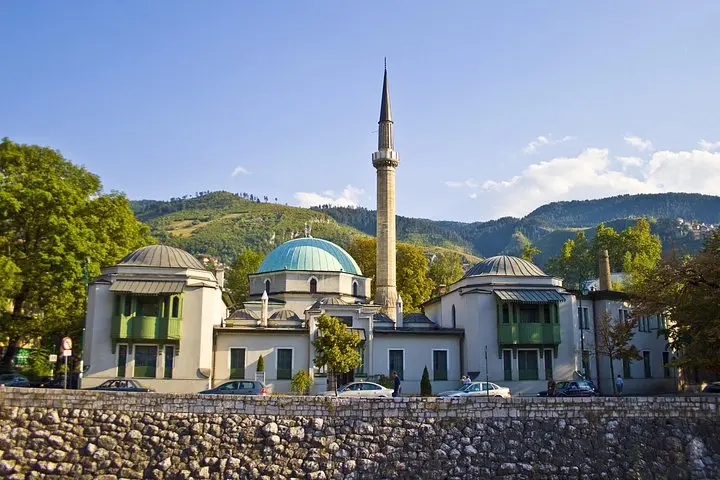
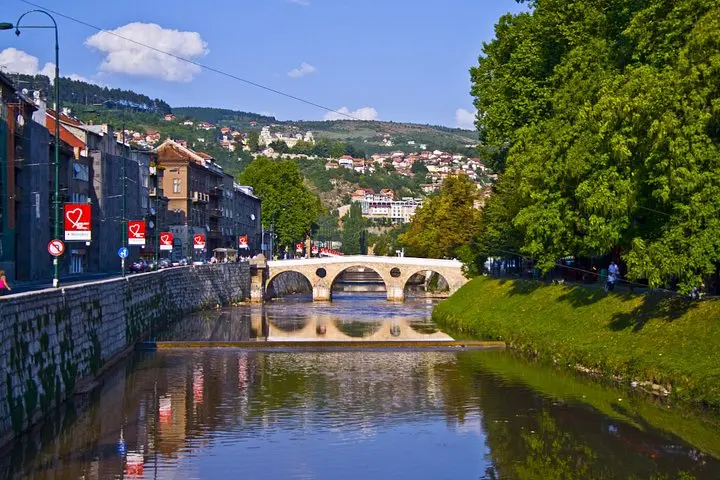
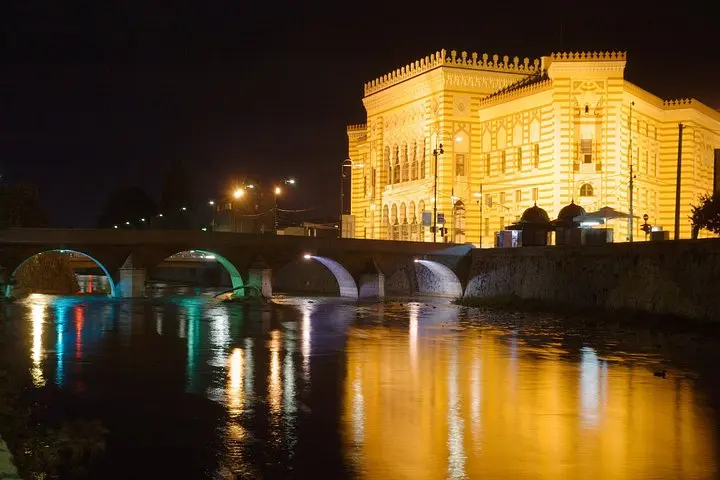
This two-hour walking tour threads Baščaršija’s Ottoman market, the Austro-Hungarian façades of the riverfront, and the sites tied to the 1914 Sarajevo assassination that helped launch World War I. Stone, wood and iron here tell stories of Ottoman traders, Austro-Hungarian builders and the multi-confessional life that earned Sarajevo its nickname as the “Jerusalem of Europe.” The Miljacka River cuts through the center like a line on a map, daring you to follow it to Latin Bridge, Vijećnica (City Hall) and the Old Clock Tower.
Expect short stretches of cobbles and gentle inclines rather than serious elevation gain; the pace is conversational and accessible. Guides typically demonstrate Bosnian coffee rituals, point out the last preserved han (inn), and recommend where to try ćevapi and burek after the tour. Modest dress is courteous at religious sites and pockets of shade make summer pauses welcome.
Practical notes: wear comfortable walking shoes, carry water, and bring small local currency for cafés and artisan stalls. The route is largely wheelchair-accessible but check ahead if you need specific mobility accommodations. Morning or late-afternoon departures avoid midday heat and give better light for photographs—this tour pairs cultural depth with an easy, grounded urban stroll.
The route is largely on paved streets and several stops are wheelchair-accessible, but contact the operator in advance to confirm specific accessibility needs.
Yes — the tour includes the Latin Bridge area where guides discuss the assassination and its historical context; some stops are viewed from outside rather than indoor exhibits.
Tipping is customary for good service; a small gratuity (5–10% or a few convertible marks/euros) is appreciated but not mandatory.
Yes, the tour is family-friendly and suitable for children; content includes historical events so parental discretion is advised for younger kids.
Toureedoo - Sarajevo City Tours operates guided outdoor trips and adventures with an emphasis on safety, stewardship, and memorable experiences.
You step off a narrow, cobbled street and the city opens in layers: the call to prayer from a minaret, the chiming of the Orthodox bell, vendors tending ovens for burek — Sarajevo’s voices press close and teach you its history by sound.
You step off a narrow, cobbled street and the city opens in layers: the call to prayer from a minaret, the chiming of the Orthodox bell, vendors tending ovens for burek — Sarajevo’s voices press close and teach you its history by sound.
This two-hour walking tour threads Baščaršija’s Ottoman market, the Austro-Hungarian façades of the riverfront, and the sites tied to the 1914 Sarajevo assassination that helped launch World War I. Stone, wood and iron here tell stories of Ottoman traders, Austro-Hungarian builders and the multi-confessional life that earned Sarajevo its nickname as the “Jerusalem of Europe.” The Miljacka River cuts through the center like a line on a map, daring you to follow it to Latin Bridge, Vijećnica (City Hall) and the Old Clock Tower.
Expect short stretches of cobbles and gentle inclines rather than serious elevation gain; the pace is conversational and accessible. Guides typically demonstrate Bosnian coffee rituals, point out the last preserved han (inn), and recommend where to try ćevapi and burek after the tour. Modest dress is courteous at religious sites and pockets of shade make summer pauses welcome.
Practical notes: wear comfortable walking shoes, carry water, and bring small local currency for cafés and artisan stalls. The route is largely wheelchair-accessible but check ahead if you need specific mobility accommodations. Morning or late-afternoon departures avoid midday heat and give better light for photographs—this tour pairs cultural depth with an easy, grounded urban stroll.