THE ADVENTURE COLLECTIVE® · Independent discovery and booking for outdoor travel

This full-day circuit from Saranda links Lekuresi Castle, the Blue Eye spring, Butrint National Park and Ksamil’s beaches. It’s a compact mix of coastal views, archaeological ruins and crystalline waters — perfect for travelers who want history and a swim in one day.
This full-day circuit from Saranda links Lekuresi Castle, the Blue Eye spring, Butrint National Park and Ksamil’s beaches. It’s a compact mix of coastal views, archaeological ruins and crystalline waters — perfect for travelers who want history and a swim in one day.
From the hill above Saranda the sea opens like a wide invitation — wind pushing across the Ionian, gulls arguing over the wake. At Lekuresi Castle you stand where watchmen once scanned for pirate sails; the town and distant Corfu lie below like a map you can walk into. The day moves from high stone to deep spring, from layered ruins to white sand, sequencing southern Albania’s best scenes.
Verified experiences and guided adventures in the surrounding area.
Operated by Joel Travel · Saranda, Vlorë County
From the hill above Saranda the sea opens like a wide invitation — wind pushing across the Ionian, gulls arguing over the wake. At Lekuresi Castle you stand where watchmen once scanned for pirate sails; the town and distant Corfu lie below like a map you can walk into. The day moves from high stone to deep spring, from layered ruins to white sand, sequencing southern Albania’s best scenes.
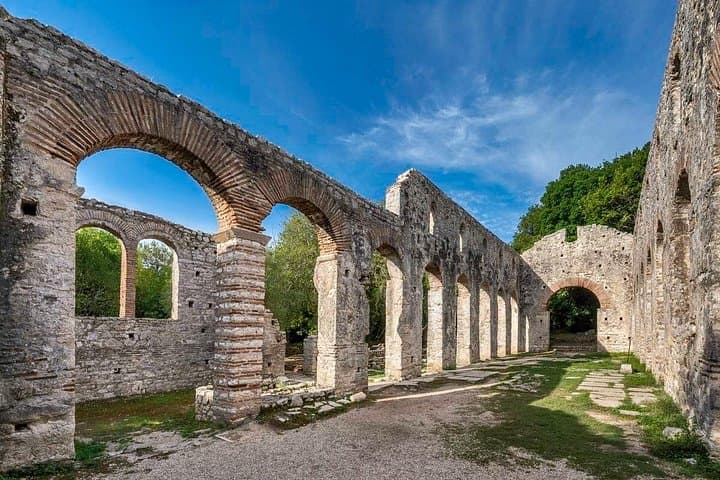
This route threads history and geology: Lekuresi’s 16th-century fortifications, the karst-fed brilliance of Syri i Kaltër (the Blue Eye) with its startling cobalt pool, and Butrint National Park where Greek, Roman, Byzantine and Venetian traces crowd a lagoon-side archaeological site. Ksamil’s small islands are composed of recent marine sediments and shell sands, and the whole coastline reflects tectonic activity that has folded mountains and opened bays over millennia.
Local culture is present in small ways — seafood served simply on the beach, guides who tell Ottoman and Venetian stories, and fishermen launching skiffs that still follow old lines. Conservation is visible: swimming is restricted at the Blue Eye to protect its aquifer, and Butrint’s protected status balances tourism with archaeology.
Practical guidance: the tour runs about six hours with moderate walking over uneven surfaces and short boardwalks. Bring sturdy shoes for ruins, a swimsuit for Ksamil, sun protection, and a light layer for coastal breezes. Expect paved transfer between stops, short hikes at each site, and chances to buy fresh seafood or refreshments in Ksamil. Timing your visit for morning or late afternoon helps avoid peak heat and improves light for photography.
Yes — entrance fees are included with the tour, though confirm at booking as policies sometimes change.
No — swimming is prohibited at the Blue Eye to protect the fragile spring and groundwater.
You’ll typically have about 45–60 minutes of free time to swim, walk the beach, or eat at a seaside restaurant.
Yes — the tour includes air-conditioned transport and a professional local guide for the full-day itinerary.
Joel Travel operates guided outdoor trips and adventures with an emphasis on safety, stewardship, and memorable experiences.
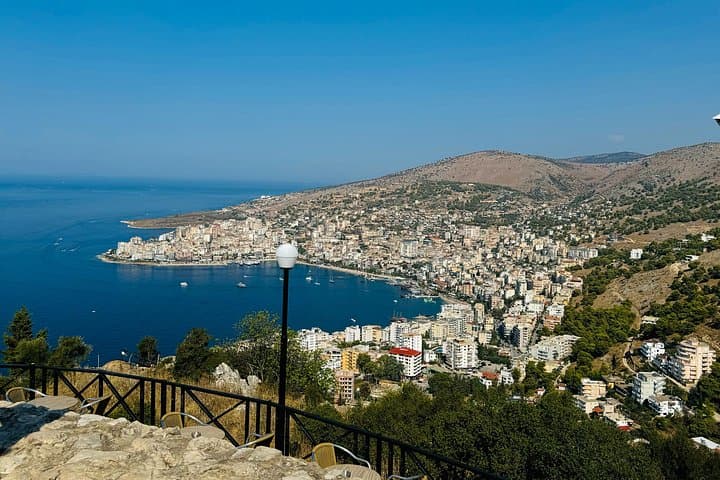
From the hill above Saranda the sea opens like a wide invitation — wind pushing across the Ionian, gulls arguing over the wake. At Lekuresi Castle you stand where watchmen once scanned for pirate sails; the town and distant Corfu lie below like a map you can walk into. The day moves from high stone to deep spring, from layered ruins to white sand, sequencing southern Albania’s best scenes.
From the hill above Saranda the sea opens like a wide invitation — wind pushing across the Ionian, gulls arguing over the wake. At Lekuresi Castle you stand where watchmen once scanned for pirate sails; the town and distant Corfu lie below like a map you can walk into. The day moves from high stone to deep spring, from layered ruins to white sand, sequencing southern Albania’s best scenes.
This route threads history and geology: Lekuresi’s 16th-century fortifications, the karst-fed brilliance of Syri i Kaltër (the Blue Eye) with its startling cobalt pool, and Butrint National Park where Greek, Roman, Byzantine and Venetian traces crowd a lagoon-side archaeological site. Ksamil’s small islands are composed of recent marine sediments and shell sands, and the whole coastline reflects tectonic activity that has folded mountains and opened bays over millennia.
Local culture is present in small ways — seafood served simply on the beach, guides who tell Ottoman and Venetian stories, and fishermen launching skiffs that still follow old lines. Conservation is visible: swimming is restricted at the Blue Eye to protect its aquifer, and Butrint’s protected status balances tourism with archaeology.
Practical guidance: the tour runs about six hours with moderate walking over uneven surfaces and short boardwalks. Bring sturdy shoes for ruins, a swimsuit for Ksamil, sun protection, and a light layer for coastal breezes. Expect paved transfer between stops, short hikes at each site, and chances to buy fresh seafood or refreshments in Ksamil. Timing your visit for morning or late afternoon helps avoid peak heat and improves light for photography.