THE ADVENTURE COLLECTIVE® · Independent discovery and booking for outdoor travel

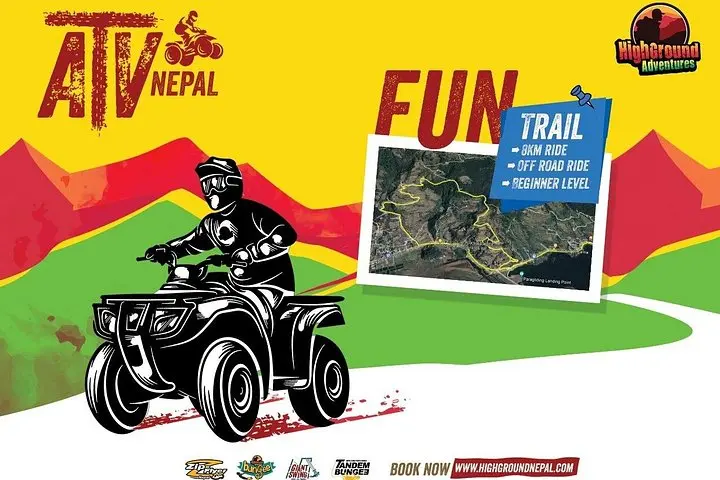
Throttle up from Pokhara Lakeside and climb to Sarangkot on an intermediate 10 km ATV route that rewards riders with sweeping views of Fewa Lake and the Annapurna foothills. Training is provided, and the two-hour trip includes scenic photo stops and a lakeside lunch.
Throttle up from Pokhara Lakeside and climb to Sarangkot on an intermediate 10 km ATV route that rewards riders with sweeping views of Fewa Lake and the Annapurna foothills. Training is provided, and the two-hour trip includes scenic photo stops and a lakeside lunch.
The engine rumbles beside Fewa Lake as morning light slices across the water. You push off from Pokhara’s lakeside and the town slips behind—rice terraces and forested 4WD tracks folding up toward Sarangkot. The trail climbs roughly 10 km and gains to about 4,500 ft, trading lake reflections for open ridgelines where the Annapurna and Dhaulagiri ranges puncture the sky.
Verified experiences and guided adventures in the surrounding area.
Operated by ZipFlyer Nepal · Pokhara, Gandaki Province
The engine rumbles beside Fewa Lake as morning light slices across the water. You push off from Pokhara’s lakeside and the town slips behind—rice terraces and forested 4WD tracks folding up toward Sarangkot. The trail climbs roughly 10 km and gains to about 4,500 ft, trading lake reflections for open ridgelines where the Annapurna and Dhaulagiri ranges puncture the sky.
This ridge is part of the Lesser Himalaya—folded, weathered foothills carved by monsoon rains and ancient tectonic lift. Sarangkot itself has long been a local vantage point for sunrise and aircraft-spotting; today guides weave cultural notes about Gurung and Tamang communities into the ride, pointing out traditional hill farms and stone walls.
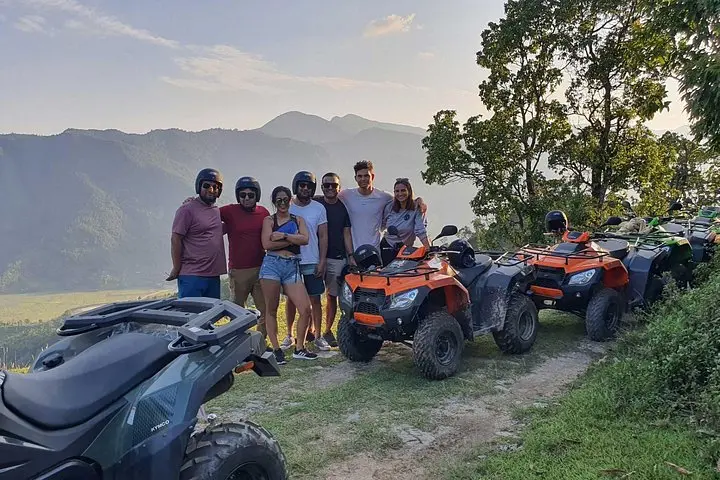
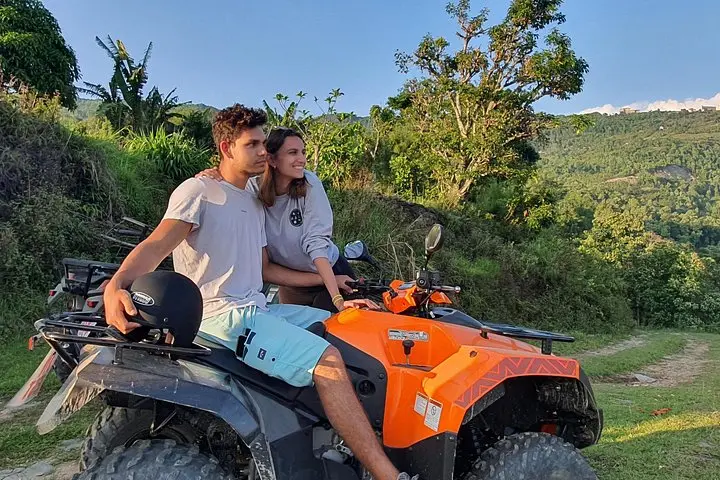
Expect a mix of packed dirt, loose gravel, and occasional muddy ruts on forested stretches. The experience is sensory: dust rising with each throttle, a cool hill breeze urging you onward, sunlight tipping the peaks. You’ll stop at a framed viewpoint for photos and a cooked lunch while guides share local stories.
Practically: no prior ATV experience is required—training is provided and a valid driver’s license is needed. The two-hour window covers orientation, the climb, photo stops and a short meal; fitness should be moderate. Best times are early morning for cooler temperatures and clearer air, or late afternoon for softer light—avoid heavy monsoon downpours when tracks become treacherous. Bring layered clothing, sturdy closed-toe shoes, sun protection and enough water; follow guide instructions and stay on designated tracks to minimize erosion. This is an active, motorized way to access viewpoints few visitors reach on foot.
No—basic handling and safety training are provided at the start; guides lead the group and adjust pace for comfort.
Yes, participants must present a valid driver’s license to ride an ATV in Nepal.
Moderate—you’ll be standing frequently on the footrests and walking short distances; basic mobility and no serious back/heart conditions are recommended.
Full refund if you cancel at least 24 hours before departure; tours may be canceled by the operator for bad weather or insufficient travelers.
ZipFlyer Nepal operates guided outdoor trips and adventures with an emphasis on safety, stewardship, and memorable experiences.
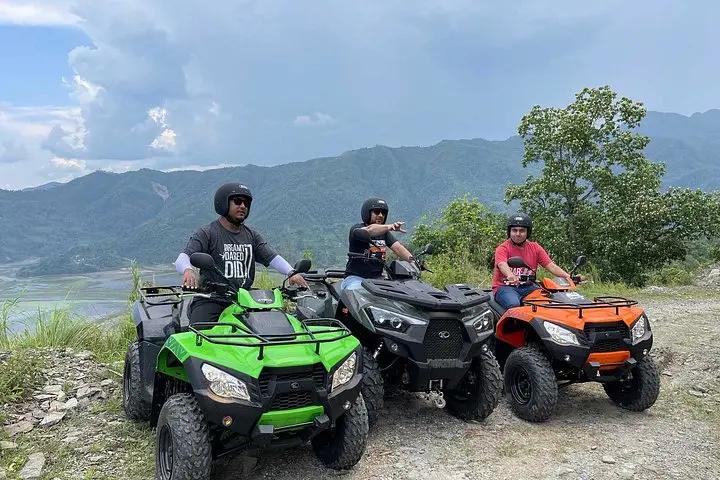
The engine rumbles beside Fewa Lake as morning light slices across the water. You push off from Pokhara’s lakeside and the town slips behind—rice terraces and forested 4WD tracks folding up toward Sarangkot. The trail climbs roughly 10 km and gains to about 4,500 ft, trading lake reflections for open ridgelines where the Annapurna and Dhaulagiri ranges puncture the sky.
The engine rumbles beside Fewa Lake as morning light slices across the water. You push off from Pokhara’s lakeside and the town slips behind—rice terraces and forested 4WD tracks folding up toward Sarangkot. The trail climbs roughly 10 km and gains to about 4,500 ft, trading lake reflections for open ridgelines where the Annapurna and Dhaulagiri ranges puncture the sky.
This ridge is part of the Lesser Himalaya—folded, weathered foothills carved by monsoon rains and ancient tectonic lift. Sarangkot itself has long been a local vantage point for sunrise and aircraft-spotting; today guides weave cultural notes about Gurung and Tamang communities into the ride, pointing out traditional hill farms and stone walls.
Expect a mix of packed dirt, loose gravel, and occasional muddy ruts on forested stretches. The experience is sensory: dust rising with each throttle, a cool hill breeze urging you onward, sunlight tipping the peaks. You’ll stop at a framed viewpoint for photos and a cooked lunch while guides share local stories.
Practically: no prior ATV experience is required—training is provided and a valid driver’s license is needed. The two-hour window covers orientation, the climb, photo stops and a short meal; fitness should be moderate. Best times are early morning for cooler temperatures and clearer air, or late afternoon for softer light—avoid heavy monsoon downpours when tracks become treacherous. Bring layered clothing, sturdy closed-toe shoes, sun protection and enough water; follow guide instructions and stay on designated tracks to minimize erosion. This is an active, motorized way to access viewpoints few visitors reach on foot.