THE ADVENTURE COLLECTIVE® · Independent discovery and booking for outdoor travel

Catch sunrise over Annapurna from Sarangkot on a long day hike from Pokhara. This route mixes ridge viewpoints, village paths, and sweeping lake-and-mountain panoramas—ideal for photographers and active travelers who want a full-day outdoor experience without technical climbing.
Catch sunrise over Annapurna from Sarangkot on a long day hike from Pokhara. This route mixes ridge viewpoints, village paths, and sweeping lake-and-mountain panoramas—ideal for photographers and active travelers who want a full-day outdoor experience without technical climbing.
A thin pre-dawn chill carries across the edge of Pokhara as walkers shuttle out toward Sarangkot, the ridge that stares straight at the Annapurna range. By the time the trail crests, the sun is already testing the horizon—gold fingers sliding across Dhaulagiri and Annapurna I—turning distant glaciers into ridged mirrors. The ridge holds a wide view: terraced fields below, Phewa Lake catching light like a dark coin, and mountain faces that seem to move as the day opens.
Verified experiences and guided adventures in the surrounding area.
Operated by Shriyan World Wide Tours Private Limited · Pokhara, Gandaki Province
A thin pre-dawn chill carries across the edge of Pokhara as walkers shuttle out toward Sarangkot, the ridge that stares straight at the Annapurna range. By the time the trail crests, the sun is already testing the horizon—gold fingers sliding across Dhaulagiri and Annapurna I—turning distant glaciers into ridged mirrors. The ridge holds a wide view: terraced fields below, Phewa Lake catching light like a dark coin, and mountain faces that seem to move as the day opens.
This route follows centuries-old footpaths used by Gurung and Magar communities, skirting small villages and shaded pine stands. Geologically the area is young Himalayan uplift—steep slopes, unstable scree in places, and a clear shift from lake plain to alpine ridge within a few kilometres. Along the way, local life is visible in stone-built houses, vegetable terraces, and prayer flags marking household shrines.
Practical guidance: expect 5–7 hours on-foot with roughly 500–700 m of cumulative ascent depending on route choices. Trails vary from paved village steps to narrow forest tracks; good ankle support and steady footwear matter. Start before dawn for sunrise at the Sarangkot viewpoint, carry water (refill options limited outside Lakeside), and dress in layers—mornings are cold, midday warm. Guides from Pokhara know the best vantage and local stories; they can time the return to avoid mid-day crowds.
Leave no trace: pack out waste, respect private farmland, and tip guides who sustain this trail’s hospitality.
It’s moderate—several hours of uphill and downhill walking on mixed terrain; no technical climbing is required but expect sustained effort.
Sarangkot sits around 1,600–1,700 m—altitude effects are minimal for most, but those with cardiovascular issues should consult a doctor.
This offering includes an English-speaking trekking guide, private car transfers within Lakeside Pokhara, and hotel pickup/drop-off in Lakeside.
October–December and February–April generally offer the clearest skies; early mornings across seasons yield the best views.
Shriyan World Wide Tours Private Limited operates guided outdoor trips and adventures with an emphasis on safety, stewardship, and memorable experiences.
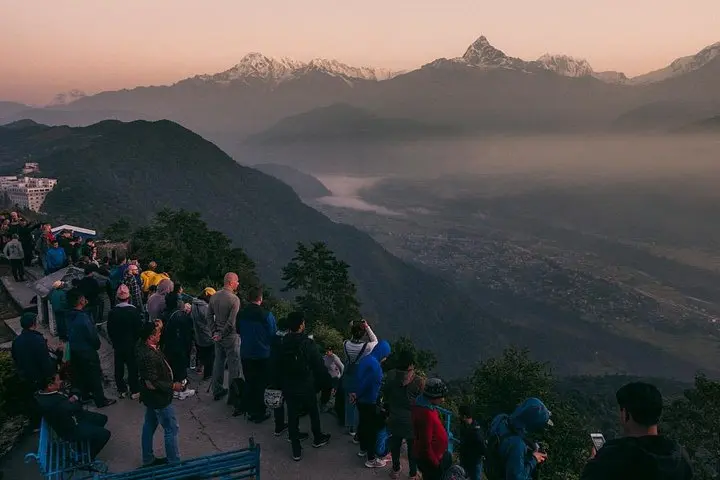
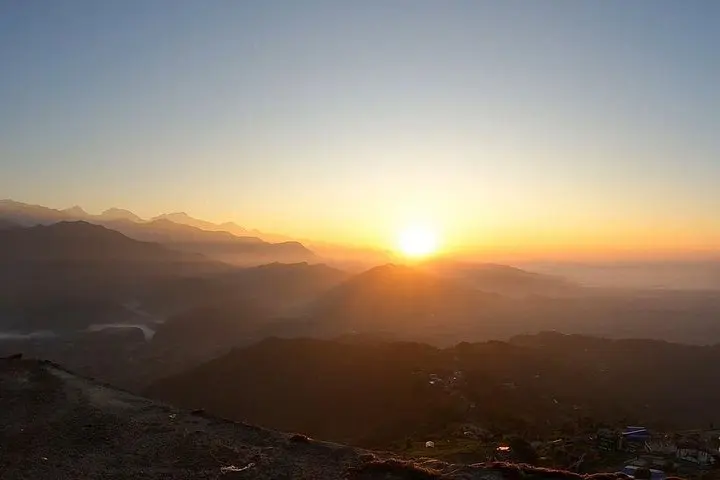
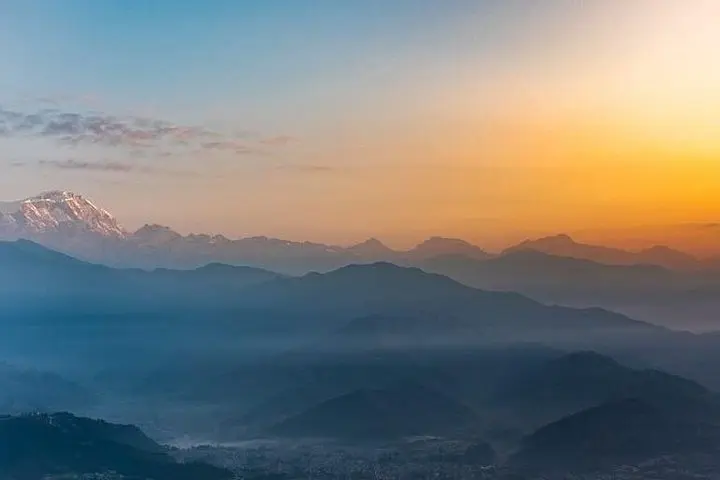
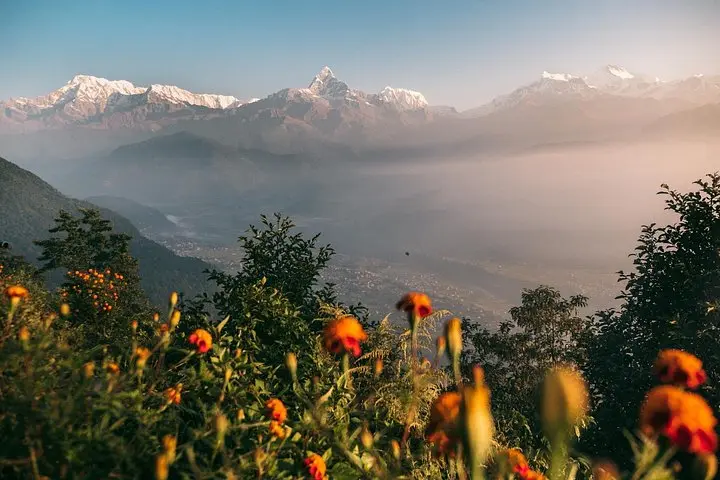
A thin pre-dawn chill carries across the edge of Pokhara as walkers shuttle out toward Sarangkot, the ridge that stares straight at the Annapurna range. By the time the trail crests, the sun is already testing the horizon—gold fingers sliding across Dhaulagiri and Annapurna I—turning distant glaciers into ridged mirrors. The ridge holds a wide view: terraced fields below, Phewa Lake catching light like a dark coin, and mountain faces that seem to move as the day opens.
A thin pre-dawn chill carries across the edge of Pokhara as walkers shuttle out toward Sarangkot, the ridge that stares straight at the Annapurna range. By the time the trail crests, the sun is already testing the horizon—gold fingers sliding across Dhaulagiri and Annapurna I—turning distant glaciers into ridged mirrors. The ridge holds a wide view: terraced fields below, Phewa Lake catching light like a dark coin, and mountain faces that seem to move as the day opens.
This route follows centuries-old footpaths used by Gurung and Magar communities, skirting small villages and shaded pine stands. Geologically the area is young Himalayan uplift—steep slopes, unstable scree in places, and a clear shift from lake plain to alpine ridge within a few kilometres. Along the way, local life is visible in stone-built houses, vegetable terraces, and prayer flags marking household shrines.
Practical guidance: expect 5–7 hours on-foot with roughly 500–700 m of cumulative ascent depending on route choices. Trails vary from paved village steps to narrow forest tracks; good ankle support and steady footwear matter. Start before dawn for sunrise at the Sarangkot viewpoint, carry water (refill options limited outside Lakeside), and dress in layers—mornings are cold, midday warm. Guides from Pokhara know the best vantage and local stories; they can time the return to avoid mid-day crowds.
Leave no trace: pack out waste, respect private farmland, and tip guides who sustain this trail’s hospitality.