
Sarangkot Sunrise Tour from Pokhara: Private Vehicle Sunrise Over Annapurna
Watch the Annapurna range ignite from Sarangkot with a short private transfer from Pokhara. This early-morning viewpoint delivers big Himalayan light with minimal effort—ideal for photographers and time-limited travelers.
An Adventure In Pokhara.
Watch the Annapurna range ignite from Sarangkot with a short private transfer from Pokhara. This early-morning viewpoint delivers big Himalayan light with minimal effort—ideal for photographers and time-limited travelers.
Read the full experience
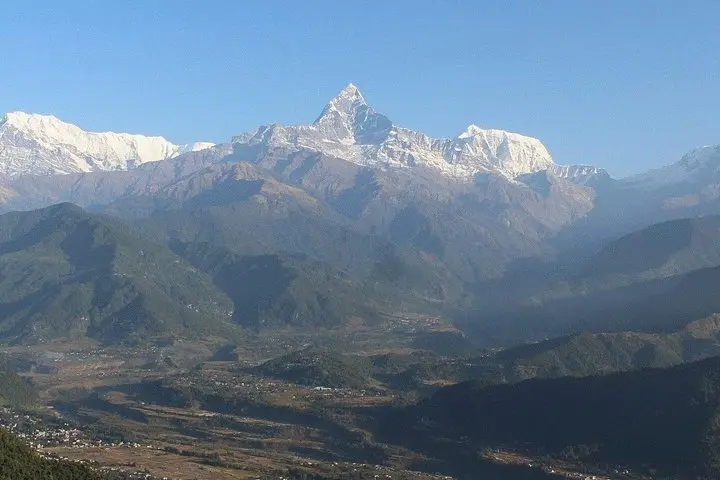
A thin cold light slips over the Annapurna range and Sarangkot’s ridgeline sharpens against the sky. Travelers arrive before dawn by private vehicle, stepping onto a low stone wall with Phewa Lake unfurling below and the Himalaya cutting the horizon. The air pushes at your face—crisp, carrying the smell of wood smoke from village kitchens—and the first rays paint Dhaulagiri and Machhapuchhre in clean, changing gold.
A thin cold light slips over the Annapurna range and Sarangkot’s ridgeline sharpens against the sky. Travelers arrive before dawn by private vehicle, stepping onto a low stone wall with Phewa Lake unfurling below and the Himalaya cutting the horizon. The air pushes at your face—crisp, carrying the smell of wood smoke from village kitchens—and the first rays paint Dhaulagiri and Machhapuchhre in clean, changing gold.
Sarangkot began as a small hill settlement above Pokhara, later becoming a favored viewpoint and takeoff for paragliders. Geologically it’s part of the Lesser Himalaya: folded, uplifted terrain that gives sudden, steep viewpoints rather than long alpine ridges. Culturally, mornings are practical here—tea stalls open early, local guides arrange transport, and sunrise viewing is woven into Pokhara’s tourism economy.
For visitors the experience is short and intense: a 20–40 minute drive from central Pokhara, a brief walk to the best vantage points, and clear views when weather cooperates. Expect temperatures several degrees cooler than the lakeside; wind can be steady. Photographers should arrive 30 minutes before predicted sunrise to set composition and exposure, while those sensitive to altitude should move slowly—Sarangkot sits around 1,592 m.
Practical guidance: layer warmly, bring a headlamp for pre-dawn paths, and carry small local currency for tea and tips. If clouds block the mountains, the overlook still offers sweeping valley perspectives. Whether you’re aiming for a quick viewpoint or combining this with paragliding or a ridge walk, Sarangkot delivers an accessible Himalayan dawn that rewards minimal effort with expansive, memorable light.
Frequently asked questions
The drive typically takes 20–40 minutes depending on traffic and your hotel location—private transfers are the quickest option.
No major hike is required; most visitors walk a short, sometimes steep path from the roadside parking to the viewpoint.
Clear, cold mornings offer the best mountain views; monsoon months bring cloud cover and reduced visibility—check local forecasts the day before.
Yes—access is straightforward, though those with limited mobility should be prepared for short uneven steps at the viewpoint.
Adventure tips
Recommended gear
- Warm insulated jacket: Keeps you comfortable during cold pre-dawn temperatures.
- Headlamp or small flashlight: Useful for the walk from the vehicle to the viewpoint before sunrise.
- Camera with tripod: A tripod stabilizes long exposures for sunrise and mountain shots.
- Sturdy walking shoes: Grippy shoes help on wet or uneven paths near the viewpoint.
Photos of the experience
Related adventures & guides
Read the full experience
A thin cold light slips over the Annapurna range and Sarangkot’s ridgeline sharpens against the sky. Travelers arrive before dawn by private vehicle, stepping onto a low stone wall with Phewa Lake unfurling below and the Himalaya cutting the horizon. The air pushes at your face—crisp, carrying the smell of wood smoke from village kitchens—and the first rays paint Dhaulagiri and Machhapuchhre in clean, changing gold.
A thin cold light slips over the Annapurna range and Sarangkot’s ridgeline sharpens against the sky. Travelers arrive before dawn by private vehicle, stepping onto a low stone wall with Phewa Lake unfurling below and the Himalaya cutting the horizon. The air pushes at your face—crisp, carrying the smell of wood smoke from village kitchens—and the first rays paint Dhaulagiri and Machhapuchhre in clean, changing gold.
Sarangkot began as a small hill settlement above Pokhara, later becoming a favored viewpoint and takeoff for paragliders. Geologically it’s part of the Lesser Himalaya: folded, uplifted terrain that gives sudden, steep viewpoints rather than long alpine ridges. Culturally, mornings are practical here—tea stalls open early, local guides arrange transport, and sunrise viewing is woven into Pokhara’s tourism economy.
For visitors the experience is short and intense: a 20–40 minute drive from central Pokhara, a brief walk to the best vantage points, and clear views when weather cooperates. Expect temperatures several degrees cooler than the lakeside; wind can be steady. Photographers should arrive 30 minutes before predicted sunrise to set composition and exposure, while those sensitive to altitude should move slowly—Sarangkot sits around 1,592 m.
Practical guidance: layer warmly, bring a headlamp for pre-dawn paths, and carry small local currency for tea and tips. If clouds block the mountains, the overlook still offers sweeping valley perspectives. Whether you’re aiming for a quick viewpoint or combining this with paragliding or a ridge walk, Sarangkot delivers an accessible Himalayan dawn that rewards minimal effort with expansive, memorable light.
Make a day of it nearby.
Verified experiences and guided adventures in the surrounding area.