THE ADVENTURE COLLECTIVE® · Independent discovery and booking for outdoor travel

Paddle the energetic Sarapiqui River and finish with an organic farm lunch near La Fortuna. This half-day blend of class II–III rapids and hands-on agricultural insights offers wet thrills and a taste of Costa Rican farm life.
Paddle the energetic Sarapiqui River and finish with an organic farm lunch near La Fortuna. This half-day blend of class II–III rapids and hands-on agricultural insights offers wet thrills and a taste of Costa Rican farm life.
The first spray arrives like a reminder: the Sarapiqui is not passive water — it pushes, teases and occasionally demands attention. On a morning that begins in La Fortuna, the guides load bright rafts and clip on helmets, and the town recedes into a corridor of palms and banana stands. By the time the river widens and the current finds its voice, everyone in the boat is tuned to the same rhythm: paddle, listen, respond.
Verified experiences and guided adventures in the surrounding area.
Operated by Costa Rica Descents · La Fortuna, Alajuela Province
The first spray arrives like a reminder: the Sarapiqui is not passive water — it pushes, teases and occasionally demands attention. On a morning that begins in La Fortuna, the guides load bright rafts and clip on helmets, and the town recedes into a corridor of palms and banana stands. By the time the river widens and the current finds its voice, everyone in the boat is tuned to the same rhythm: paddle, listen, respond.
Sarapiqui River flows from the highlands toward the Caribbean lowlands, carving a corridor through volcanic soils and lowland rainforest. Geologically, the area is a mix of recent volcanic deposits from the Arenal system and older alluvial plains; those ingredients give the river its mix of calm pools and jagged ledges that create class II–III rapids — suitable for families and first-timers with a moderate fitness base.
Culturally, the trip balances adrenaline with gentle rural life. After roughly two hours on the water, the raft pulls to a shaded bank for a fruit break—mango, pineapple, and the odd sweet guava. That pause is also a pivot into farming history: Costa Rica’s smallholdings and organic initiatives are visible at the post-raft lunch spot. The two-story restaurant overlooks fields where coffee, cacao and vegetables are tended by hand. A walk through the organic farm that follows the meal is practical and tactile — you see seedbeds, drip lines and a sugarcane demonstration where guests taste pressed cane juice and a local cane spirit.
The combination of river and farm captures a regional logic: water moves crops and commerce, and the landscape that produces adrenaline also feeds communities. Local guides often share context about banana and coffee economies, and how reforestation upstream keeps sediment down and rapids predictable.
Practical details: plan for a full morning to mid-afternoon — the operator lists 6–7 hours total including transport, safety briefing and a buffet-style organic lunch. Bring quick-dry clothing, sturdy water shoes and a small dry bag for essentials; guides provide helmets, life jackets and paddles. Fitness expectations are moderate — guests should be comfortable paddling intermittently and moving in a moving raft. Children from about seven can join, though the company advises against participation for older adults with certain health limitations.
Timing matters: early departures avoid heavier river traffic and afternoon storms. Hydrate before you depart; the tropical sun can be immediate once you reach the farm. For photographers, the river offers wide-angle scenes of green walls and close-up action shots from inside the raft — protect gear from spray. The trip finishes with food and conversation, the sugarcane tasting an uncomplicated local flourish that leaves a simple, memorable aftertaste of place.
Expect roughly 2 hours of white-water time on the river, embedded within a 6–7 hour total tour including transport and lunch.
The rapids are generally class II–III and guides provide instruction, so basic fitness and willingness to paddle are sufficient.
Yes — minimum age is 7; all children must wear life jackets and follow guide instructions.
Yes — hotel pickup and drop-off in La Fortuna is included; pickup times are provided after booking.
A buffet-style organic lunch featuring local produce, coffee and a sugarcane tasting is included.
A photographer may accompany the tour and photos are usually available for purchase after the activity.
Costa Rica Descents operates guided outdoor trips and adventures with an emphasis on safety, stewardship, and memorable experiences.
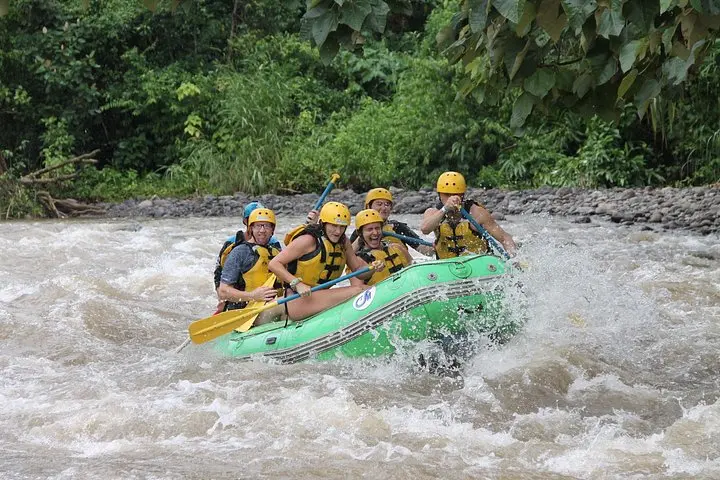
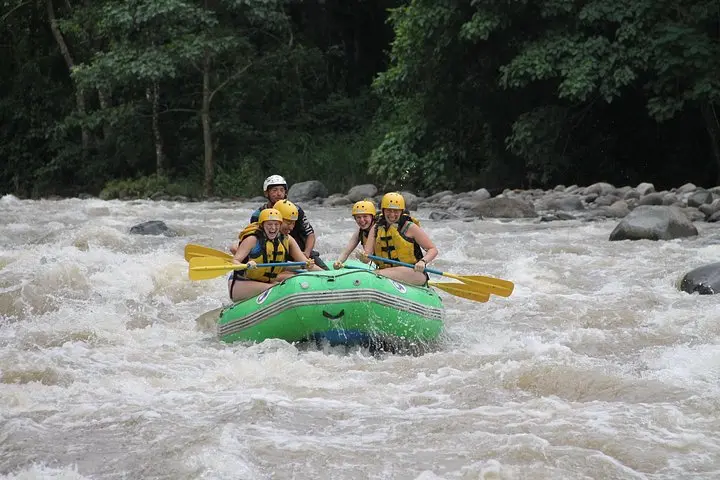
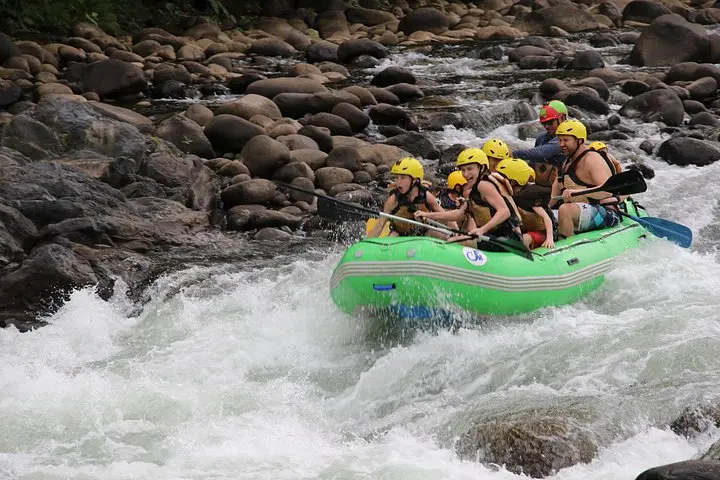
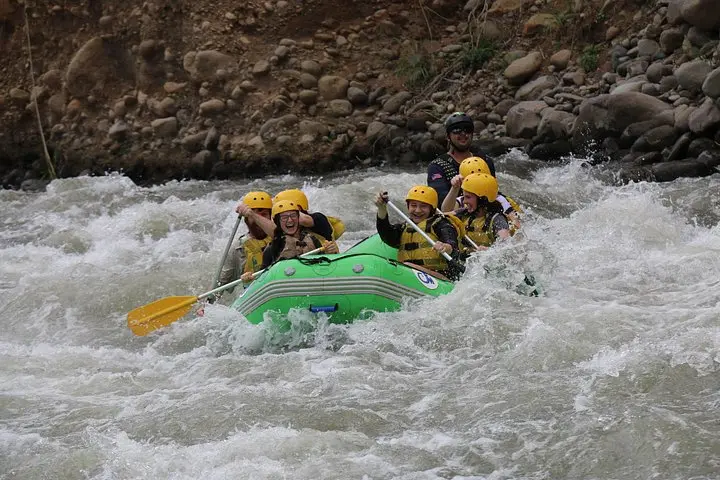
The first spray arrives like a reminder: the Sarapiqui is not passive water — it pushes, teases and occasionally demands attention. On a morning that begins in La Fortuna, the guides load bright rafts and clip on helmets, and the town recedes into a corridor of palms and banana stands. By the time the river widens and the current finds its voice, everyone in the boat is tuned to the same rhythm: paddle, listen, respond.
The first spray arrives like a reminder: the Sarapiqui is not passive water — it pushes, teases and occasionally demands attention. On a morning that begins in La Fortuna, the guides load bright rafts and clip on helmets, and the town recedes into a corridor of palms and banana stands. By the time the river widens and the current finds its voice, everyone in the boat is tuned to the same rhythm: paddle, listen, respond.
Sarapiqui River flows from the highlands toward the Caribbean lowlands, carving a corridor through volcanic soils and lowland rainforest. Geologically, the area is a mix of recent volcanic deposits from the Arenal system and older alluvial plains; those ingredients give the river its mix of calm pools and jagged ledges that create class II–III rapids — suitable for families and first-timers with a moderate fitness base.
Culturally, the trip balances adrenaline with gentle rural life. After roughly two hours on the water, the raft pulls to a shaded bank for a fruit break—mango, pineapple, and the odd sweet guava. That pause is also a pivot into farming history: Costa Rica’s smallholdings and organic initiatives are visible at the post-raft lunch spot. The two-story restaurant overlooks fields where coffee, cacao and vegetables are tended by hand. A walk through the organic farm that follows the meal is practical and tactile — you see seedbeds, drip lines and a sugarcane demonstration where guests taste pressed cane juice and a local cane spirit.
The combination of river and farm captures a regional logic: water moves crops and commerce, and the landscape that produces adrenaline also feeds communities. Local guides often share context about banana and coffee economies, and how reforestation upstream keeps sediment down and rapids predictable.
Practical details: plan for a full morning to mid-afternoon — the operator lists 6–7 hours total including transport, safety briefing and a buffet-style organic lunch. Bring quick-dry clothing, sturdy water shoes and a small dry bag for essentials; guides provide helmets, life jackets and paddles. Fitness expectations are moderate — guests should be comfortable paddling intermittently and moving in a moving raft. Children from about seven can join, though the company advises against participation for older adults with certain health limitations.
Timing matters: early departures avoid heavier river traffic and afternoon storms. Hydrate before you depart; the tropical sun can be immediate once you reach the farm. For photographers, the river offers wide-angle scenes of green walls and close-up action shots from inside the raft — protect gear from spray. The trip finishes with food and conversation, the sugarcane tasting an uncomplicated local flourish that leaves a simple, memorable aftertaste of place.