THE ADVENTURE COLLECTIVE® · Independent discovery and booking for outdoor travel

Plunge into 14 km of Sarapiquí River rapids with experienced guides, rainforest wildlife on the banks, and a homestyle Costa Rican lunch at the finish. This half-day whitewater trip mixes Class II–III action with occasional Class IV drops depending on water level.
Plunge into 14 km of Sarapiquí River rapids with experienced guides, rainforest wildlife on the banks, and a homestyle Costa Rican lunch at the finish. This half-day whitewater trip mixes Class II–III action with occasional Class IV drops depending on water level.
You push off from a wooden dock; the guide’s whistle cuts through the river noise and the raft answers with a bob. For the next two and a half hours the Sarapiquí River will insist you pay attention — breaking into short, sharp rapids, opening into glassy pools, then churning again as the jungle presses close. Water hits your paddle, then your face, and the canopy above hums with toucans and howler monkeys that watch the commotion like weather.
Verified experiences and guided adventures in the surrounding area.
Operated by Flow Trips · Puerto Viejo de Sarapiquí, Heredia
You push off from a wooden dock; the guide’s whistle cuts through the river noise and the raft answers with a bob. For the next two and a half hours the Sarapiquí River will insist you pay attention — breaking into short, sharp rapids, opening into glassy pools, then churning again as the jungle presses close. Water hits your paddle, then your face, and the canopy above hums with toucans and howler monkeys that watch the commotion like weather.
Geology here is young and loud: volcanic highlands drain into steep-gradient channels, carving the Sarapiquí’s energetic riffles and occasional drops. The stretch this trip covers is roughly 14 km of river, claimed by the operator to include more than 30 named rapids; most run Class II–III with a handful of heavier, gradient-driven Class IV sections depending on water level. Historically, the river has been a lifeline for communities in the northern lowlands, once used to float goods and now relied on for eco-tourism income that supports local families and guides.
Culture and cuisine are part of the day. The trip ends at the Sibaja family property where you can rinse off in private facilities and be served a homestyle Costa Rican lunch at Soda Marielos — gallo pinto, grilled fish or chicken, and papaya slices — a reminder that rafting here is as much about people as it is about whitewater.
Wildlife sightings are frequent: keep an eye on banks for sloths suspended like ornaments, iguanas sunning on branches, and troops of monkeys that sometimes treat rafts like passersby. Guides are good at spotting birds and will point out species and seasonal behaviors.
Practical details: total excursion time is roughly 6–7 hours including pickup (most operators offer hotel transfer and ask you to be ready 30 minutes before departure), a safety briefing, 2.5 hours on the river, and lunch. Wear secure river shoes or old sneakers, a swim top or lightweight quick-dry clothes, reef‑safe sunscreen, and a light rain layer just in case. Bring a small dry bag or use the operator’s waterproof containers for phones and cameras. Fitness-wise, expect intermittent paddling and the ability to step in and out of a raft; a moderate level of stamina makes the day more comfortable.
Safety and sustainability are constant priorities. Guides provide helmets and PFDs, explain commands, and scout tricky sections. Respect wildlife distances, avoid leaving trash, and opt for operators that compensate local communities and follow river stewardship practices.
If you’re in La Fortuna or the Sarapiquí lowlands and crave an active, wildlife-rich day, this run delivers: splash, speed, and the kind of rain‑forest scenery that keeps you braced for the next bend.
The guided run covers about 14 km and roughly 2.5 hours on the river, embedded within a full-day excursion of about 6–7 hours including transport and lunch.
Most of the stretch is Class II–III with occasional gradient-driven Class IV sections depending on recent rainfall and river levels; the guide will scout and advise appropriate lines.
Yes—families with older kids and beginners can join; guides tailor commands and seating. Operators set age and weight limits, and infants are usually required to sit on laps.
Typical inclusions are hotel pickup, safety briefing, helmets and PFDs, guided rafting, showers/changing at the Sibaja finish, and a Costa Rican lunch at Soda Marielos.
Pregnant travelers are not recommended to participate; disclose any recent surgeries, chronic conditions, or mobility issues when booking.
Standard policy allows a full refund if canceled at least 24 hours before departure; operators may cancel for unsafe weather and will notify you in advance.
Flow Trips operates guided outdoor trips and adventures with an emphasis on safety, stewardship, and memorable experiences.
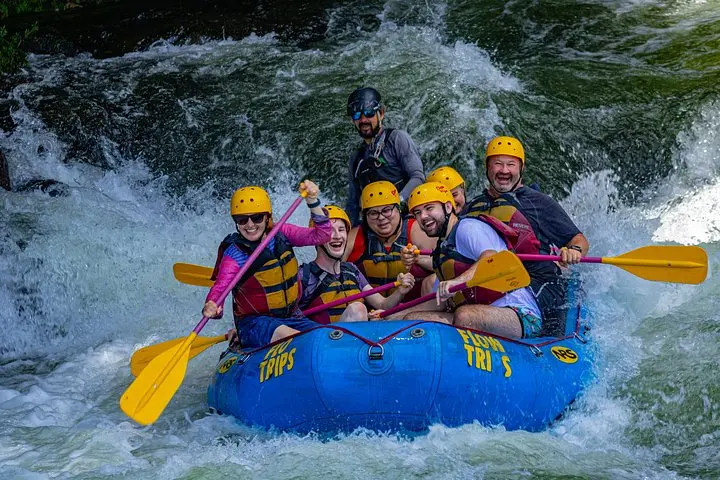
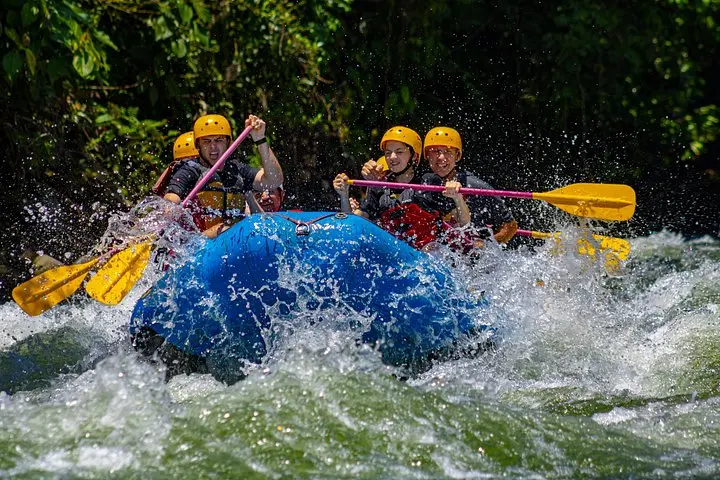
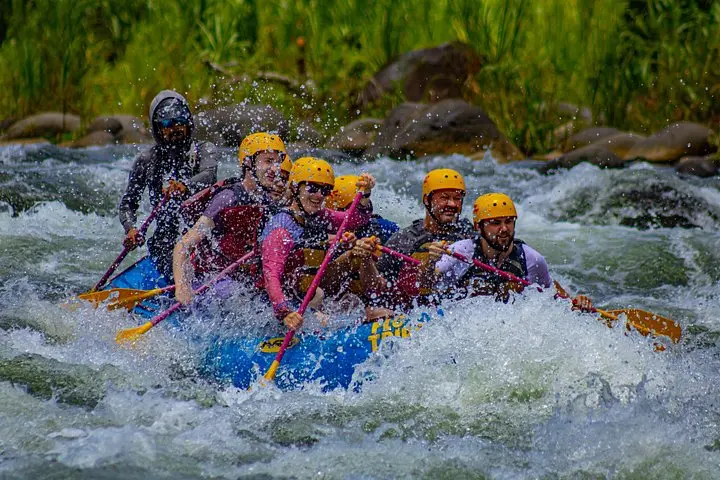
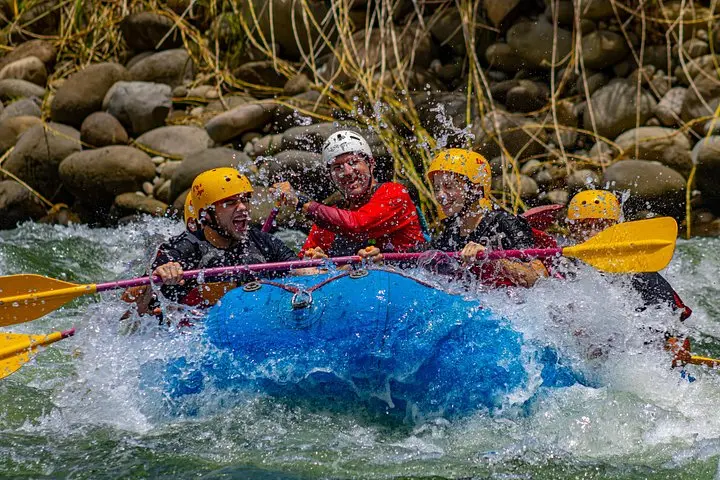
You push off from a wooden dock; the guide’s whistle cuts through the river noise and the raft answers with a bob. For the next two and a half hours the Sarapiquí River will insist you pay attention — breaking into short, sharp rapids, opening into glassy pools, then churning again as the jungle presses close. Water hits your paddle, then your face, and the canopy above hums with toucans and howler monkeys that watch the commotion like weather.
You push off from a wooden dock; the guide’s whistle cuts through the river noise and the raft answers with a bob. For the next two and a half hours the Sarapiquí River will insist you pay attention — breaking into short, sharp rapids, opening into glassy pools, then churning again as the jungle presses close. Water hits your paddle, then your face, and the canopy above hums with toucans and howler monkeys that watch the commotion like weather.
Geology here is young and loud: volcanic highlands drain into steep-gradient channels, carving the Sarapiquí’s energetic riffles and occasional drops. The stretch this trip covers is roughly 14 km of river, claimed by the operator to include more than 30 named rapids; most run Class II–III with a handful of heavier, gradient-driven Class IV sections depending on water level. Historically, the river has been a lifeline for communities in the northern lowlands, once used to float goods and now relied on for eco-tourism income that supports local families and guides.
Culture and cuisine are part of the day. The trip ends at the Sibaja family property where you can rinse off in private facilities and be served a homestyle Costa Rican lunch at Soda Marielos — gallo pinto, grilled fish or chicken, and papaya slices — a reminder that rafting here is as much about people as it is about whitewater.
Wildlife sightings are frequent: keep an eye on banks for sloths suspended like ornaments, iguanas sunning on branches, and troops of monkeys that sometimes treat rafts like passersby. Guides are good at spotting birds and will point out species and seasonal behaviors.
Practical details: total excursion time is roughly 6–7 hours including pickup (most operators offer hotel transfer and ask you to be ready 30 minutes before departure), a safety briefing, 2.5 hours on the river, and lunch. Wear secure river shoes or old sneakers, a swim top or lightweight quick-dry clothes, reef‑safe sunscreen, and a light rain layer just in case. Bring a small dry bag or use the operator’s waterproof containers for phones and cameras. Fitness-wise, expect intermittent paddling and the ability to step in and out of a raft; a moderate level of stamina makes the day more comfortable.
Safety and sustainability are constant priorities. Guides provide helmets and PFDs, explain commands, and scout tricky sections. Respect wildlife distances, avoid leaving trash, and opt for operators that compensate local communities and follow river stewardship practices.
If you’re in La Fortuna or the Sarapiquí lowlands and crave an active, wildlife-rich day, this run delivers: splash, speed, and the kind of rain‑forest scenery that keeps you braced for the next bend.