THE ADVENTURE COLLECTIVE® · Independent discovery and booking for outdoor travel

A relaxed four-hour trek through the foothills of the Sarawat Mountains, passing farms, fields and acacia groves. Ideal for morning or afternoon departures, the route combines accessible terrain with local rural scenery and refreshments included.
A relaxed four-hour trek through the foothills of the Sarawat Mountains, passing farms, fields and acacia groves. Ideal for morning or afternoon departures, the route combines accessible terrain with local rural scenery and refreshments included.
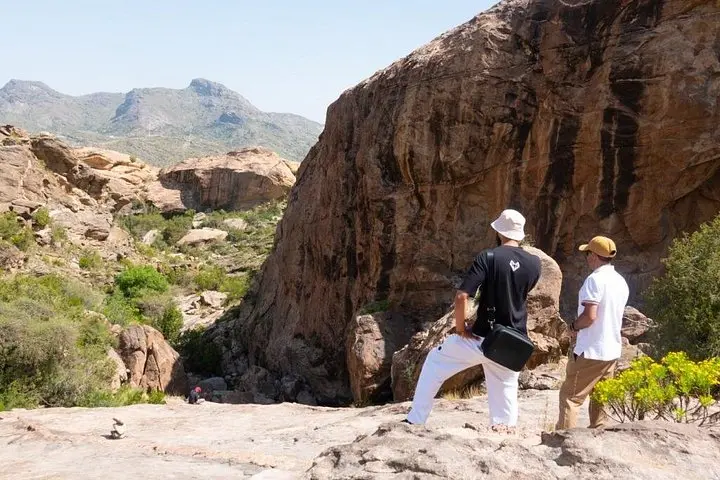
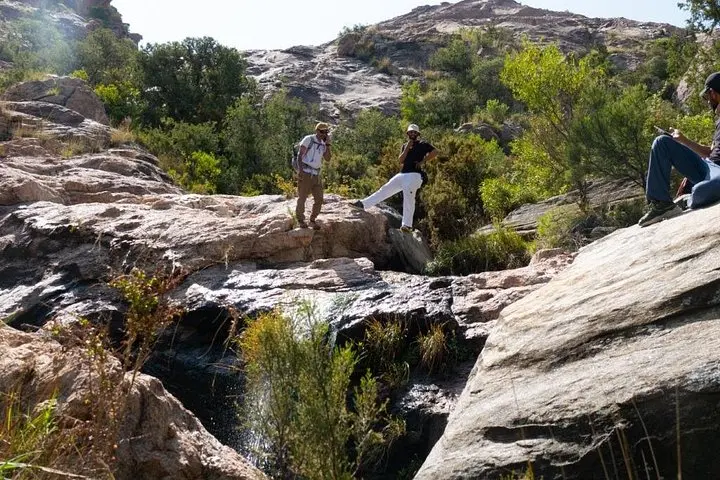
You step from an air-conditioned vehicle onto a stony farm track that climbs gently toward the lower flanks of the Sarawat Mountains. The air tastes faintly of earth and citrus; insects flit through field edges while birds call from acacia groves. This is a four-hour, low-impact trek built for steady footsteps and quiet observation.
Verified experiences and guided adventures in the surrounding area.
Operated by GTS DMC · Abha, Asir Province
You step from an air-conditioned vehicle onto a stony farm track that climbs gently toward the lower flanks of the Sarawat Mountains. The air tastes faintly of earth and citrus; insects flit through field edges while birds call from acacia groves. This is a four-hour, low-impact trek built for steady footsteps and quiet observation.
The Sarawat range runs parallel to Saudi Arabia’s Red Sea coast and is geologically ancient—folded volcanic and sedimentary rock that has created a chain of ridges and terraces where small-scale farming survives. Culturally the highlands have long supported terraced plots and seasonal grazing; farmers still tend fig, pomegranate and coffee plants in pockets of richer soil. Underfoot the route alternates compact dirt, loose scree and short paved farm lanes; expect 6–8 km covered with roughly 200–300 m cumulative elevation gain.
Practical guidance: choose the morning slot to avoid afternoon heat and bring a daypack, water and sturdy shoes—the operator supplies bottled water and light snacks and provides round-trip AC transport. Fitness expectations are moderate: steady walking on uneven ground for several hours, with short rests in shaded fields. The hike is family-friendly but not suitable for travelers with serious spinal, cardiac or pregnancy restrictions.
Local etiquette: greet landowners politely if you pass cultivated plots and take care not to trample irrigation. Wildlife is subtle here—watch for songbirds and colorful beetles rather than large mammals. The walk offers immediate access to rural life and sweeping foothill views without a difficult ascent—an accessible introduction to the Sarawat's quieter side.
The experience is a four-hour, low-to-moderate hike covering roughly 6–8 km with about 200–300 m cumulative elevation gain; suitable for those with moderate fitness.
Yes—bottled water and snacks are included, and transport is in an air-conditioned vehicle.
Families can join but participants should be able to walk several kilometers on uneven ground; not recommended for those with significant spinal, cardiac, or pregnancy restrictions.
Wear closed-toe trail shoes, sun protection, and bring a small daypack with extra water, a camera, and a basic first-aid kit.
GTS DMC operates guided outdoor trips and adventures with an emphasis on safety, stewardship, and memorable experiences.
You step from an air-conditioned vehicle onto a stony farm track that climbs gently toward the lower flanks of the Sarawat Mountains. The air tastes faintly of earth and citrus; insects flit through field edges while birds call from acacia groves. This is a four-hour, low-impact trek built for steady footsteps and quiet observation.
You step from an air-conditioned vehicle onto a stony farm track that climbs gently toward the lower flanks of the Sarawat Mountains. The air tastes faintly of earth and citrus; insects flit through field edges while birds call from acacia groves. This is a four-hour, low-impact trek built for steady footsteps and quiet observation.
The Sarawat range runs parallel to Saudi Arabia’s Red Sea coast and is geologically ancient—folded volcanic and sedimentary rock that has created a chain of ridges and terraces where small-scale farming survives. Culturally the highlands have long supported terraced plots and seasonal grazing; farmers still tend fig, pomegranate and coffee plants in pockets of richer soil. Underfoot the route alternates compact dirt, loose scree and short paved farm lanes; expect 6–8 km covered with roughly 200–300 m cumulative elevation gain.
Practical guidance: choose the morning slot to avoid afternoon heat and bring a daypack, water and sturdy shoes—the operator supplies bottled water and light snacks and provides round-trip AC transport. Fitness expectations are moderate: steady walking on uneven ground for several hours, with short rests in shaded fields. The hike is family-friendly but not suitable for travelers with serious spinal, cardiac or pregnancy restrictions.
Local etiquette: greet landowners politely if you pass cultivated plots and take care not to trample irrigation. Wildlife is subtle here—watch for songbirds and colorful beetles rather than large mammals. The walk offers immediate access to rural life and sweeping foothill views without a difficult ascent—an accessible introduction to the Sarawat's quieter side.