THE ADVENTURE COLLECTIVE® · Independent discovery and booking for outdoor travel

Witness the ceremonial cavalry of the President’s Bodyguards at Rashtrapati Bhavan on Saturdays, then spend a full day touring New and Old Delhi’s major monuments. This private tour blends formal pageantry with Mughal tombs, colonial boulevards and the maze of Chandni Chowk.
Witness the ceremonial cavalry of the President’s Bodyguards at Rashtrapati Bhavan on Saturdays, then spend a full day touring New and Old Delhi’s major monuments. This private tour blends formal pageantry with Mughal tombs, colonial boulevards and the maze of Chandni Chowk.
Step out of the car and the brass band pulls the morning forward: horses stamp, cavalry sabres catch sunlight, and the President’s Bodyguards trade places beneath the ochre walls of Rashtrapati Bhavan. The 30‑minute Change of Guard is a staged moment of discipline and pageantry—an opening act to a day that moves from imperial boulevards to crowded bazaars.
Verified experiences and guided adventures in the surrounding area.
Operated by SITA World Tours · New Delhi, Delhi
Step out of the car and the brass band pulls the morning forward: horses stamp, cavalry sabres catch sunlight, and the President’s Bodyguards trade places beneath the ochre walls of Rashtrapati Bhavan. The 30‑minute Change of Guard is a staged moment of discipline and pageantry—an opening act to a day that moves from imperial boulevards to crowded bazaars.
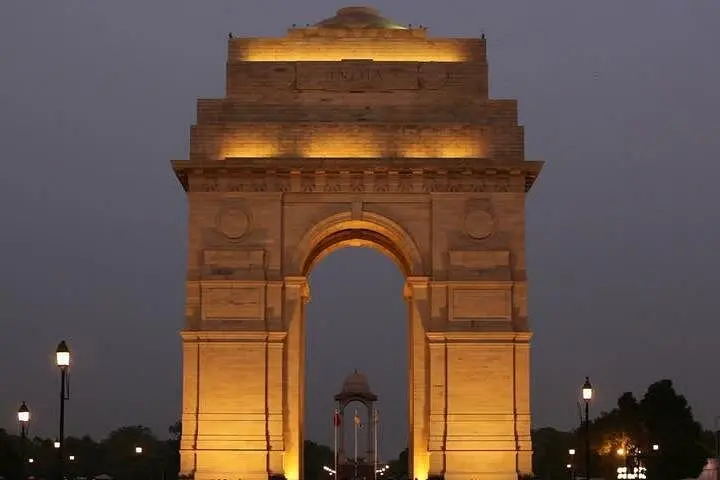
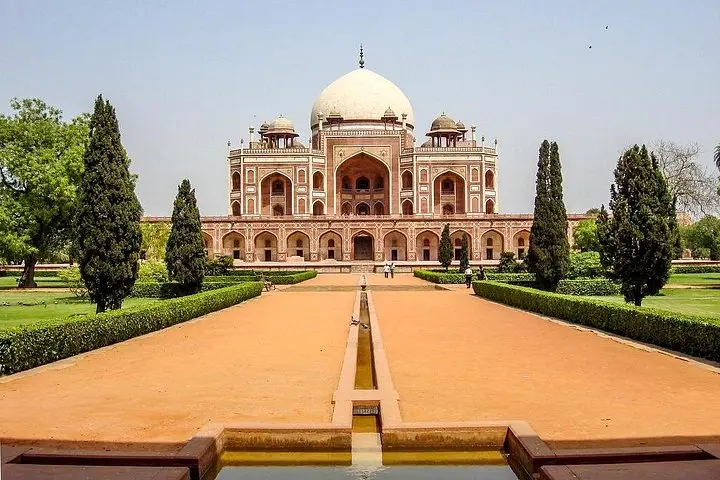
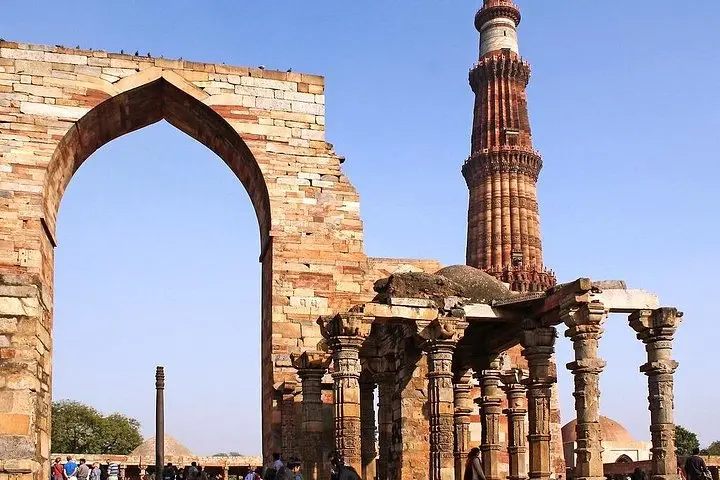
The route threads Rajpath past India Gate and Parliament, then steps back through Mughal and colonial layers at Humayun’s Tomb, Qutub Minar and the Red Fort. Rashtrapati Bhavan itself is a product of Lutyens’ Delhi and a formal symbol built during the British Raj; the President’s Bodyguard regiment traces its lineage to the 18th century. Geologically, the area sits on the flat Indo‑Gangetic plain; the monuments are sandstone and marble standing over centuries of human settlement rather than dramatic terrain.
Culturally the day balances ceremonial protocol, Hindu temple rituals at Birla Mandir, and the chaotic commerce of Chandni Chowk, where alleys challenge your pace and senses.
Practical guidance: Saturdays are the only day for the ceremony—bring a valid photo ID for Rashtrapati Bhavan checkpoint. Expect six hours of touring with multiple short walks, uneven surfaces and stairs; the Red Fort is closed on Mondays. Wear comfortable shoes, carry water and sun protection, and leave large bags at your hotel when possible. Photography is allowed at most sites but restricted at some government areas—follow your guide’s instructions. Timing your visit for a cooler morning and pocketing small change for market treats will make the day both efficient and memorable.
No. The Change of Guard at Rashtrapati Bhavan takes place on Saturdays only; verify the date before booking.
Yes. A valid government photo ID is mandatory for entry to the presidential grounds and must be carried by all adults.
Red Fort is regularly open but may be closed on Mondays or for national events—this specific tour notes the Red Fort can be closed on Mondays.
The tour is partially wheelchair accessible; several monuments have steps and uneven paths. Notify the operator in advance for assistance and vehicle arrangements.
SITA World Tours operates guided outdoor trips and adventures with an emphasis on safety, stewardship, and memorable experiences.
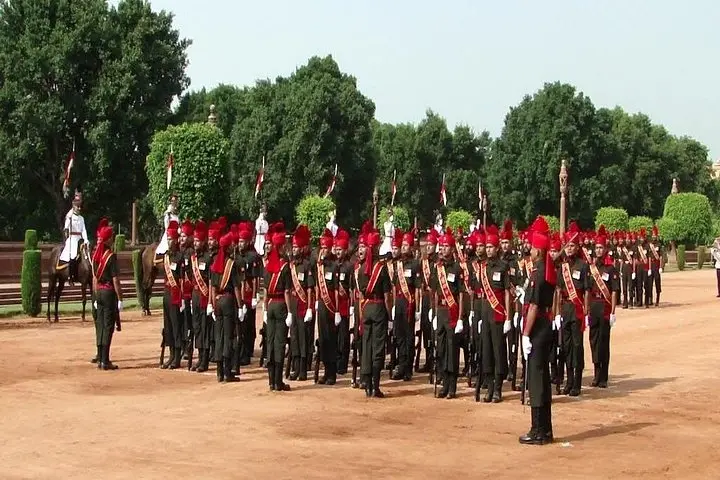
Step out of the car and the brass band pulls the morning forward: horses stamp, cavalry sabres catch sunlight, and the President’s Bodyguards trade places beneath the ochre walls of Rashtrapati Bhavan. The 30‑minute Change of Guard is a staged moment of discipline and pageantry—an opening act to a day that moves from imperial boulevards to crowded bazaars.
Step out of the car and the brass band pulls the morning forward: horses stamp, cavalry sabres catch sunlight, and the President’s Bodyguards trade places beneath the ochre walls of Rashtrapati Bhavan. The 30‑minute Change of Guard is a staged moment of discipline and pageantry—an opening act to a day that moves from imperial boulevards to crowded bazaars.
The route threads Rajpath past India Gate and Parliament, then steps back through Mughal and colonial layers at Humayun’s Tomb, Qutub Minar and the Red Fort. Rashtrapati Bhavan itself is a product of Lutyens’ Delhi and a formal symbol built during the British Raj; the President’s Bodyguard regiment traces its lineage to the 18th century. Geologically, the area sits on the flat Indo‑Gangetic plain; the monuments are sandstone and marble standing over centuries of human settlement rather than dramatic terrain.
Culturally the day balances ceremonial protocol, Hindu temple rituals at Birla Mandir, and the chaotic commerce of Chandni Chowk, where alleys challenge your pace and senses.
Practical guidance: Saturdays are the only day for the ceremony—bring a valid photo ID for Rashtrapati Bhavan checkpoint. Expect six hours of touring with multiple short walks, uneven surfaces and stairs; the Red Fort is closed on Mondays. Wear comfortable shoes, carry water and sun protection, and leave large bags at your hotel when possible. Photography is allowed at most sites but restricted at some government areas—follow your guide’s instructions. Timing your visit for a cooler morning and pocketing small change for market treats will make the day both efficient and memorable.