THE ADVENTURE COLLECTIVE® · Independent discovery and booking for outdoor travel

A high-energy semi-rigid cruise from Cargèse or Sagone that threads UNESCO-listed Scandola, Girolata and the Calanques de Piana, with a snorkel stop at Capo Rosso. Expect dramatic cliffs, coastal caves and a short village break — ideal for photographers and snorkelers comfortable on small boats.
A high-energy semi-rigid cruise from Cargèse or Sagone that threads UNESCO-listed Scandola, Girolata and the Calanques de Piana, with a snorkel stop at Capo Rosso. Expect dramatic cliffs, coastal caves and a short village break — ideal for photographers and snorkelers comfortable on small boats.
The zodiac cuts through cool Mediterranean light as the west coast of Corsica unfolds — red cliffs rising like stacked earth, sea caves yawning dark at their bases, and a small shuttered village that seems to have remained unchanged by time. Boarding from Cargèse or Sagone, the ride toward Scandola is immediate: salt on your lips, wind pushing the bow, and the captain pointing out sculpted arches before you even unstrap your life jacket.
Verified experiences and guided adventures in the surrounding area.
Operated by Isula Croisières · Cargèse, Corse-du-Sud
The zodiac cuts through cool Mediterranean light as the west coast of Corsica unfolds — red cliffs rising like stacked earth, sea caves yawning dark at their bases, and a small shuttered village that seems to have remained unchanged by time. Boarding from Cargèse or Sagone, the ride toward Scandola is immediate: salt on your lips, wind pushing the bow, and the captain pointing out sculpted arches before you even unstrap your life jacket.
This coastline is shaped by volcanic and metamorphic geology; the Calanques de Piana’s ochre and red rocks are the slow work of erosion, wind and sea carving pinnacles, arches and caves over millennia. The Scandola Nature Reserve, a UNESCO site, protects both rare endemic plants on cliff ledges and a rich underwater world where Posidonia meadows shelter fishes and octopus. Culture here is maritime and old—Genoese towers and small harbors mark centuries of coastal defense and fishing traditions. Girolata remains reachable only by water or a steep trail, giving it a lived-in, off-grid feel.
Practically: the trip runs about 4–4.5 hours and includes a guided approach to Scandola, a short stop in Girolata, passage through the Gulf of Porto, views of the Calanques and a swimming/snorkeling break at Capo Rosso when conditions allow. Expect short, bumpy stretches on a 12-seat semi-rigid; seasickness and sun exposure are the most common issues. Bring sun protection, a light wind layer, and shoes that grip for stepping on wet docks. The captain manages navigation and safety, but be prepared for fast-paced transitions between viewpoints and a 30-minute time window ashore in Girolata.
The full excursion lasts about 4–4.5 hours with a 30–40 minute snorkeling/swim stop at Capo Rosso and a 30-minute stopover in Girolata.
Yes — snorkeling gear is provided onboard; you may bring your own mask if you prefer a personalized fit.
The trip is labeled suitable for all fitness levels, but boarding a semi-rigid requires stepping from dock to boat and some balance; contact the operator about specific mobility needs before booking.
The operator may cancel or reschedule if conditions are unsafe; their policy allows full refunds for cancellations made at least 24 hours in advance or if the trip is canceled due to weather.
Isula Croisières operates guided outdoor trips and adventures with an emphasis on safety, stewardship, and memorable experiences.
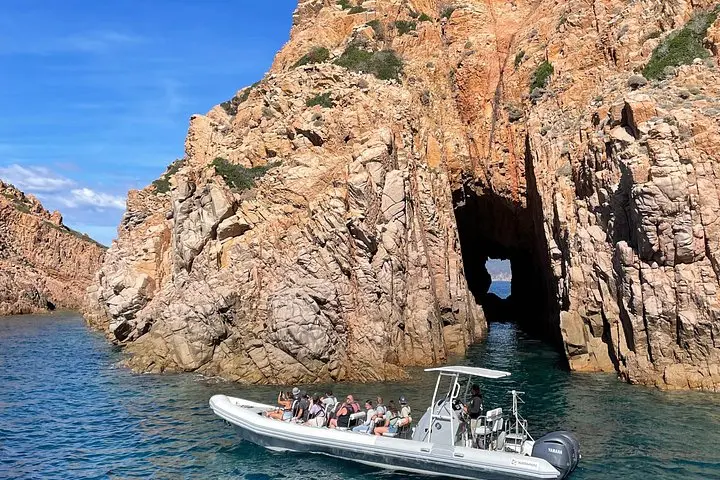
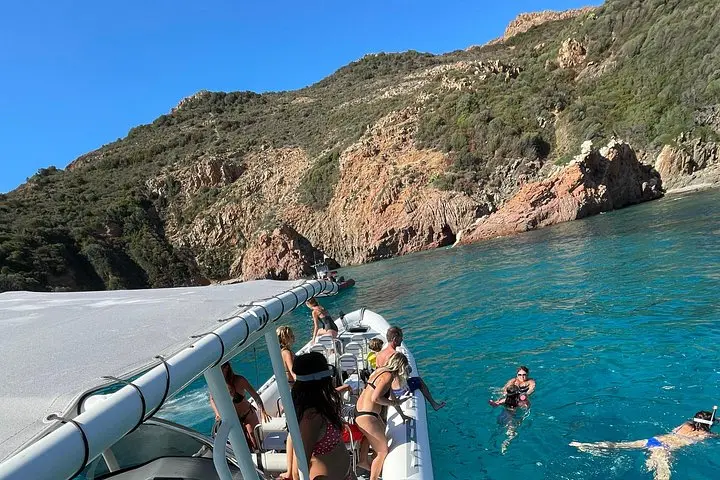
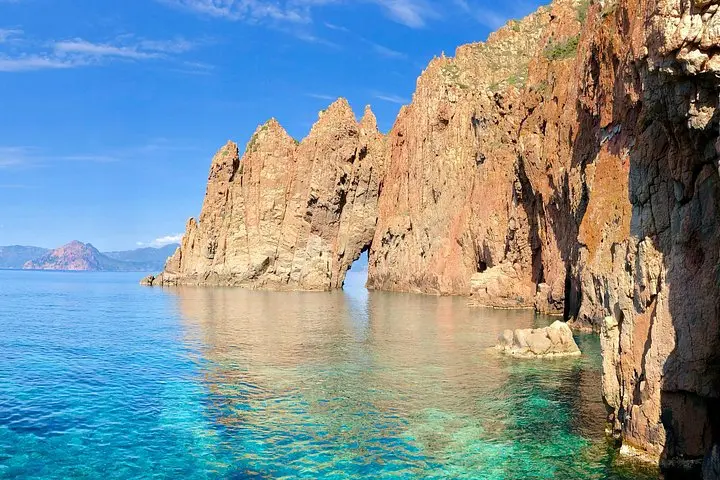
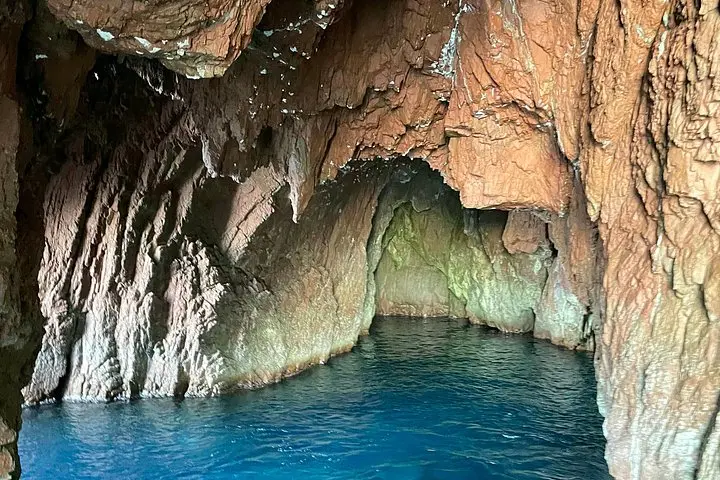
The zodiac cuts through cool Mediterranean light as the west coast of Corsica unfolds — red cliffs rising like stacked earth, sea caves yawning dark at their bases, and a small shuttered village that seems to have remained unchanged by time. Boarding from Cargèse or Sagone, the ride toward Scandola is immediate: salt on your lips, wind pushing the bow, and the captain pointing out sculpted arches before you even unstrap your life jacket.
The zodiac cuts through cool Mediterranean light as the west coast of Corsica unfolds — red cliffs rising like stacked earth, sea caves yawning dark at their bases, and a small shuttered village that seems to have remained unchanged by time. Boarding from Cargèse or Sagone, the ride toward Scandola is immediate: salt on your lips, wind pushing the bow, and the captain pointing out sculpted arches before you even unstrap your life jacket.
This coastline is shaped by volcanic and metamorphic geology; the Calanques de Piana’s ochre and red rocks are the slow work of erosion, wind and sea carving pinnacles, arches and caves over millennia. The Scandola Nature Reserve, a UNESCO site, protects both rare endemic plants on cliff ledges and a rich underwater world where Posidonia meadows shelter fishes and octopus. Culture here is maritime and old—Genoese towers and small harbors mark centuries of coastal defense and fishing traditions. Girolata remains reachable only by water or a steep trail, giving it a lived-in, off-grid feel.
Practically: the trip runs about 4–4.5 hours and includes a guided approach to Scandola, a short stop in Girolata, passage through the Gulf of Porto, views of the Calanques and a swimming/snorkeling break at Capo Rosso when conditions allow. Expect short, bumpy stretches on a 12-seat semi-rigid; seasickness and sun exposure are the most common issues. Bring sun protection, a light wind layer, and shoes that grip for stepping on wet docks. The captain manages navigation and safety, but be prepared for fast-paced transitions between viewpoints and a 30-minute time window ashore in Girolata.