THE ADVENTURE COLLECTIVE® · Independent discovery and booking for outdoor travel

Set sail from Salvador for an eight‑hour schooner cruise through Baía de Todos os Santos to Ilha dos Frades and Itaparica. Swim in Blue Flag waters, explore a small island village, and sample coastal Bahian culture on a relaxed, family‑friendly day trip.
Set sail from Salvador for an eight‑hour schooner cruise through Baía de Todos os Santos to Ilha dos Frades and Itaparica. Swim in Blue Flag waters, explore a small island village, and sample coastal Bahian culture on a relaxed, family‑friendly day trip.
You step aboard a wooden schooner at the Pier in Salvador as the city’s colonial skyline recedes and the bay opens like a living map. The wind takes hold of your hat and the Atlantic answers with a steady chop; vendors' voices and traffic noises fade, replaced by the hush of open water and an occasional saxophone drifting in from the island docks. The schooner slides through Baía de Todos os Santos—All Saints Bay—its dark hull tracing a route used by fishermen and traders for centuries.
Verified experiences and guided adventures in the surrounding area.
Operated by Gray Line Brazil · Salvador, Bahia
You step aboard a wooden schooner at the Pier in Salvador as the city’s colonial skyline recedes and the bay opens like a living map. The wind takes hold of your hat and the Atlantic answers with a steady chop; vendors' voices and traffic noises fade, replaced by the hush of open water and an occasional saxophone drifting in from the island docks. The schooner slides through Baía de Todos os Santos—All Saints Bay—its dark hull tracing a route used by fishermen and traders for centuries.
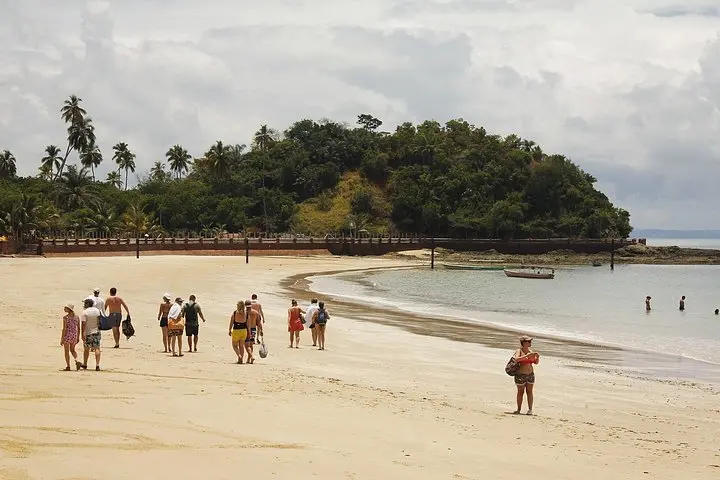
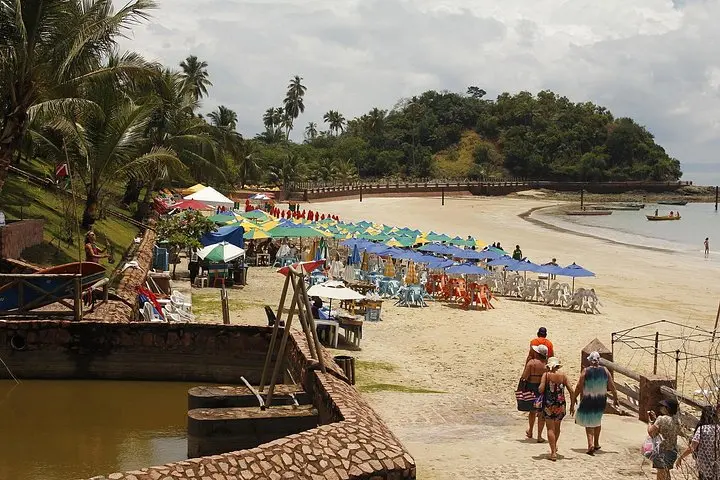
Geology here is quiet but decisive: shallow, sandy-bottomed channels and coral outcrops shape the islands’ beaches and the clear pockets of water that earned Ilha dos Frades a Blue Flag designation. The bay itself is Brazil’s largest, carved by tectonic shifts and coastal currents that created the sheltered lagoons and long tidal flats you’ll pass. Culturally, the islands carry layers of history—indigenous presence, Portuguese colonial forts, and Afro-Brazilian traditions that surface in church festivals and street music. On Ilha dos Frades, a small village of roughly a hundred people still keeps a slower rhythm; you’ll hear a resident saxophonist greeting arrivals and see churches whose whitewashed façades read like living archives.
The day is pragmatic and pleasurable: roughly eight hours total, with about 90 minutes of sailing to the first stop, two hours ashore at Ilha dos Frades for swimming and optional snorkel or SUP, another 45-minute sail to Itaparica, and two hours there to swim, rent kayaks or eat at local buffets before returning to Salvador.
Practical details matter: the schooner provides shade and onboard service—fruits are included—and hotel pickup is available. Bring reef-safe sunscreen, a swimsuit, towel, and small cash for environmental fees and island vendors; optional sports like snorkeling and SUP typically cost extra. The tour is family-friendly and rated easy for all fitness levels, but open-sea motion and sun exposure can test even experienced travelers, so prepare accordingly.
Timing is everything. Morning light softens the islands’ contours and makes snorkeling clearer; late-afternoon returns catch Salvador’s skyline in gold. Respect the island communities—stay on marked paths, don’t touch coral, and leave no trace. When you step back onto the pier in Salvador, the city’s color and noise remind you that the bay is not remote wilderness but a living landscape where nature and culture meet, push, and persist.
This schooner day cruise is a practical, sensory introduction to All Saints Bay: easy logistics, a mix of swimming and light exploration, and a clear chance to experience Bahia’s coastal history and warm Atlantic waters.
The tour is about 8 hours total—departing around 9:00 a.m., ~1.5 hours to Ilha dos Frades (2 hours ashore), ~45 minutes to Itaparica (2 hours ashore), then return to Salvador.
Onboard service includes drinks and fruits; main meals such as a buffet on Itaparica are optional and not included unless specified.
No—snorkel and SUP rentals are optional and paid locally on the islands.
Yes—this tour is family‑friendly and described as easy, but passengers should be able to board via boat ladders and handle sun exposure and short walks on sand.
Environmental fees are not included and must be paid locally—bring small BRL notes to cover these charges.
Access is limited—boarding the schooner and moving around island beaches typically requires steps and sand walking; contact the operator to discuss specific needs.
Gray Line Brazil operates guided outdoor trips and adventures with an emphasis on safety, stewardship, and memorable experiences.
You step aboard a wooden schooner at the Pier in Salvador as the city’s colonial skyline recedes and the bay opens like a living map. The wind takes hold of your hat and the Atlantic answers with a steady chop; vendors' voices and traffic noises fade, replaced by the hush of open water and an occasional saxophone drifting in from the island docks. The schooner slides through Baía de Todos os Santos—All Saints Bay—its dark hull tracing a route used by fishermen and traders for centuries.
You step aboard a wooden schooner at the Pier in Salvador as the city’s colonial skyline recedes and the bay opens like a living map. The wind takes hold of your hat and the Atlantic answers with a steady chop; vendors' voices and traffic noises fade, replaced by the hush of open water and an occasional saxophone drifting in from the island docks. The schooner slides through Baía de Todos os Santos—All Saints Bay—its dark hull tracing a route used by fishermen and traders for centuries.
Geology here is quiet but decisive: shallow, sandy-bottomed channels and coral outcrops shape the islands’ beaches and the clear pockets of water that earned Ilha dos Frades a Blue Flag designation. The bay itself is Brazil’s largest, carved by tectonic shifts and coastal currents that created the sheltered lagoons and long tidal flats you’ll pass. Culturally, the islands carry layers of history—indigenous presence, Portuguese colonial forts, and Afro-Brazilian traditions that surface in church festivals and street music. On Ilha dos Frades, a small village of roughly a hundred people still keeps a slower rhythm; you’ll hear a resident saxophonist greeting arrivals and see churches whose whitewashed façades read like living archives.
The day is pragmatic and pleasurable: roughly eight hours total, with about 90 minutes of sailing to the first stop, two hours ashore at Ilha dos Frades for swimming and optional snorkel or SUP, another 45-minute sail to Itaparica, and two hours there to swim, rent kayaks or eat at local buffets before returning to Salvador.
Practical details matter: the schooner provides shade and onboard service—fruits are included—and hotel pickup is available. Bring reef-safe sunscreen, a swimsuit, towel, and small cash for environmental fees and island vendors; optional sports like snorkeling and SUP typically cost extra. The tour is family-friendly and rated easy for all fitness levels, but open-sea motion and sun exposure can test even experienced travelers, so prepare accordingly.
Timing is everything. Morning light softens the islands’ contours and makes snorkeling clearer; late-afternoon returns catch Salvador’s skyline in gold. Respect the island communities—stay on marked paths, don’t touch coral, and leave no trace. When you step back onto the pier in Salvador, the city’s color and noise remind you that the bay is not remote wilderness but a living landscape where nature and culture meet, push, and persist.
This schooner day cruise is a practical, sensory introduction to All Saints Bay: easy logistics, a mix of swimming and light exploration, and a clear chance to experience Bahia’s coastal history and warm Atlantic waters.