THE ADVENTURE COLLECTIVE® · Independent discovery and booking for outdoor travel

Experience Punta Cana’s reefs by ScubaDoo: sit in an underwater scooter, breathe normally at shallow depths, then snorkel El Niño and finish with a glass-bottom boat tour. Ideal for beginners and non-swimmers, this half-day excursion pairs close marine encounters with practical safety and local insight.
Experience Punta Cana’s reefs by ScubaDoo: sit in an underwater scooter, breathe normally at shallow depths, then snorkel El Niño and finish with a glass-bottom boat tour. Ideal for beginners and non-swimmers, this half-day excursion pairs close marine encounters with practical safety and local insight.
You step off the speedboat into warm Caribbean light and lower yourself into a seat that hums with a promise: the ocean will pull you forward. The ScubaDoo places you face-to-face with reef life—comfortably seated, breathing normally as colorful parrotfish and sergeant majors investigate. At 3–5 meters the reef rises like an ancient city wall; corals lean into currents that nudge you along.
Verified experiences and guided adventures in the surrounding area.
Operated by Falolas Tours & Transfers · Punta Cana, La Altagracia
You step off the speedboat into warm Caribbean light and lower yourself into a seat that hums with a promise: the ocean will pull you forward. The ScubaDoo places you face-to-face with reef life—comfortably seated, breathing normally as colorful parrotfish and sergeant majors investigate. At 3–5 meters the reef rises like an ancient city wall; corals lean into currents that nudge you along.
Cabeza de Toro sits on the eastern tip of Hispaniola where Pleistocene carbonate platforms created broad, shallow reefs. The area developed as a small fishing community before tourism, and local guides still point out traditional fishing spots and offshore sandbars used by generations. Culture here mixes Dominican coastal rhythms with boat crews who know the sea as a workplace and a classroom.
After your ScubaDoo run—15 to 20 minutes of guided underwater observation—you’ll snorkel around the official site “El Niño,” where branching corals and sponges host cleaner wrasses and the occasional sea turtle. The outing closes with a 30-minute Panoramic One glass-bottom cruise that lets you read the reef from above if currents keep you shallow.
Practical guidance: arrive with reef-safe sunscreen, a light snack, and expect mild boat motion; operators provide equipment and a safety briefing suitable for beginners and non-swimmers. Morning departures usually mean calmer seas and clearer visibility. Listen to your guide, avoid touching coral, and keep an eye on the horizon—the Caribbean often gifts sudden, golden light that makes the reef glow.
No—this tour is designed for beginners and non-swimmers; you remain seated in the ScubaDoo and breathe normally under guide supervision.
Age limits vary by operator, but many allow children who meet minimum age or height requirements and can follow safety instructions—check at booking.
The Panoramic One is a surface boat—you stay dry while viewing the reef through the glass panels, though splashes on deck are possible.
Yes—snorkel sessions are supervised by a lifeguard guide, and flotation equipment is provided if needed; inform staff of any medical or mobility concerns before departure.
Falolas Tours & Transfers operates guided outdoor trips and adventures with an emphasis on safety, stewardship, and memorable experiences.


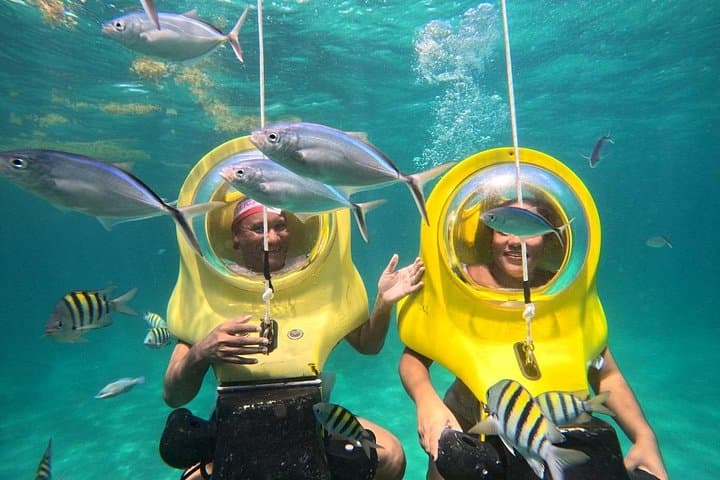

You step off the speedboat into warm Caribbean light and lower yourself into a seat that hums with a promise: the ocean will pull you forward. The ScubaDoo places you face-to-face with reef life—comfortably seated, breathing normally as colorful parrotfish and sergeant majors investigate. At 3–5 meters the reef rises like an ancient city wall; corals lean into currents that nudge you along.
You step off the speedboat into warm Caribbean light and lower yourself into a seat that hums with a promise: the ocean will pull you forward. The ScubaDoo places you face-to-face with reef life—comfortably seated, breathing normally as colorful parrotfish and sergeant majors investigate. At 3–5 meters the reef rises like an ancient city wall; corals lean into currents that nudge you along.
Cabeza de Toro sits on the eastern tip of Hispaniola where Pleistocene carbonate platforms created broad, shallow reefs. The area developed as a small fishing community before tourism, and local guides still point out traditional fishing spots and offshore sandbars used by generations. Culture here mixes Dominican coastal rhythms with boat crews who know the sea as a workplace and a classroom.
After your ScubaDoo run—15 to 20 minutes of guided underwater observation—you’ll snorkel around the official site “El Niño,” where branching corals and sponges host cleaner wrasses and the occasional sea turtle. The outing closes with a 30-minute Panoramic One glass-bottom cruise that lets you read the reef from above if currents keep you shallow.
Practical guidance: arrive with reef-safe sunscreen, a light snack, and expect mild boat motion; operators provide equipment and a safety briefing suitable for beginners and non-swimmers. Morning departures usually mean calmer seas and clearer visibility. Listen to your guide, avoid touching coral, and keep an eye on the horizon—the Caribbean often gifts sudden, golden light that makes the reef glow.