THE ADVENTURE COLLECTIVE® · Independent discovery and booking for outdoor travel

Explore Germany’s largest SEA LIFE aquarium at Oberhausen’s CentrO: glass tunnels, a shark nursing facility and lively feeding presentations make this a compact, family-friendly marine encounter. Plan 60–120 minutes and visit off-peak to avoid lines.
Explore Germany’s largest SEA LIFE aquarium at Oberhausen’s CentrO: glass tunnels, a shark nursing facility and lively feeding presentations make this a compact, family-friendly marine encounter. Plan 60–120 minutes and visit off-peak to avoid lines.
You step from the busy CentrO plaza into dimmed rooms where light plays over scales and glass; currents imagined through colored spotlights tug at display walls and a slow parade of rays glides as if rehearsing beneath your feet.
Verified experiences and guided adventures in the surrounding area.
Operated by SEA LIFE Oberhausen · Oberhausen, North Rhine-Westphalia
You step from the busy CentrO plaza into dimmed rooms where light plays over scales and glass; currents imagined through colored spotlights tug at display walls and a slow parade of rays glides as if rehearsing beneath your feet.
SEA LIFE Oberhausen is Germany's largest SEA LIFE aquarium, built around a long glass tunnel that puts visitors face-to-fin with sharks, rays and turtles. Exhibits trace freshwater to ocean environments — local rivers, the Atlantic and Pacific, and a recreated mangrove where the center’s shark nursery raises black-tip reef and cat shark pups. Daily feedings and a playful otter pair add kinetic surprises: you may catch them juggling pebbles in their pool.
The Ruhr’s industrial past shaped Oberhausen into a regional cultural hub; the aquarium sits amid the CentrO complex, a modern leisure quarter that contrasts with the area’s steel-and-coal history. Geology is on display too: tanks explain sediment, currents and coastal habitats that link local rivers to broader marine systems.
Practically, plan 60–120 minutes for the visit; last admissions are typically 90 minutes before closing. Mornings or weekday afternoons reduce wait times — there is no guaranteed skip-the-line during peak season. Facilities are wheelchair and stroller accessible, and staff run scheduled feedings with interpretive talks.
Bring a camera (no flash), comfortable shoes and layers for cooler gallery spaces. Respect viewing rules, avoid tapping glass, and use the educational signage: the aquarium is both entertaining and a compact lesson in coastal conservation and species recovery.
Expect 60–120 minutes depending on crowd size and whether you attend feeding sessions or educational talks.
Tickets are mobile and accepted at entry; there is no guaranteed skip-the-line during peak times, so booking ahead is recommended.
Yes—routes, surfaces and transport links are wheelchair- and stroller-accessible, with elevators between levels.
Direct contact is limited; some touch exhibits may exist but most animal interactions are observational and supervised for welfare reasons.
SEA LIFE Oberhausen operates guided outdoor trips and adventures with an emphasis on safety, stewardship, and memorable experiences.
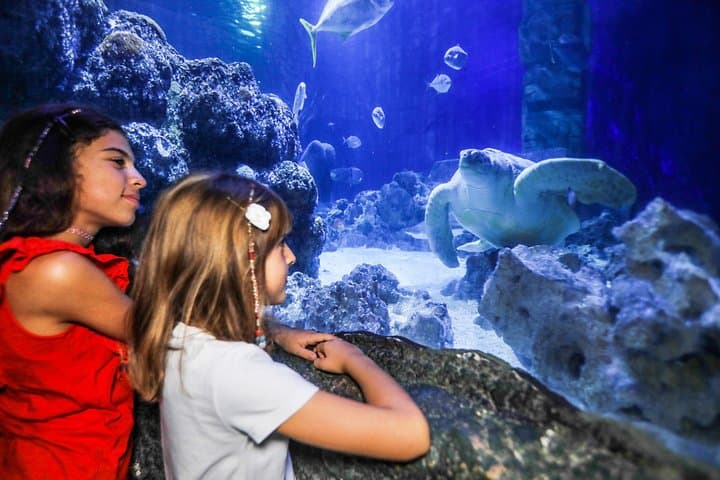


You step from the busy CentrO plaza into dimmed rooms where light plays over scales and glass; currents imagined through colored spotlights tug at display walls and a slow parade of rays glides as if rehearsing beneath your feet.
You step from the busy CentrO plaza into dimmed rooms where light plays over scales and glass; currents imagined through colored spotlights tug at display walls and a slow parade of rays glides as if rehearsing beneath your feet.
SEA LIFE Oberhausen is Germany's largest SEA LIFE aquarium, built around a long glass tunnel that puts visitors face-to-fin with sharks, rays and turtles. Exhibits trace freshwater to ocean environments — local rivers, the Atlantic and Pacific, and a recreated mangrove where the center’s shark nursery raises black-tip reef and cat shark pups. Daily feedings and a playful otter pair add kinetic surprises: you may catch them juggling pebbles in their pool.
The Ruhr’s industrial past shaped Oberhausen into a regional cultural hub; the aquarium sits amid the CentrO complex, a modern leisure quarter that contrasts with the area’s steel-and-coal history. Geology is on display too: tanks explain sediment, currents and coastal habitats that link local rivers to broader marine systems.
Practically, plan 60–120 minutes for the visit; last admissions are typically 90 minutes before closing. Mornings or weekday afternoons reduce wait times — there is no guaranteed skip-the-line during peak season. Facilities are wheelchair and stroller accessible, and staff run scheduled feedings with interpretive talks.
Bring a camera (no flash), comfortable shoes and layers for cooler gallery spaces. Respect viewing rules, avoid tapping glass, and use the educational signage: the aquarium is both entertaining and a compact lesson in coastal conservation and species recovery.