THE ADVENTURE COLLECTIVE® · Independent discovery and booking for outdoor travel

Step into a transparent helmet and walk the sandy floor of Chankanaab National Park while colorful reef fish thread through the water around you. Sea Trek makes underwater exploration accessible to non-swimmers and families, pairing a brief safety briefing with a unique, guided ocean stroll.
Step into a transparent helmet and walk the sandy floor of Chankanaab National Park while colorful reef fish thread through the water around you. Sea Trek makes underwater exploration accessible to non-swimmers and families, pairing a brief safety briefing with a unique, guided ocean stroll.
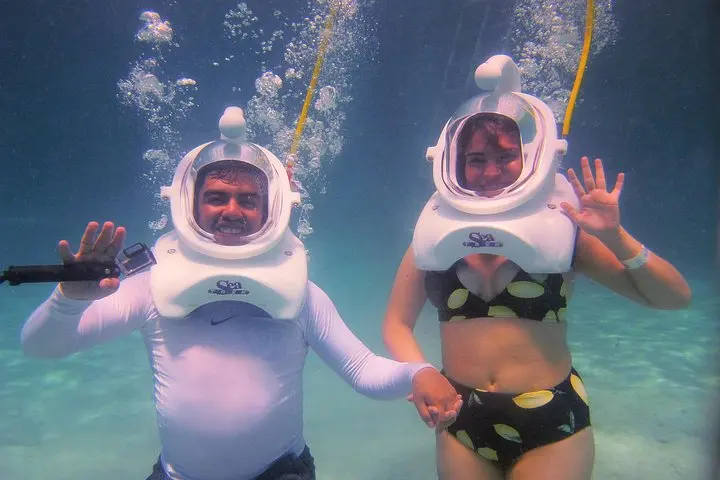
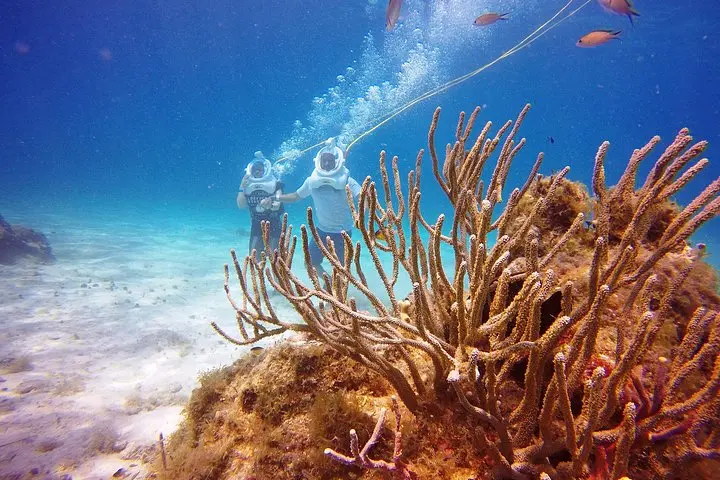
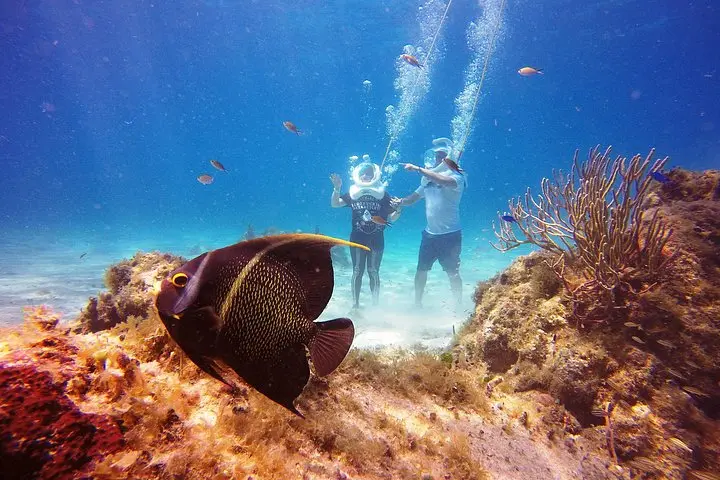
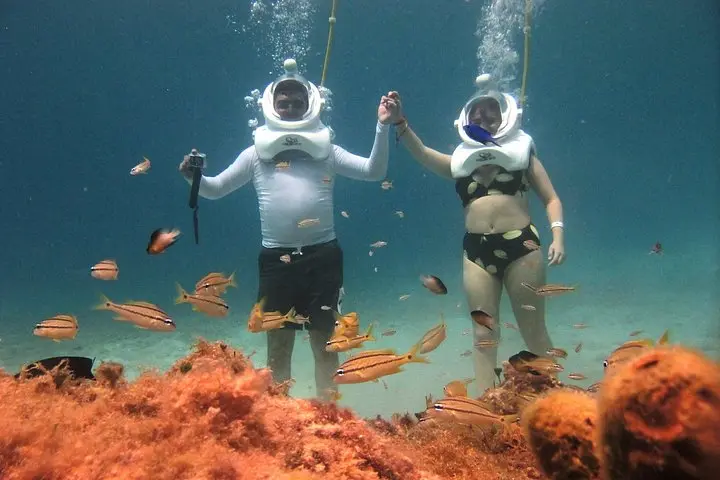
The ladder groans a little as you step down; warm Caribbean water closes around your calves and the shoreline noise recedes into a soft hiss. The Sea Trek helmet locks into place, a clear visor framing a new world: schools of sergeant majors and parrotfish weave between staghorn coral, sand ripples lay out like lanes, and your guide points out a curious pufferfish as if introducing a shy neighbor.
Verified experiences and guided adventures in the surrounding area.
Operated by Sea Trek Cozumel · Cozumel, Quintana Roo
The ladder groans a little as you step down; warm Caribbean water closes around your calves and the shoreline noise recedes into a soft hiss. The Sea Trek helmet locks into place, a clear visor framing a new world: schools of sergeant majors and parrotfish weave between staghorn coral, sand ripples lay out like lanes, and your guide points out a curious pufferfish as if introducing a shy neighbor.
This helmet-dive at Chankanaab National Park lets you walk on the ocean floor without needing to swim or earn any certification. It’s an accessible introduction to Cozumel’s reef systems—shallow, protected and designed for people aged eight and up. The experience is as much about the engineering of breathing underwater as it is the marine life: a steady flow of air into the helmet keeps your head dry while you tread the white sand and let the reef do the moving around you.
Geologically, Cozumel rides a limestone platform carved by tropical seas; the island’s abrupt drop-offs and coral gardens started as living architecture. Chankanaab offers a gentler face of that geology—sand flats punctuated by coral outcrops—so the biodiversity is dense and visible even from standing height. The park itself has roots in local conservation efforts dating back decades, when preserving reef and mangrove became a priority for both tourism and fishing communities.
Culturally, a visit here always has local color: guides with quick Spanish banter, hand-painted signs, and the smell of frankincense from nearby Mayan craft stalls. Expect practical service—a short safety briefing, a fitted helmet, and a guide who narrates reef highlights as you move—followed by time to snorkel afterward with complimentary gear.
Plan your day with logistics in mind. Arrive 20 minutes early, bring cash for the park entrance (the park offers a discounted cash rate), and leave room in your schedule—Sea Trek bookings are limited to small groups and slowdowns are common at peak times. It’s not recommended for people with spinal, cardiovascular issues, or pregnancy. Wear water shoes, biodegradable sunscreen and secure a waterproof camera or use an underwater housing if you want clear shots; phone cases usually fog at depth.
The experience is short—about an hour on-site—but immersive. The reef will tease and pull your attention: a cracked clam embedded in coral, a school that decides to orbit your group, a bright nudibranch clinging to a rock. Walk slowly, listen to your guide, and let the ocean set the pace. For many travelers, Sea Trek is the moment the Caribbean stops being a postcard and starts being a place that moves around you.
No—Sea Trek helmets keep your head dry and you walk on the sand; basic mobility and the ability to stand are required.
Participants must be at least 8 years old and meet the minimum weight requirement (around 80 pounds/36 kg).
The full visit is about 80 minutes including briefing, helmet time and a chance to snorkel afterward.
Yes—small waterproof cameras or housings are recommended; phones should use an approved waterproof case to avoid fogging.
Chankanaab Park has wheelchair-accessible facilities and transportation options, but helmet-dive access requires descending a seaside ladder, so check accessibility needs with the operator ahead of time.
Sea Trek is not recommended for people with serious spinal, cardiovascular issues, or pregnancy—consult your doctor and inform staff of any medical concerns.
Sea Trek Cozumel operates guided outdoor trips and adventures with an emphasis on safety, stewardship, and memorable experiences.
The ladder groans a little as you step down; warm Caribbean water closes around your calves and the shoreline noise recedes into a soft hiss. The Sea Trek helmet locks into place, a clear visor framing a new world: schools of sergeant majors and parrotfish weave between staghorn coral, sand ripples lay out like lanes, and your guide points out a curious pufferfish as if introducing a shy neighbor.
The ladder groans a little as you step down; warm Caribbean water closes around your calves and the shoreline noise recedes into a soft hiss. The Sea Trek helmet locks into place, a clear visor framing a new world: schools of sergeant majors and parrotfish weave between staghorn coral, sand ripples lay out like lanes, and your guide points out a curious pufferfish as if introducing a shy neighbor.
This helmet-dive at Chankanaab National Park lets you walk on the ocean floor without needing to swim or earn any certification. It’s an accessible introduction to Cozumel’s reef systems—shallow, protected and designed for people aged eight and up. The experience is as much about the engineering of breathing underwater as it is the marine life: a steady flow of air into the helmet keeps your head dry while you tread the white sand and let the reef do the moving around you.
Geologically, Cozumel rides a limestone platform carved by tropical seas; the island’s abrupt drop-offs and coral gardens started as living architecture. Chankanaab offers a gentler face of that geology—sand flats punctuated by coral outcrops—so the biodiversity is dense and visible even from standing height. The park itself has roots in local conservation efforts dating back decades, when preserving reef and mangrove became a priority for both tourism and fishing communities.
Culturally, a visit here always has local color: guides with quick Spanish banter, hand-painted signs, and the smell of frankincense from nearby Mayan craft stalls. Expect practical service—a short safety briefing, a fitted helmet, and a guide who narrates reef highlights as you move—followed by time to snorkel afterward with complimentary gear.
Plan your day with logistics in mind. Arrive 20 minutes early, bring cash for the park entrance (the park offers a discounted cash rate), and leave room in your schedule—Sea Trek bookings are limited to small groups and slowdowns are common at peak times. It’s not recommended for people with spinal, cardiovascular issues, or pregnancy. Wear water shoes, biodegradable sunscreen and secure a waterproof camera or use an underwater housing if you want clear shots; phone cases usually fog at depth.
The experience is short—about an hour on-site—but immersive. The reef will tease and pull your attention: a cracked clam embedded in coral, a school that decides to orbit your group, a bright nudibranch clinging to a rock. Walk slowly, listen to your guide, and let the ocean set the pace. For many travelers, Sea Trek is the moment the Caribbean stops being a postcard and starts being a place that moves around you.