THE ADVENTURE COLLECTIVE® · Independent discovery and booking for outdoor travel

Ride a Seabob along Fort Lauderdale’s nearshore reef for 90 minutes of guided snorkeling without heavy scuba gear. This small-group tour combines steady machine propulsion with close-up marine encounters suitable for non-swimmers and seasoned snorkelers alike.
Ride a Seabob along Fort Lauderdale’s nearshore reef for 90 minutes of guided snorkeling without heavy scuba gear. This small-group tour combines steady machine propulsion with close-up marine encounters suitable for non-swimmers and seasoned snorkelers alike.
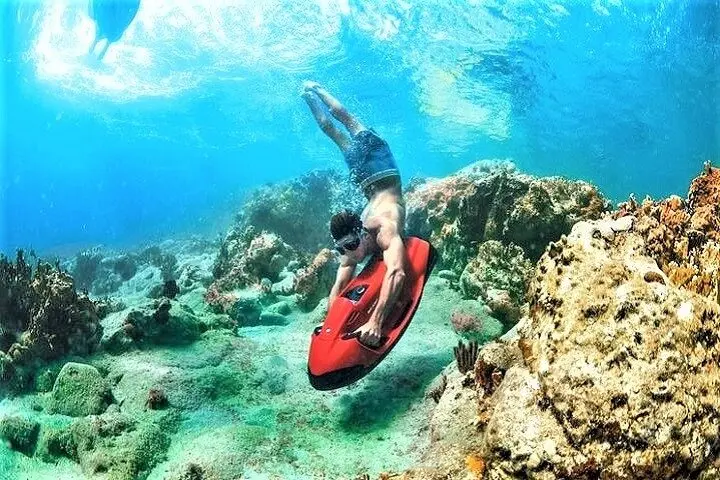
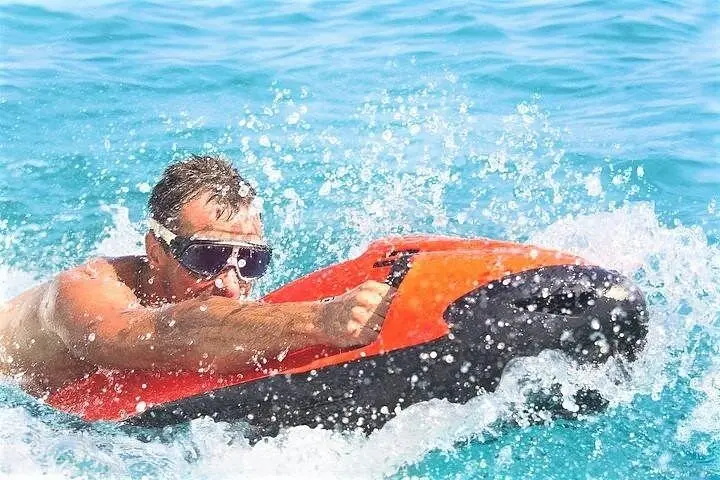
The ocean in front of the Pelican Grand isn’t anonymous blue; it’s a shallow stage where coral heads rise like outposts and fish streak through columns of sun. On a wind-pulled morning the water sits flat and glassy, the Seabob’s hull whispering as guides walk machines into waist-deep surf. You clip a safety harness to the device, feel the buoyant tug as it floats, and for the next 90 minutes the machine becomes both vehicle and flotation — part jet ski, part mask-and-fins, part small craft that invites you to ride the reef line.
Verified experiences and guided adventures in the surrounding area.
Operated by Beach Ventures Seabob Rental · Fort Lauderdale, Florida
The ocean in front of the Pelican Grand isn’t anonymous blue; it’s a shallow stage where coral heads rise like outposts and fish streak through columns of sun. On a wind-pulled morning the water sits flat and glassy, the Seabob’s hull whispering as guides walk machines into waist-deep surf. You clip a safety harness to the device, feel the buoyant tug as it floats, and for the next 90 minutes the machine becomes both vehicle and flotation — part jet ski, part mask-and-fins, part small craft that invites you to ride the reef line.
Fort Lauderdale’s reefs are the northern edge of South Florida’s nearshore patch reefs, relics of reef systems that predate modern development. The landscape under the surface is limestone and ancient marine terraces; coral colonies and spur-and-groove formations provide structure for parrotfish, angelfish, and the occasional hawksbill or green sea turtle. The city’s relationship with its coastline runs deep: 20th-century beach hotels and early conservation efforts shaped a coastline used for tourism and slowly refitted to protect vulnerable offshore habitats.
The tour combines local maritime savvy with a compact natural-history lesson. Guides point out how currents sculpt sand around coral, where grazing fish keep algae down, and how seasonal sea temperatures change which species show up. Fort Lauderdale isn’t remote — fishing boats, jet skis, and the occasional cargo ship pass the horizon — but the reef asks for careful behavior: no touching, steady buoyancy, and reef-safe sunscreen.
For travelers the experience is immediate and physical. The Seabob reduces the learning curve: no heavy scuba kit, no long surface swims — the machine pulls you along, while an instructor floats nearby. Expect close encounters with colorful schooling fish, territorial hogfish, and turtle breezes that glide with the current. Photographers can capture near-surface angles where light and water create sharp, saturated color.
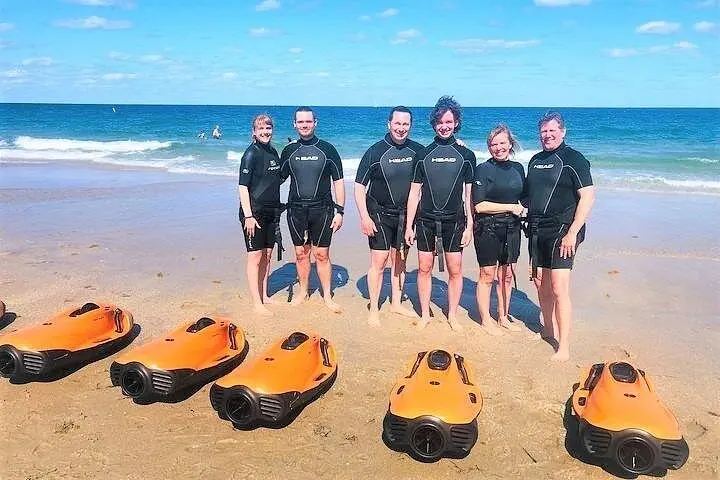
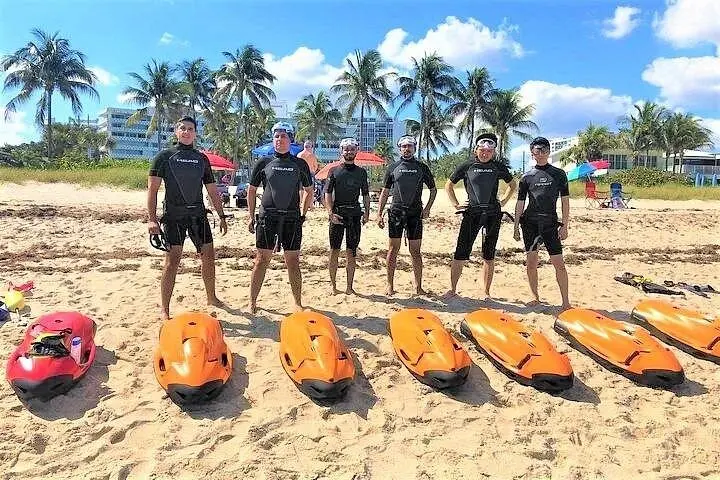
Practical guidance matters here. Meet behind Pelican Grand Beach Resort; plan for limited parking and bring water, a towel, and a long-sleeve rash guard for sun and belt-friction protection. If you’re prone to motion sickness, take over-the-counter medication before boarding — wind and chop can make the short transit bumpy. Tours run year-round; wetsuits are optional in winter for a modest fee. The operator limits groups to six, providing masks, a safety harness, and instruction, so even travelers who aren’t confident swimmers can participate.
In short: this is a high-access, low-barrier reef encounter that puts you within arm’s reach of South Florida’s nearshore marine life, with the novelty of Seabob propulsion making the reef feel freshly discoverable. It’s fast, tactile, and very much ocean-forward — and it rewards a little planning with vivid, easy-to-capture moments underwater.
No — the Seabob floats and you wear a pilot harness; instructors remain nearby for swimmers and non‑swimmers.
Groups accept guests 12+ and a minimum weight of 75 lbs; Seabob operators can be younger with parental consent and supervision.
Yes — optional wetsuit rentals are available for a small fee in cooler months; masks and safety gear are provided.
Tours cancel for unsafe sea conditions; you can get a full refund if you cancel at least 24 hours prior or if the operator cancels for weather.
Limited street and beach parking are available near Pelican Grand; paid lots and a nearby garage provide alternatives.
Yes — you may bring waterproof cameras; guides often assist with framing but will not handle personal gear for liability reasons.
Beach Ventures Seabob Rental operates guided outdoor trips and adventures with an emphasis on safety, stewardship, and memorable experiences.
The ocean in front of the Pelican Grand isn’t anonymous blue; it’s a shallow stage where coral heads rise like outposts and fish streak through columns of sun. On a wind-pulled morning the water sits flat and glassy, the Seabob’s hull whispering as guides walk machines into waist-deep surf. You clip a safety harness to the device, feel the buoyant tug as it floats, and for the next 90 minutes the machine becomes both vehicle and flotation — part jet ski, part mask-and-fins, part small craft that invites you to ride the reef line.
The ocean in front of the Pelican Grand isn’t anonymous blue; it’s a shallow stage where coral heads rise like outposts and fish streak through columns of sun. On a wind-pulled morning the water sits flat and glassy, the Seabob’s hull whispering as guides walk machines into waist-deep surf. You clip a safety harness to the device, feel the buoyant tug as it floats, and for the next 90 minutes the machine becomes both vehicle and flotation — part jet ski, part mask-and-fins, part small craft that invites you to ride the reef line.
Fort Lauderdale’s reefs are the northern edge of South Florida’s nearshore patch reefs, relics of reef systems that predate modern development. The landscape under the surface is limestone and ancient marine terraces; coral colonies and spur-and-groove formations provide structure for parrotfish, angelfish, and the occasional hawksbill or green sea turtle. The city’s relationship with its coastline runs deep: 20th-century beach hotels and early conservation efforts shaped a coastline used for tourism and slowly refitted to protect vulnerable offshore habitats.
The tour combines local maritime savvy with a compact natural-history lesson. Guides point out how currents sculpt sand around coral, where grazing fish keep algae down, and how seasonal sea temperatures change which species show up. Fort Lauderdale isn’t remote — fishing boats, jet skis, and the occasional cargo ship pass the horizon — but the reef asks for careful behavior: no touching, steady buoyancy, and reef-safe sunscreen.
For travelers the experience is immediate and physical. The Seabob reduces the learning curve: no heavy scuba kit, no long surface swims — the machine pulls you along, while an instructor floats nearby. Expect close encounters with colorful schooling fish, territorial hogfish, and turtle breezes that glide with the current. Photographers can capture near-surface angles where light and water create sharp, saturated color.
Practical guidance matters here. Meet behind Pelican Grand Beach Resort; plan for limited parking and bring water, a towel, and a long-sleeve rash guard for sun and belt-friction protection. If you’re prone to motion sickness, take over-the-counter medication before boarding — wind and chop can make the short transit bumpy. Tours run year-round; wetsuits are optional in winter for a modest fee. The operator limits groups to six, providing masks, a safety harness, and instruction, so even travelers who aren’t confident swimmers can participate.
In short: this is a high-access, low-barrier reef encounter that puts you within arm’s reach of South Florida’s nearshore marine life, with the novelty of Seabob propulsion making the reef feel freshly discoverable. It’s fast, tactile, and very much ocean-forward — and it rewards a little planning with vivid, easy-to-capture moments underwater.