THE ADVENTURE COLLECTIVE® · Independent discovery and booking for outdoor travel

Paddle from Pelican Point’s lighthouse across cool Atlantic water to watch seals, pelicans and often dolphins in their element. This half-day sea-kayak tour combines a scenic 4x4 transfer, beginner-friendly paddling and expert local guiding.
Paddle from Pelican Point’s lighthouse across cool Atlantic water to watch seals, pelicans and often dolphins in their element. This half-day sea-kayak tour combines a scenic 4x4 transfer, beginner-friendly paddling and expert local guiding.
A low spit of sand thrusts into the Atlantic; the lighthouse stands like a weathered marker and the ocean immediately begins to shape the day. Paddle in a double kayak as seals bob like polished stones and pelicans adjust their wings on nearby rocks. The air smells faintly of salt and the Benguela current pulls cool water past the Namib’s edge, inviting inquisitive dolphins to inspect new arrivals.
Verified experiences and guided adventures in the surrounding area.
Operated by Eco Marine Kayak Tours · Walvis Bay, Erongo
A low spit of sand thrusts into the Atlantic; the lighthouse stands like a weathered marker and the ocean immediately begins to shape the day. Paddle in a double kayak as seals bob like polished stones and pelicans adjust their wings on nearby rocks. The air smells faintly of salt and the Benguela current pulls cool water past the Namib’s edge, inviting inquisitive dolphins to inspect new arrivals.
Pelican Point is the sandbar that guards Walvis Bay’s lagoon, a wetland long used for salt harvesting and maritime navigation and today recognized for its importance to shorebirds. Geologically, the site is where windblown desert meets cold, nutrient-rich ocean—creating broad salt pans, extensive mudflats and a persistent upwelling that fuels seabird life. Local guides, often drawn from fishing and coastal communities, combine safety instruction with natural history to minimize disturbance to wildlife.
Expect a 40 km 4x4 transfer across coastal gravel and salt flats to a launch point near the lighthouse, then a sheltered-but-open ocean paddle to the seal colonies. The operator supplies kayaks and basic safety gear and provides light snacks; the full outing runs about 4–5 hours. Conditions can shift rapidly—mornings are calmer, afternoons bring stronger winds—so plan for layered clothing, sun protection, and secure phone/camera storage. Keep distance from hauled-out seals, follow guide signals, and listen for on-water currents. This half-day trip balances close wildlife encounters with straightforward logistics, making it a practical choice for first-time ocean paddlers who want an authentic, low-impact marine experience.
The full excursion is about 4–5 hours including transfers; the on-water paddling segment is typically 60–90 minutes round trip depending on conditions.
No—this trip is designed for beginners; guides provide instruction, but basic paddling ability and the ability to sit and paddle for an hour are expected.
Yes—kayaks routinely approach areas near hauled-out seals and you may see playful individuals, but guides enforce respectful distances to avoid disturbance.
All sales are final per operator policy and trips may be canceled for bad weather or insufficient participants; confirm specifics at booking.
Eco Marine Kayak Tours operates guided outdoor trips and adventures with an emphasis on safety, stewardship, and memorable experiences.
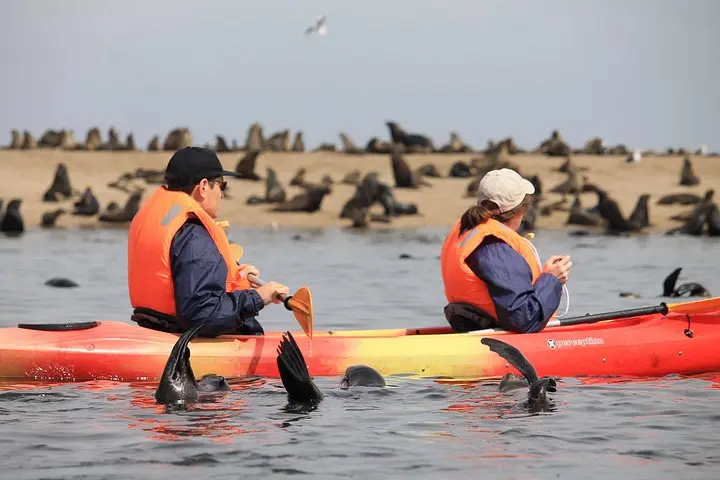
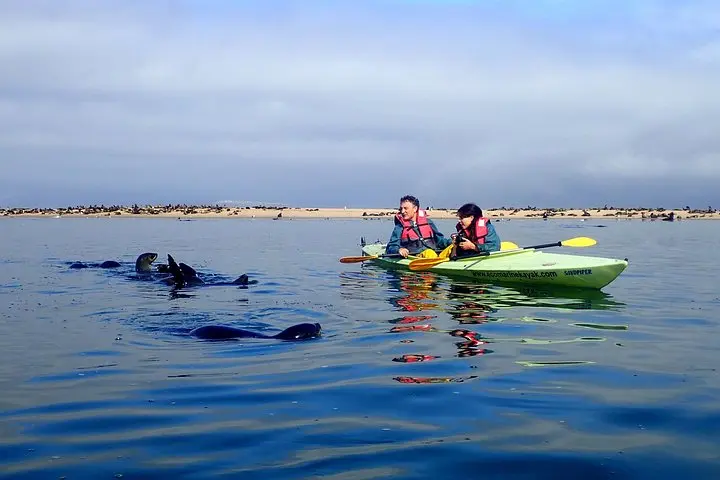
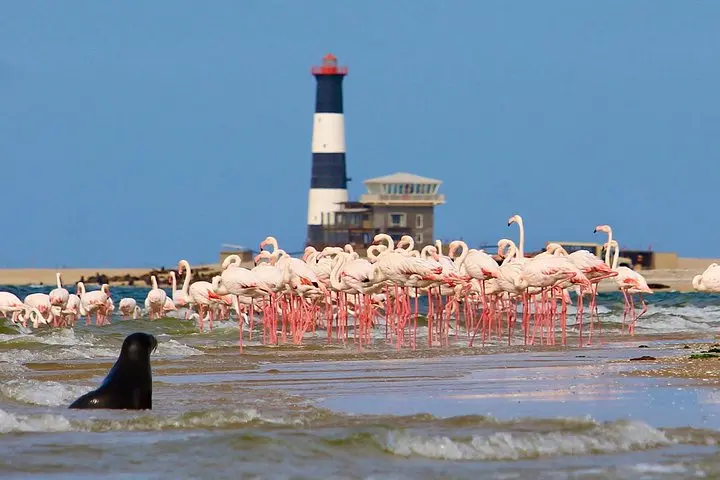
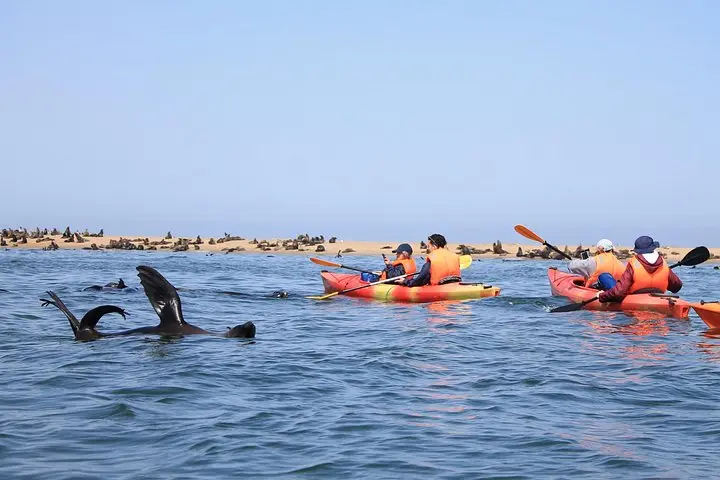
A low spit of sand thrusts into the Atlantic; the lighthouse stands like a weathered marker and the ocean immediately begins to shape the day. Paddle in a double kayak as seals bob like polished stones and pelicans adjust their wings on nearby rocks. The air smells faintly of salt and the Benguela current pulls cool water past the Namib’s edge, inviting inquisitive dolphins to inspect new arrivals.
A low spit of sand thrusts into the Atlantic; the lighthouse stands like a weathered marker and the ocean immediately begins to shape the day. Paddle in a double kayak as seals bob like polished stones and pelicans adjust their wings on nearby rocks. The air smells faintly of salt and the Benguela current pulls cool water past the Namib’s edge, inviting inquisitive dolphins to inspect new arrivals.
Pelican Point is the sandbar that guards Walvis Bay’s lagoon, a wetland long used for salt harvesting and maritime navigation and today recognized for its importance to shorebirds. Geologically, the site is where windblown desert meets cold, nutrient-rich ocean—creating broad salt pans, extensive mudflats and a persistent upwelling that fuels seabird life. Local guides, often drawn from fishing and coastal communities, combine safety instruction with natural history to minimize disturbance to wildlife.
Expect a 40 km 4x4 transfer across coastal gravel and salt flats to a launch point near the lighthouse, then a sheltered-but-open ocean paddle to the seal colonies. The operator supplies kayaks and basic safety gear and provides light snacks; the full outing runs about 4–5 hours. Conditions can shift rapidly—mornings are calmer, afternoons bring stronger winds—so plan for layered clothing, sun protection, and secure phone/camera storage. Keep distance from hauled-out seals, follow guide signals, and listen for on-water currents. This half-day trip balances close wildlife encounters with straightforward logistics, making it a practical choice for first-time ocean paddlers who want an authentic, low-impact marine experience.