THE ADVENTURE COLLECTIVE® · Independent discovery and booking for outdoor travel

Soar above Fort Lauderdale and Miami’s white-sand beaches on a 1-hour seaplane tour that links skyline views with turquoise bays and a dramatic water landing. Ideal for photographers and first-time flyers, this route reveals the coastline’s geology, Art Deco legacy, and boating culture from a bird’s-eye perspective.
Soar above Fort Lauderdale and Miami’s white-sand beaches on a 1-hour seaplane tour that links skyline views with turquoise bays and a dramatic water landing. Ideal for photographers and first-time flyers, this route reveals the coastline’s geology, Art Deco legacy, and boating culture from a bird’s-eye perspective.
You lift off from the marina and the city shrinks: palm-lined shorelines, white sand serrated against aquamarine water, and the grid of streets across Miami Beach laid out like a map below your feet.
Verified experiences and guided adventures in the surrounding area.
You lift off from the marina and the city shrinks: palm-lined shorelines, white sand serrated against aquamarine water, and the grid of streets across Miami Beach laid out like a map below your feet.
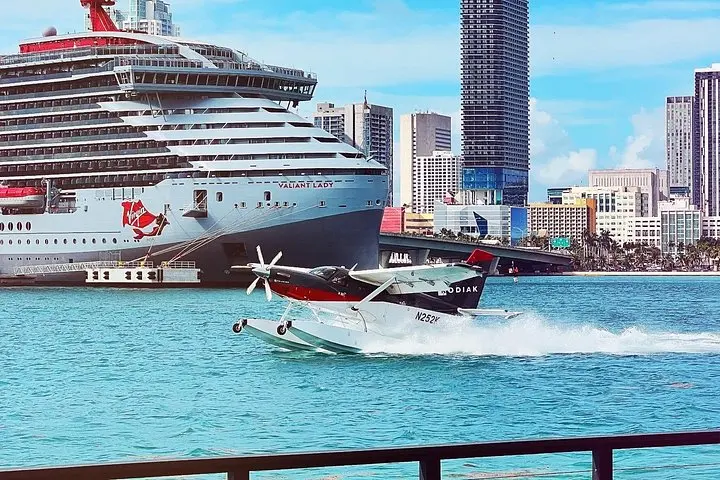
In a single hour the seaplane traces the Atlantic edge from Fort Lauderdale Beach past Hollywood and Sunny Isles, sweeps Haulover’s sandbars, and follows the Art Deco coastline into Biscayne Bay where islands and channels carve a patchwork into the water. Pilots point out downtown Miami’s skyline, the curving causeways and the shallow, seagrass-bottomed shallows that give the bay its vivid turquoise. The ride finishes with a controlled splash landing in Miami — a small, perfectly engineered contact between machine and sea.
This corridor sits on young coastal sand and limestone shoals formed by Pleistocene sea-level shifts; Miami’s Art Deco district reflects the 1920s–30s boom that made these beaches travel-ready. The region’s boating culture and early amphibious flights helped promote aerial tours as a way to read the coastline.
Practical guidance: flights are about 60 minutes—book morning or late afternoon light for best visibility. Expect wind and spray on approach; a light windbreaker, sunglasses, and a secure strap for cameras are smart. Motion-sickness medication helps sensitive riders. Operators follow FAA rules and marine guidelines; listen to the safety briefing about weight limits and life jackets. Weather, especially during hurricane season, dictates schedule changes. For photographers, the best shots are taken with fast shutter speeds and a steady hand; for everyone else, bring sunscreen and a sense of scale—seeing the coastline from a seaplane changes how you read the water below.
The advertised tour is approximately 60 minutes from takeoff to splash landing and return procedures.
Yes—splash landings are routine for seaplane pilots and part of standard training; crew provide safety instructions and life jackets are available if required.
Operators commonly have combined weight limits and may ask for passenger weights for balance. If you have mobility or serious medical issues, check with the operator before booking.
Space is limited; bring compact gear and secure it with straps. Large tripods or heavy equipment may not be allowed onboard.
You lift off from the marina and the city shrinks: palm-lined shorelines, white sand serrated against aquamarine water, and the grid of streets across Miami Beach laid out like a map below your feet.
You lift off from the marina and the city shrinks: palm-lined shorelines, white sand serrated against aquamarine water, and the grid of streets across Miami Beach laid out like a map below your feet.
In a single hour the seaplane traces the Atlantic edge from Fort Lauderdale Beach past Hollywood and Sunny Isles, sweeps Haulover’s sandbars, and follows the Art Deco coastline into Biscayne Bay where islands and channels carve a patchwork into the water. Pilots point out downtown Miami’s skyline, the curving causeways and the shallow, seagrass-bottomed shallows that give the bay its vivid turquoise. The ride finishes with a controlled splash landing in Miami — a small, perfectly engineered contact between machine and sea.
This corridor sits on young coastal sand and limestone shoals formed by Pleistocene sea-level shifts; Miami’s Art Deco district reflects the 1920s–30s boom that made these beaches travel-ready. The region’s boating culture and early amphibious flights helped promote aerial tours as a way to read the coastline.
Practical guidance: flights are about 60 minutes—book morning or late afternoon light for best visibility. Expect wind and spray on approach; a light windbreaker, sunglasses, and a secure strap for cameras are smart. Motion-sickness medication helps sensitive riders. Operators follow FAA rules and marine guidelines; listen to the safety briefing about weight limits and life jackets. Weather, especially during hurricane season, dictates schedule changes. For photographers, the best shots are taken with fast shutter speeds and a steady hand; for everyone else, bring sunscreen and a sense of scale—seeing the coastline from a seaplane changes how you read the water below.