THE ADVENTURE COLLECTIVE® · Independent discovery and booking for outdoor travel

Move through Jasper’s winter silence on a guided snowshoe tour that crosses frozen lakes, evergreen forests, and open meadows. Guides supply snowshoes and boots while sharing geology, wildlife tracks, and stories that bring the park’s cold landscape alive.
Move through Jasper’s winter silence on a guided snowshoe tour that crosses frozen lakes, evergreen forests, and open meadows. Guides supply snowshoes and boots while sharing geology, wildlife tracks, and stories that bring the park’s cold landscape alive.
The first crunch of snow underfoot arrives before the explanation—an honest, audible punctuation to a morning that smells of pine and cold metal. Your guide tightens the straps on your snowshoes, breath fogging in the thin mountain air, and points to a line of tracks fading into a stand of spruce. For the next three to four hours you follow that line: over frozen lake ice that dares you to admire its glassy skin up close, through evergreen corridors that muff le the world, and across meadows where wind-sculpted drifts catch the low winter light.
Verified experiences and guided adventures in the surrounding area.
Operated by SunDog Tour Co · Jasper, Alberta
The first crunch of snow underfoot arrives before the explanation—an honest, audible punctuation to a morning that smells of pine and cold metal. Your guide tightens the straps on your snowshoes, breath fogging in the thin mountain air, and points to a line of tracks fading into a stand of spruce. For the next three to four hours you follow that line: over frozen lake ice that dares you to admire its glassy skin up close, through evergreen corridors that muff le the world, and across meadows where wind-sculpted drifts catch the low winter light.
Jasper National Park is a landscape written in ice and sediment. The valleys here were carved by Pleistocene glaciers; the layers of limestone and shale reveal an ancient seabed now uplifted into peaks. European explorers and the Canadian Pacific Railway put Jasper on the map in the early 20th century, but this country has been traveled and cared for by Indigenous peoples—Cree and Stoney (Nakoda) among them—for generations. Your guide will sketch those histories as easily as they point out a cirque or a pocket of glacial till.
The tour moves at a steady, accessible pace—about 3–5 km of rolling terrain, with cumulative elevation gain usually under 200 m. Guides supply snowshoes, thermal boots, and hiking poles, and the route is selected for safe, scenic travel: frozen lake edges, gently sloping meadows, and sheltered forest tracks. Expect to stop for short interpretive moments—reading the land for animal sign, noting rock outcrops, and listening for hardy winter birds like chickadees and gray jays that punctuate the silence.
Practicalities matter in winter. Layering is non-negotiable: a moisture-wicking base, insulating midlayer, and a windproof shell. Footwear should be warm and waterproof; gaiters help with deep drifts. Bring insulated gloves, sunglasses for glare off the snow, and a small daypack with water and high-energy snacks—the cold sharpens hunger faster than you think. Guides will provide hand warmers on request and handle logistics like park permits and safety briefings. Pickup service from Jasper-area hotels simplifies logistics; confirm your pickup point and plan to be ready in the lobby five minutes before departure.
This is a tour designed to demystify winter: to teach you how to move on snow, read a frozen landscape, and leave it as you found it. Whether you come to test snowshoeing for the first time or to stretch a familiar stride across new terrain, the Secrets of Jasper tour makes winter feel less like an obstacle and more like a season with its own rules—and rewards.
Snowshoes, thermal boots, hiking poles, a guided route through Jasper National Park, and the option to request hand warmers; hotel pickup in Jasper is included.
The on-trail portion is approximately 2 hours within a 3–4 hour total tour window that includes pickup and instruction.
Yes—guides provide instruction and choose routes appropriate for beginners while still offering interest for experienced participants.
Wear layered clothing, insulated waterproof boots, sunglasses, and bring water and high-energy snacks; hand warmers are available on request.
For a full refund, cancel at least 24 hours before the scheduled departure; cancellations within 24 hours are not refundable.
Children who can walk steadily in snow for extended periods are welcome; confirm age suitability with the operator during booking.
SunDog Tour Co operates guided outdoor trips and adventures with an emphasis on safety, stewardship, and memorable experiences.
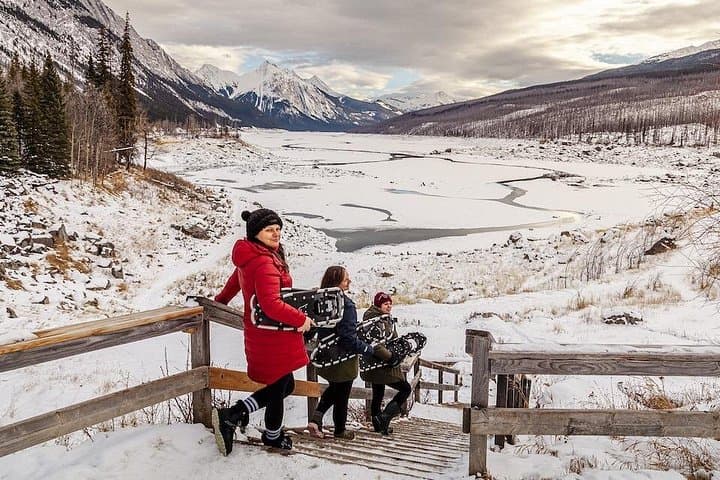
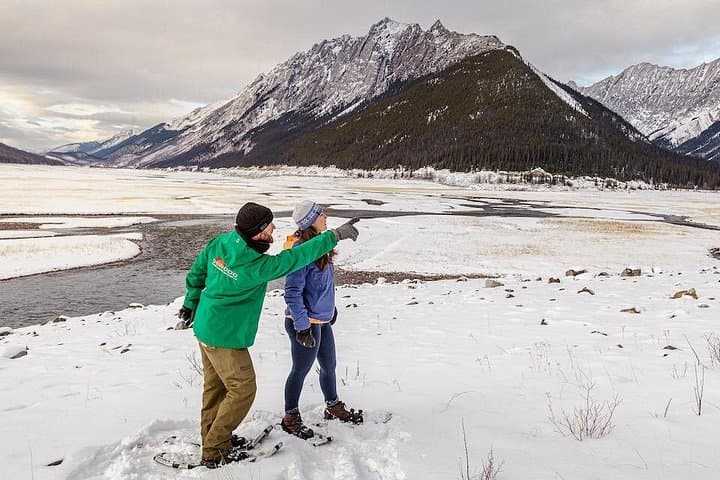

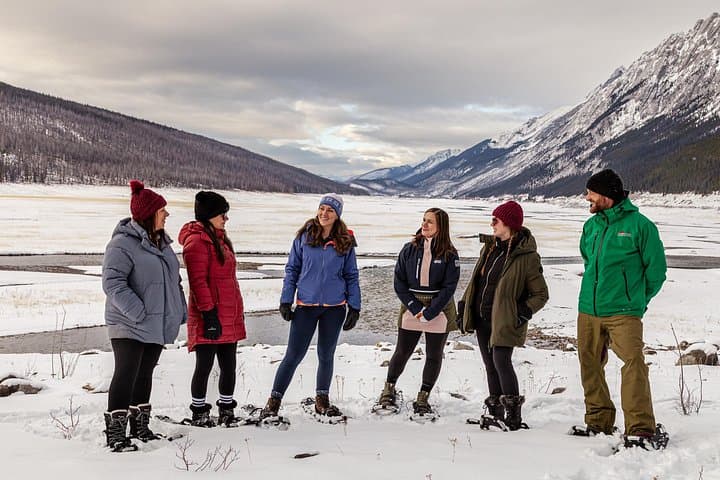
The first crunch of snow underfoot arrives before the explanation—an honest, audible punctuation to a morning that smells of pine and cold metal. Your guide tightens the straps on your snowshoes, breath fogging in the thin mountain air, and points to a line of tracks fading into a stand of spruce. For the next three to four hours you follow that line: over frozen lake ice that dares you to admire its glassy skin up close, through evergreen corridors that muff le the world, and across meadows where wind-sculpted drifts catch the low winter light.
The first crunch of snow underfoot arrives before the explanation—an honest, audible punctuation to a morning that smells of pine and cold metal. Your guide tightens the straps on your snowshoes, breath fogging in the thin mountain air, and points to a line of tracks fading into a stand of spruce. For the next three to four hours you follow that line: over frozen lake ice that dares you to admire its glassy skin up close, through evergreen corridors that muff le the world, and across meadows where wind-sculpted drifts catch the low winter light.
Jasper National Park is a landscape written in ice and sediment. The valleys here were carved by Pleistocene glaciers; the layers of limestone and shale reveal an ancient seabed now uplifted into peaks. European explorers and the Canadian Pacific Railway put Jasper on the map in the early 20th century, but this country has been traveled and cared for by Indigenous peoples—Cree and Stoney (Nakoda) among them—for generations. Your guide will sketch those histories as easily as they point out a cirque or a pocket of glacial till.
The tour moves at a steady, accessible pace—about 3–5 km of rolling terrain, with cumulative elevation gain usually under 200 m. Guides supply snowshoes, thermal boots, and hiking poles, and the route is selected for safe, scenic travel: frozen lake edges, gently sloping meadows, and sheltered forest tracks. Expect to stop for short interpretive moments—reading the land for animal sign, noting rock outcrops, and listening for hardy winter birds like chickadees and gray jays that punctuate the silence.
Practicalities matter in winter. Layering is non-negotiable: a moisture-wicking base, insulating midlayer, and a windproof shell. Footwear should be warm and waterproof; gaiters help with deep drifts. Bring insulated gloves, sunglasses for glare off the snow, and a small daypack with water and high-energy snacks—the cold sharpens hunger faster than you think. Guides will provide hand warmers on request and handle logistics like park permits and safety briefings. Pickup service from Jasper-area hotels simplifies logistics; confirm your pickup point and plan to be ready in the lobby five minutes before departure.
This is a tour designed to demystify winter: to teach you how to move on snow, read a frozen landscape, and leave it as you found it. Whether you come to test snowshoeing for the first time or to stretch a familiar stride across new terrain, the Secrets of Jasper tour makes winter feel less like an obstacle and more like a season with its own rules—and rewards.