THE ADVENTURE COLLECTIVE® · Independent discovery and booking for outdoor travel

Walk the full length of a 19th-century engineering icon while a native New Yorker reveals construction secrets, political drama and the best photo vantage points. This two-hour guided route moves from City Hall Park across the exposed span to Brooklyn Heights, blending history with practical tips for navigating crowds and wind.
Walk the full length of a 19th-century engineering icon while a native New Yorker reveals construction secrets, political drama and the best photo vantage points. This two-hour guided route moves from City Hall Park across the exposed span to Brooklyn Heights, blending history with practical tips for navigating crowds and wind.
Stand on the north side of the Jacob W. Mould Fountain and feel Manhattan lean in: the city’s grid recedes and the Brooklyn Bridge unrolls ahead, cables fanning like the ribs of an old ship. For two hours a guide who knows the bridge’s politics, engineering quirks and local folklore walks you across the span, pointing out details most passersby miss.
Verified experiences and guided adventures in the surrounding area.
Operated by Untapped New York · New York, New York
Stand on the north side of the Jacob W. Mould Fountain and feel Manhattan lean in: the city’s grid recedes and the Brooklyn Bridge unrolls ahead, cables fanning like the ribs of an old ship. For two hours a guide who knows the bridge’s politics, engineering quirks and local folklore walks you across the span, pointing out details most passersby miss.
Opened in 1883 and engineered by John A. Roebling and his son Washington, the Brooklyn Bridge was one of the first major steel-wire suspension bridges. Its towers perch on Manhattan Schist and granite caissons sunk into the East River’s shifting bed; the river’s current still tests the structure and the people who built it. As you cross, you move from City Hall’s civic gravity to the cobbled angles of DUMBO and the tree-lined promenade of Brooklyn Heights, seeing how industry and immigrant labor reshaped both boroughs.
Expect an architectural primer with cultural asides: the bridge’s role in 19th-century spectacle, its use in films, and the gritty neighborhoods it connected. The guide will note the carriage lanes, the pedestrian pathway’s wooden planks, and the best photo angles that avoid the selfie swarm.
Practical guidance: plan for mixed sun and wind on the exposed span, wear sturdy shoes for uneven boards and occasional crowds, and use public transit—the tour begins inside City Hall Park. Start early to catch softer light and fewer commuters, and bring water; there are limited services on the bridge itself.
The tour lasts about two hours and covers the full length of the Brooklyn Bridge plus short walking segments on both Manhattan and Brooklyn sides—roughly 1.5–2 miles total.
It meets on the north side of the Jacob W. Mould Fountain inside City Hall Park (43 Park Row) and ends at the Fruit Street sitting area near Orange Street and Columbia Heights in Brooklyn Heights.
Yes—this tour is suitable for most ages and service animals are allowed; families should note the length and exposure to wind on the bridge deck.
For a full refund, cancel at least 24 hours before the scheduled departure time; cancellations inside 24 hours are not refundable.
Untapped New York operates guided outdoor trips and adventures with an emphasis on safety, stewardship, and memorable experiences.
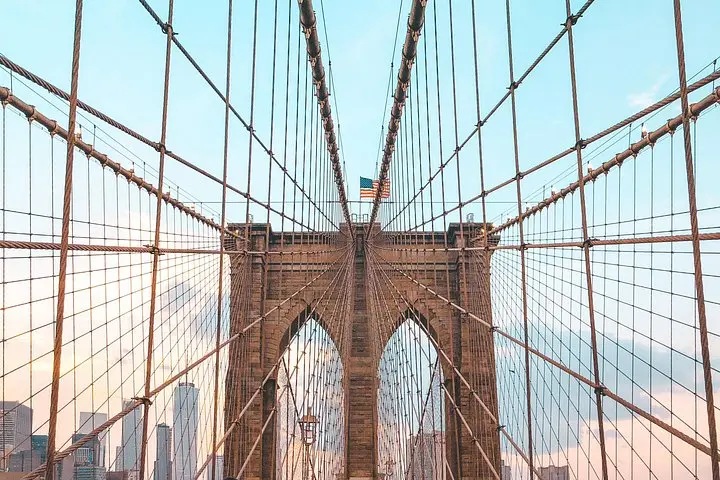
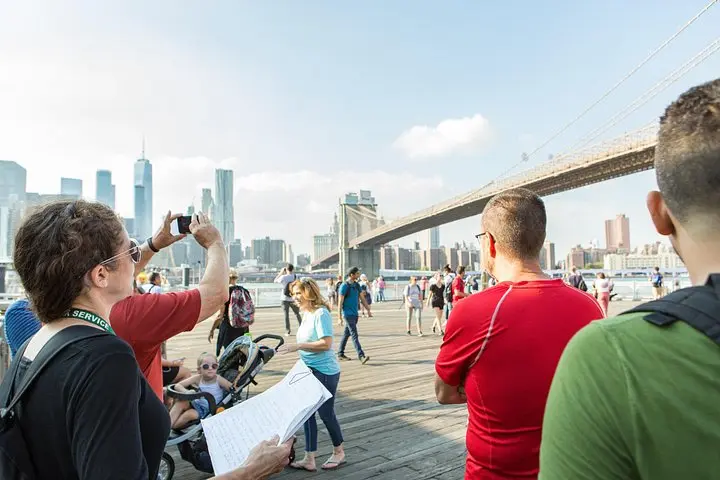
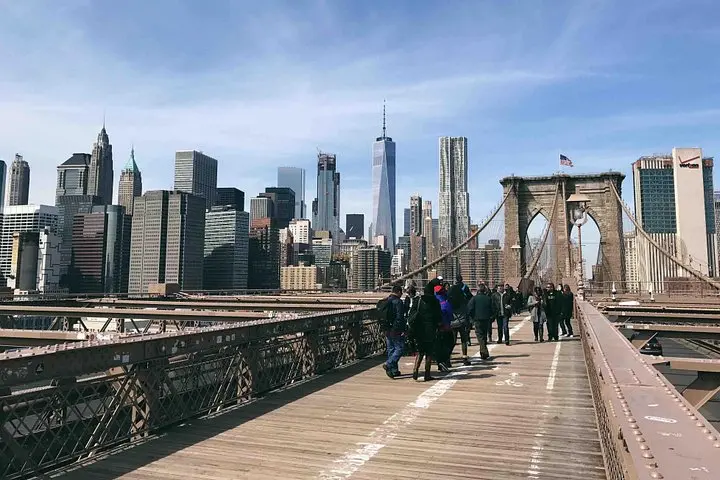
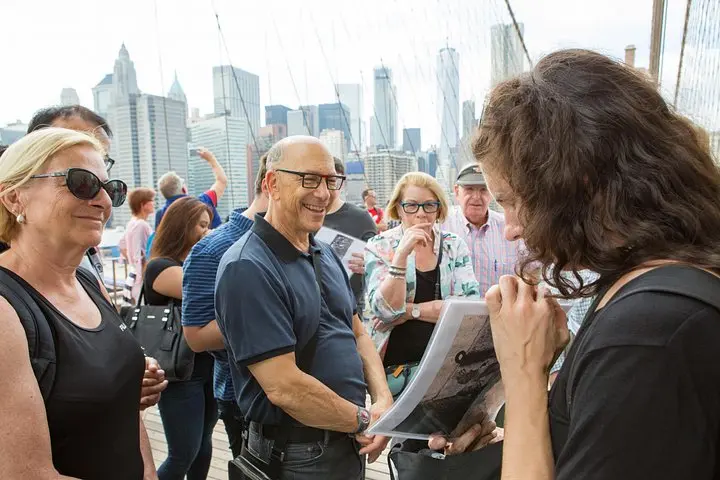
Stand on the north side of the Jacob W. Mould Fountain and feel Manhattan lean in: the city’s grid recedes and the Brooklyn Bridge unrolls ahead, cables fanning like the ribs of an old ship. For two hours a guide who knows the bridge’s politics, engineering quirks and local folklore walks you across the span, pointing out details most passersby miss.
Stand on the north side of the Jacob W. Mould Fountain and feel Manhattan lean in: the city’s grid recedes and the Brooklyn Bridge unrolls ahead, cables fanning like the ribs of an old ship. For two hours a guide who knows the bridge’s politics, engineering quirks and local folklore walks you across the span, pointing out details most passersby miss.
Opened in 1883 and engineered by John A. Roebling and his son Washington, the Brooklyn Bridge was one of the first major steel-wire suspension bridges. Its towers perch on Manhattan Schist and granite caissons sunk into the East River’s shifting bed; the river’s current still tests the structure and the people who built it. As you cross, you move from City Hall’s civic gravity to the cobbled angles of DUMBO and the tree-lined promenade of Brooklyn Heights, seeing how industry and immigrant labor reshaped both boroughs.
Expect an architectural primer with cultural asides: the bridge’s role in 19th-century spectacle, its use in films, and the gritty neighborhoods it connected. The guide will note the carriage lanes, the pedestrian pathway’s wooden planks, and the best photo angles that avoid the selfie swarm.
Practical guidance: plan for mixed sun and wind on the exposed span, wear sturdy shoes for uneven boards and occasional crowds, and use public transit—the tour begins inside City Hall Park. Start early to catch softer light and fewer commuters, and bring water; there are limited services on the bridge itself.