THE ADVENTURE COLLECTIVE® · Independent discovery and booking for outdoor travel

A private, three‑ to four‑hour loop that hits Sedona’s spiritual spaces, red‑rock panoramas, and artisan heart. Perfect for travelers who want the vistas without a long hike.
A private, three‑ to four‑hour loop that hits Sedona’s spiritual spaces, red‑rock panoramas, and artisan heart. Perfect for travelers who want the vistas without a long hike.
You step out of an air‑conditioned vehicle into a courtyard of prayer flags and wind that smells faintly of juniper and desert dust. The Amitabha Stupa & Peace Park holds quiet like a practiced breath; the white dome rises against red stone, and even in a town built for views, the silence here takes shape. That hush gives the morning a measured pace—an invitation to move slowly and see more than postcards.
Verified experiences and guided adventures in the surrounding area.
Operated by ARRA · Sedona, Arizona
You step out of an air‑conditioned vehicle into a courtyard of prayer flags and wind that smells faintly of juniper and desert dust. The Amitabha Stupa & Peace Park holds quiet like a practiced breath; the white dome rises against red stone, and even in a town built for views, the silence here takes shape. That hush gives the morning a measured pace—an invitation to move slowly and see more than postcards.
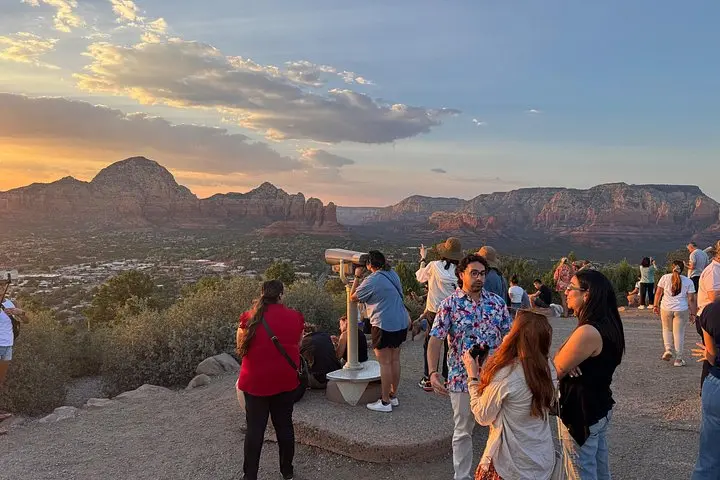
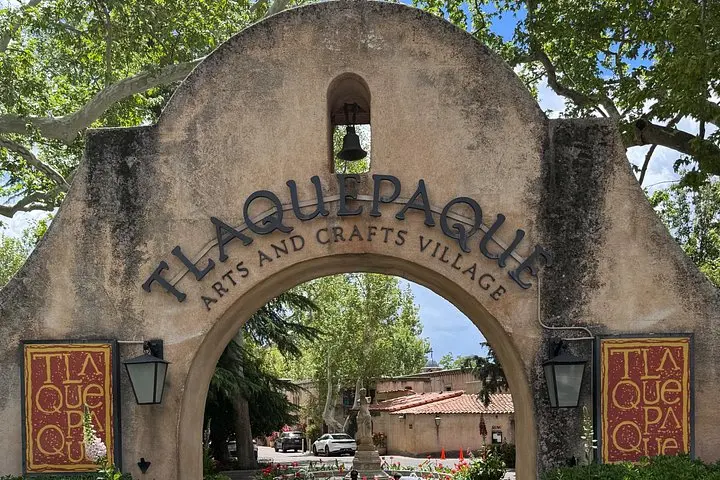
From there the tour threads through Sedona’s layers: the manicured tranquility of Rachel’s Knoll, a tucked‑away vantage in Seven Canyons that feels like a private conversation with the rocks; the cheerful bustle of Tlaquepaque, where cobblestone alleys and gallery windows show Sedona’s creative edge; and the Heritage Museum, whose ranching artifacts and film posters sketch the town’s transformation from a frontier outpost to an artist’s enclave. The finale at Airport Mesa unfurls the showpiece—wide, horizontal strata of red sandstone folding into blue sky, a place where people pause to let the landscape register.
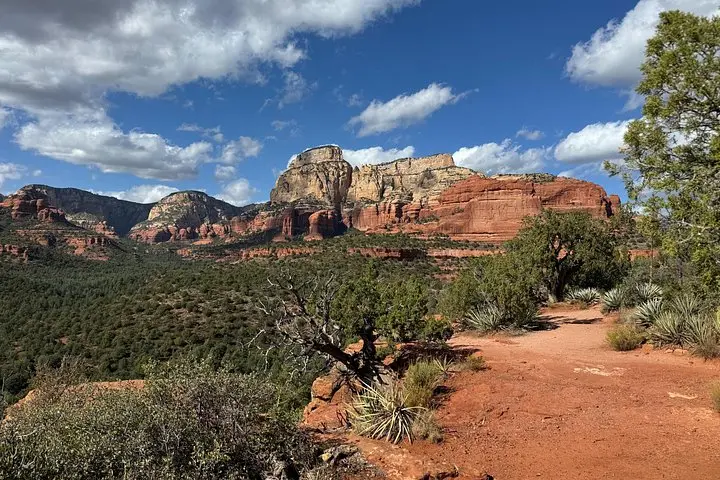
Geology here is readable in broad strokes: Permian sandstone and later uplift created the mesas and buttes you’re circling. Vortex lore—local and visceral—sits beside this science; some visitors report a physical hum or lifted energy at certain sites, others simply feel a calmer headspace. Culturally, Sedona’s identity is a blend of Native history, early ranch families, a mid‑20th century film industry that used these natural sets, and a modern arts scene that makes the town feel lived in and lively.
This private tour is practical by design—no long hikes, air‑conditioned transport between stops, bottled water and snacks, and a guide with local know‑how who can tailor the pace and photography stops. Timing matters: aim for morning or late afternoon to avoid harsh midday light and heat, especially in summer. Wear closed‑toe walking shoes for short, uneven trails at viewpoints, and bring layers—desert temperatures swing fast.
Plan for modest parking and busy weekends; small, private groups make navigating crowds easier and allow extra time at places like Tlaquepaque for shopping or a coffee. If you want to deepen the experience, ask the guide about nearby short walks or a quiet picnic spot beside Oak Creek. Respect private properties—some viewpoints are inside gated communities—and leave no trace: the red rock is resilient visually but fragile underfoot.
Practically, this tour suits visitors who want a full Sedona primer without a strenuous hike: photography, local history, spiritual sites, and accessible vistas in a compact, comfortable package. By the time the sun slides behind the western ridges, Sedona’s colors have sharpened and the day’s layout—culture, geology, and a little bit of mystery—feels complete.
The private tour runs about 3–4 hours (180–240 minutes) and typically returns to the starting point.
No—it’s rated easy with short, accessible walks; suitable for most fitness levels and stroller‑friendly in many spots.
Yes—entrance fees listed by the operator are included, and the tour often covers site access like the Amitabha Stupa and Airport Mesa viewpoints.
Pickup options are provided, but specifics depend on the supplier; confirm your exact pickup during booking or in pre‑trip communication.
Absolutely—guides plan stops at key viewpoints for photos; plan for morning or late afternoon for the best light.
Service animals are permitted; non‑service pets generally are not allowed on private tours—confirm with the operator in advance.
ARRA operates guided outdoor trips and adventures with an emphasis on safety, stewardship, and memorable experiences.
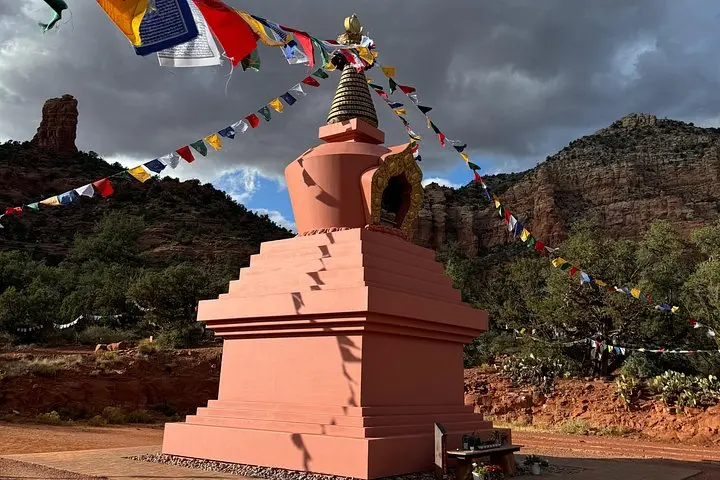
You step out of an air‑conditioned vehicle into a courtyard of prayer flags and wind that smells faintly of juniper and desert dust. The Amitabha Stupa & Peace Park holds quiet like a practiced breath; the white dome rises against red stone, and even in a town built for views, the silence here takes shape. That hush gives the morning a measured pace—an invitation to move slowly and see more than postcards.
You step out of an air‑conditioned vehicle into a courtyard of prayer flags and wind that smells faintly of juniper and desert dust. The Amitabha Stupa & Peace Park holds quiet like a practiced breath; the white dome rises against red stone, and even in a town built for views, the silence here takes shape. That hush gives the morning a measured pace—an invitation to move slowly and see more than postcards.
From there the tour threads through Sedona’s layers: the manicured tranquility of Rachel’s Knoll, a tucked‑away vantage in Seven Canyons that feels like a private conversation with the rocks; the cheerful bustle of Tlaquepaque, where cobblestone alleys and gallery windows show Sedona’s creative edge; and the Heritage Museum, whose ranching artifacts and film posters sketch the town’s transformation from a frontier outpost to an artist’s enclave. The finale at Airport Mesa unfurls the showpiece—wide, horizontal strata of red sandstone folding into blue sky, a place where people pause to let the landscape register.
Geology here is readable in broad strokes: Permian sandstone and later uplift created the mesas and buttes you’re circling. Vortex lore—local and visceral—sits beside this science; some visitors report a physical hum or lifted energy at certain sites, others simply feel a calmer headspace. Culturally, Sedona’s identity is a blend of Native history, early ranch families, a mid‑20th century film industry that used these natural sets, and a modern arts scene that makes the town feel lived in and lively.
This private tour is practical by design—no long hikes, air‑conditioned transport between stops, bottled water and snacks, and a guide with local know‑how who can tailor the pace and photography stops. Timing matters: aim for morning or late afternoon to avoid harsh midday light and heat, especially in summer. Wear closed‑toe walking shoes for short, uneven trails at viewpoints, and bring layers—desert temperatures swing fast.
Plan for modest parking and busy weekends; small, private groups make navigating crowds easier and allow extra time at places like Tlaquepaque for shopping or a coffee. If you want to deepen the experience, ask the guide about nearby short walks or a quiet picnic spot beside Oak Creek. Respect private properties—some viewpoints are inside gated communities—and leave no trace: the red rock is resilient visually but fragile underfoot.
Practically, this tour suits visitors who want a full Sedona primer without a strenuous hike: photography, local history, spiritual sites, and accessible vistas in a compact, comfortable package. By the time the sun slides behind the western ridges, Sedona’s colors have sharpened and the day’s layout—culture, geology, and a little bit of mystery—feels complete.