THE ADVENTURE COLLECTIVE® · Independent discovery and booking for outdoor travel

Move through chant, prayer wheels, and the medicine wheel among Sedona’s red rocks. This two-hour experience blends Buddhist and Native American practices—leaving you with a personal mala and practical tools for daily spiritual work.
Move through chant, prayer wheels, and the medicine wheel among Sedona’s red rocks. This two-hour experience blends Buddhist and Native American practices—leaving you with a personal mala and practical tools for daily spiritual work.
The group gathers on a wind-scrubbed spur of red rock as the sun tilts low, and Sedona’s cliffs seem to lean in to listen. Breath fogs in the cool morning air; prayer wheels whisper when fingers set them spinning. In this two-hour experience, a guide moves a small circle of travelers between three sacred sites—Buddhist stupas and a Native American medicine wheel—teaching chants, mudras, and simple rites that are meant to open attention, steady the heart, and give tools for a daily spiritual practice.
Verified experiences and guided adventures in the surrounding area.
Operated by Way of the Sacred of Sedona · Sedona, Arizona
The group gathers on a wind-scrubbed spur of red rock as the sun tilts low, and Sedona’s cliffs seem to lean in to listen. Breath fogs in the cool morning air; prayer wheels whisper when fingers set them spinning. In this two-hour experience, a guide moves a small circle of travelers between three sacred sites—Buddhist stupas and a Native American medicine wheel—teaching chants, mudras, and simple rites that are meant to open attention, steady the heart, and give tools for a daily spiritual practice.
Sedona’s rocks are more than scenic props. Geologically, the iron-rich sandstone that forms the red cliffs is a record of ancient river systems and desert conditions; culturally, those cliffs have long been a place of ceremony for Indigenous peoples and, more recently, for spiritual seekers from many traditions. The tour consciously bridges Buddhist practices—mantra, mala beads, spinning prayer wheels—with Indigenous ways of relating to direction, elements, and spirit guides at the medicine wheel. The result is a focused cultural exchange: not a history lecture, but a hands-on introduction to rituals that emphasize intention, compassion, and healing.
Expect short walks between compact sites rather than lengthy hikes. Each stop is an invitation to embodied practice. At the stupa, participants learn a heart-opening chant and are shown how to use a mala in a walking meditation; at the medicine wheel, the facilitator explains the seven sacred directions and leads a ceremony to offer prayers to each. The White Tara shrine brings a closing chant and guided silent meditation aimed at releasing fear and inviting compassion.
Practical notes: the tour is accessible to most fitness levels and accommodates strollers and service animals; it is not recommended for those with serious cardiovascular issues. Times and weather matter—wind can make spinning prayer wheels noisy and rain will close outdoor shrines. You’ll leave with a personal mala and written guidance to carry the practice home.
Plan to arrive with sun protection, plenty of water, and a small notebook if you want to record insights. Clothing should be comfortable for standing and gentle walking over rocky, uneven surfaces. Since the ceremonies are about respect and attention, silence and mindful participation are part of the experience—expect moments of chanting, listening, and reflection rather than photography-driven stops.
This is an approachable introduction to two living spiritual lineages in a landscape that commands attention. For travelers seeking a practical toolkit—mantras, mudras, a mala, and a template for daily ritual—this short, carefully guided visit to Sedona’s red-rock shrines offers clear steps to begin or deepen a practice rooted in both East and Indigenous traditions.
The ceremony lasts approximately 2 hours, with short walks between three shrine locations.
No; it involves light walking and standing and is rated easy—suitable for most fitness levels and stroller accessible.
Yes; participants receive a personal mala (Buddhist prayer beads) and written materials to support continuing practice.
The experience teaches elements of Native American medicine wheel traditions alongside Buddhist practices; it is presented as a cultural and spiritual introduction rather than a substitution for community-specific Indigenous ceremony.
Photography is generally allowed outside of active ritual moments; please follow the guide’s directions and maintain respectful silence when requested.
The operator may cancel for bad weather—participants should confirm timing and receive a full refund if canceled at least 24 hours prior per the booking terms.
Way of the Sacred of Sedona operates guided outdoor trips and adventures with an emphasis on safety, stewardship, and memorable experiences.
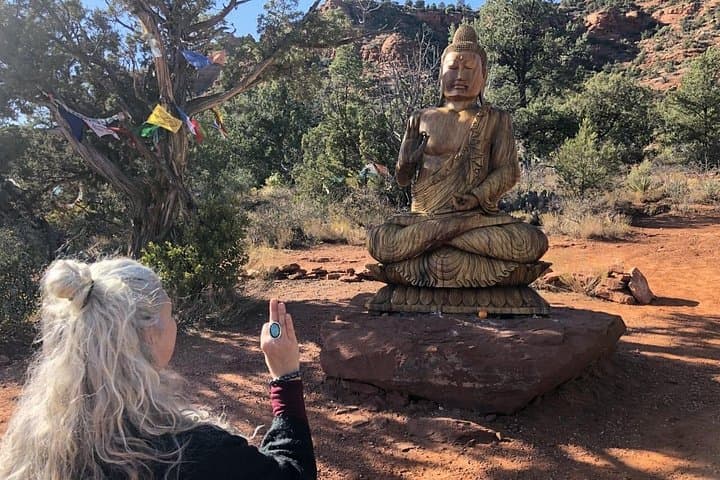
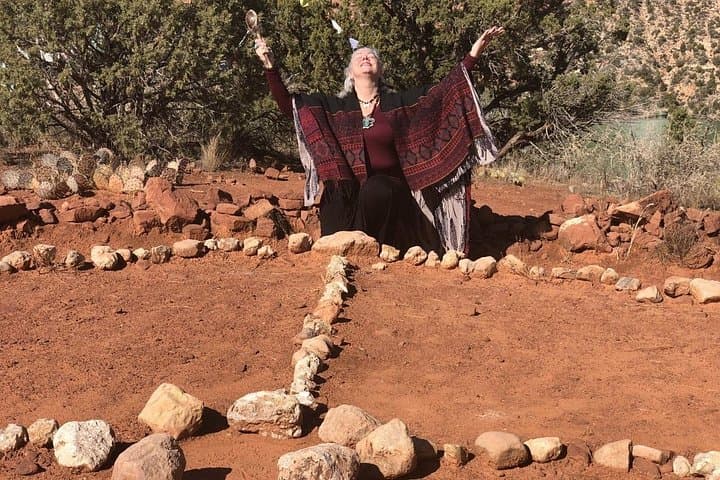
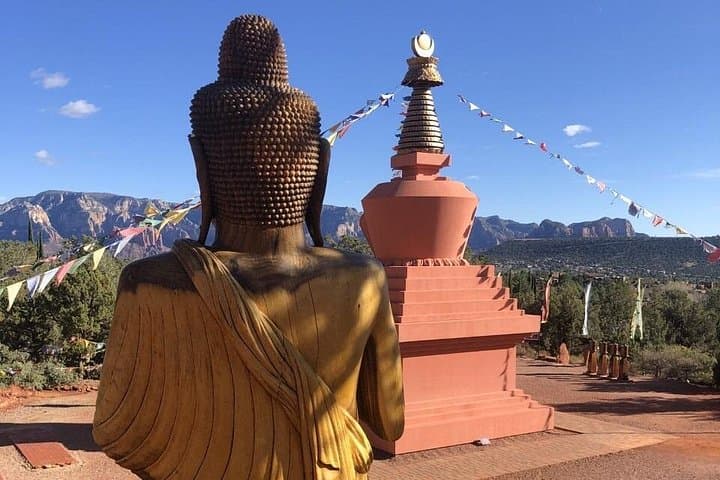
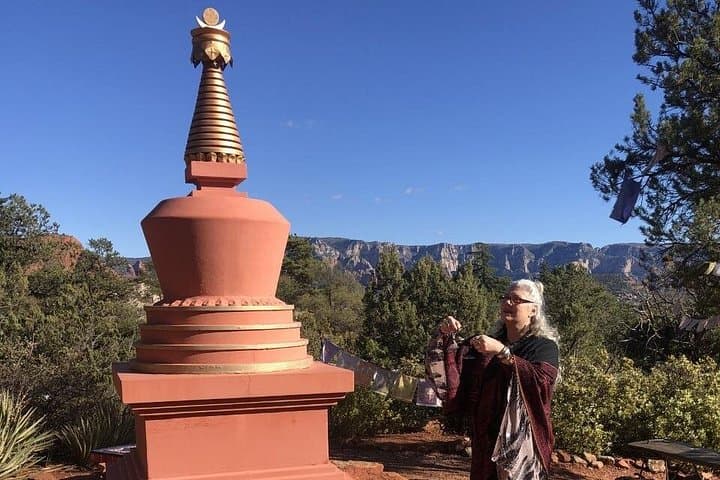
The group gathers on a wind-scrubbed spur of red rock as the sun tilts low, and Sedona’s cliffs seem to lean in to listen. Breath fogs in the cool morning air; prayer wheels whisper when fingers set them spinning. In this two-hour experience, a guide moves a small circle of travelers between three sacred sites—Buddhist stupas and a Native American medicine wheel—teaching chants, mudras, and simple rites that are meant to open attention, steady the heart, and give tools for a daily spiritual practice.
The group gathers on a wind-scrubbed spur of red rock as the sun tilts low, and Sedona’s cliffs seem to lean in to listen. Breath fogs in the cool morning air; prayer wheels whisper when fingers set them spinning. In this two-hour experience, a guide moves a small circle of travelers between three sacred sites—Buddhist stupas and a Native American medicine wheel—teaching chants, mudras, and simple rites that are meant to open attention, steady the heart, and give tools for a daily spiritual practice.
Sedona’s rocks are more than scenic props. Geologically, the iron-rich sandstone that forms the red cliffs is a record of ancient river systems and desert conditions; culturally, those cliffs have long been a place of ceremony for Indigenous peoples and, more recently, for spiritual seekers from many traditions. The tour consciously bridges Buddhist practices—mantra, mala beads, spinning prayer wheels—with Indigenous ways of relating to direction, elements, and spirit guides at the medicine wheel. The result is a focused cultural exchange: not a history lecture, but a hands-on introduction to rituals that emphasize intention, compassion, and healing.
Expect short walks between compact sites rather than lengthy hikes. Each stop is an invitation to embodied practice. At the stupa, participants learn a heart-opening chant and are shown how to use a mala in a walking meditation; at the medicine wheel, the facilitator explains the seven sacred directions and leads a ceremony to offer prayers to each. The White Tara shrine brings a closing chant and guided silent meditation aimed at releasing fear and inviting compassion.
Practical notes: the tour is accessible to most fitness levels and accommodates strollers and service animals; it is not recommended for those with serious cardiovascular issues. Times and weather matter—wind can make spinning prayer wheels noisy and rain will close outdoor shrines. You’ll leave with a personal mala and written guidance to carry the practice home.
Plan to arrive with sun protection, plenty of water, and a small notebook if you want to record insights. Clothing should be comfortable for standing and gentle walking over rocky, uneven surfaces. Since the ceremonies are about respect and attention, silence and mindful participation are part of the experience—expect moments of chanting, listening, and reflection rather than photography-driven stops.
This is an approachable introduction to two living spiritual lineages in a landscape that commands attention. For travelers seeking a practical toolkit—mantras, mudras, a mala, and a template for daily ritual—this short, carefully guided visit to Sedona’s red-rock shrines offers clear steps to begin or deepen a practice rooted in both East and Indigenous traditions.