THE ADVENTURE COLLECTIVE® · Independent discovery and booking for outdoor travel

A compact, small-group half‑day tour through Airport Mesa, the Amitabha Stupa and Rachel’s Knoll that blends geology, indigenous history and guided meditation. Expect short walks on red‑rock trails, historical context, and moments of quiet practice.
A compact, small-group half‑day tour through Airport Mesa, the Amitabha Stupa and Rachel’s Knoll that blends geology, indigenous history and guided meditation. Expect short walks on red‑rock trails, historical context, and moments of quiet practice.
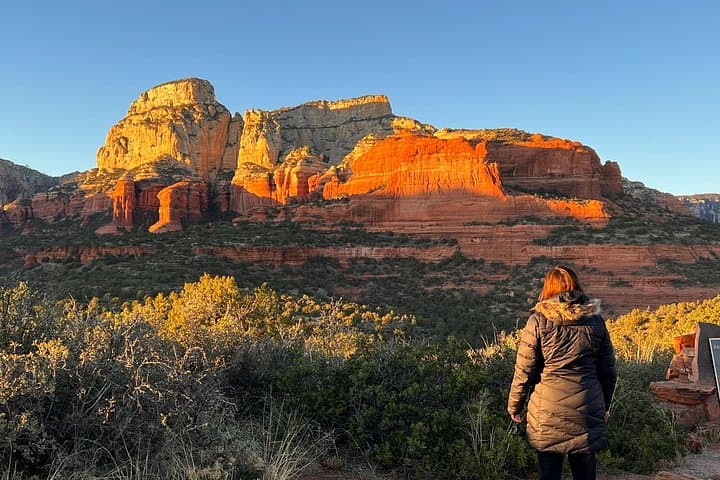
You step out of a white minivan and the air feels different—thin, sun-warmed, with a dry scent of juniper and dust. Red rock faces rise like folded pages around you; wind scrapes confidence from the cliffs and hands it to the people below. The guide points toward Airport Mesa, and the group moves through a short, well-worn loop where the view opens onto a spine of rust-colored fins and the valley below. Phones click; breath slows.
Verified experiences and guided adventures in the surrounding area.
Operated by Blue Bear Tours · Sedona, Arizona
You step out of a white minivan and the air feels different—thin, sun-warmed, with a dry scent of juniper and dust. Red rock faces rise like folded pages around you; wind scrapes confidence from the cliffs and hands it to the people below. The guide points toward Airport Mesa, and the group moves through a short, well-worn loop where the view opens onto a spine of rust-colored fins and the valley below. Phones click; breath slows.
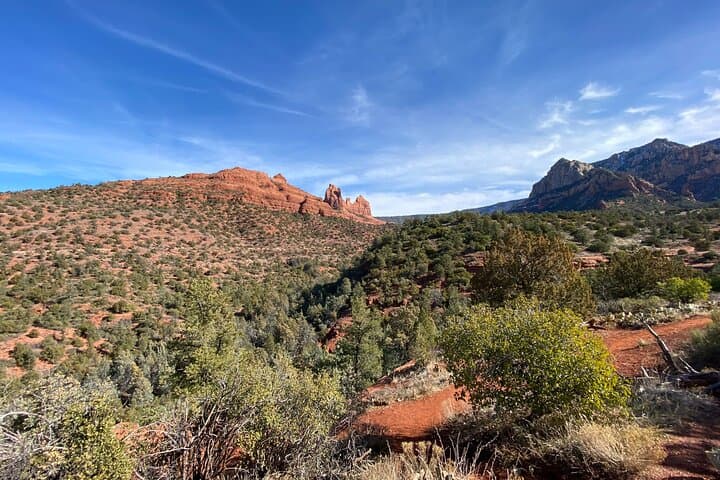
Sedona’s “vortexes” are as much cultural story as geology. The red sandstone here is Schnebly Hill Formation—iron-rich layers sculpted by eons of uplift and erosion—creating the steep mesas and natural amphitheaters that visitors read as energy centers. Long before the New Age movement arrived in the 20th century, the Yavapai and Apache nations lived and traveled through these canyons, leaving a quieter history written in trails and seasonal camps.
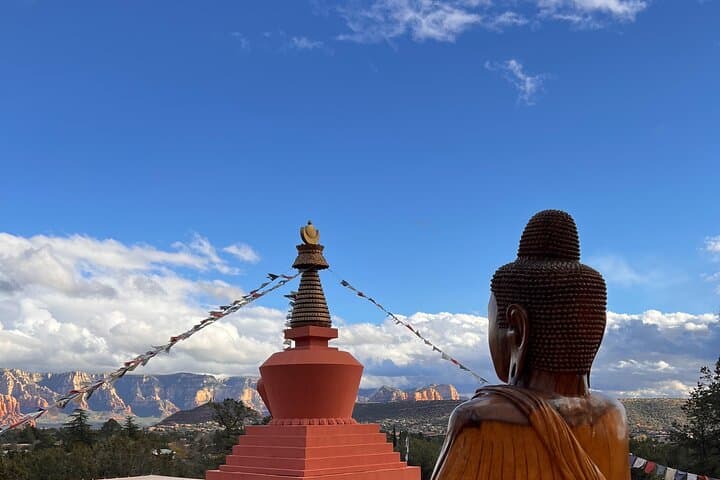
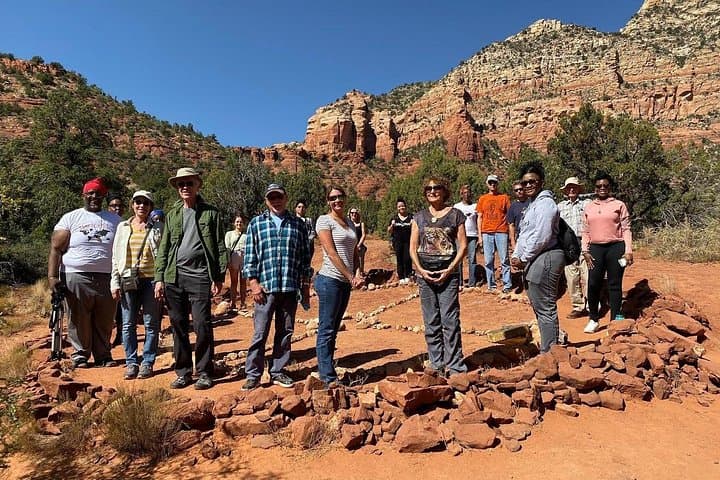
This 2.5-hour small-group tour stitches three focal points into a mindful loop: Airport Mesa — a dramatic overlook and a short trail with panoramic views; the Amitabha Stupa and the adjoining Peace Park — a quieter meditation space with a medicine wheel and a guided flute sound-healing session; and Rachel’s Knoll — a compact rise tied to Sedona’s New Age history where you’re coached on connecting with the landscape in stillness.
Walks are brief but purposeful: expect uneven red-soil paths, low rock steps and brief climbs that peak at viewpoints. Guides frame each stop with geology, indigenous context and the modern spiritual practices that brought people here, and they weave in practical cues—how to approach a medicine wheel respectfully, and why leaving offerings is discouraged.
Practicalities matter as much as presence. The tour meets at the Airport Road lot (parking fee is reimbursed), runs in groups of up to five and includes water and snacks. Mobile tickets are accepted and the operator offers free cancellation up to 24 hours prior. Morning and late-afternoon departures deliver the most flattering light and cooler temperatures.
For travelers: wear sturdy closed-toe shoes with traction, bring layered sun protection and at least one liter of water, and plan to keep your phone on mute during meditation segments. Respect the cultural context—ask before photographing ceremonies, follow Leave No Trace, and treat cairns and shrines as living history rather than props.
In short, the tour is part guided hike, part cultural primer and part meditative practice. It’s compact enough for half a day but shaped to leave an impression that lasts—clearer lungs, quieter mind, and a sharper sense of how this landscape holds stories long before tourists arrived.
Expect several short walks—most stops include 10–20 minute loops or brief climbs; total on-foot distance is under 2 miles.
Yes—tour description lists it as physically easy and accessible to most ages; note there are uneven surfaces and short rock steps.
No—guides request that visitors refrain from leaving offerings or building cairns to protect cultural and natural resources.
Sun protection, sturdy shoes, a small daypack for layers and camera, and any personal medication.
No—the tour covers cultural history, New Age perspectives and guided meditative practices, but it is presented as educational and experiential rather than a formal religious service.
Meet at the Airport Road lot across from the lookout and flag pole; parking costs $3 and the guide reimburses the ticket—look for the white minivan with blue bears.
Blue Bear Tours operates guided outdoor trips and adventures with an emphasis on safety, stewardship, and memorable experiences.
You step out of a white minivan and the air feels different—thin, sun-warmed, with a dry scent of juniper and dust. Red rock faces rise like folded pages around you; wind scrapes confidence from the cliffs and hands it to the people below. The guide points toward Airport Mesa, and the group moves through a short, well-worn loop where the view opens onto a spine of rust-colored fins and the valley below. Phones click; breath slows.
You step out of a white minivan and the air feels different—thin, sun-warmed, with a dry scent of juniper and dust. Red rock faces rise like folded pages around you; wind scrapes confidence from the cliffs and hands it to the people below. The guide points toward Airport Mesa, and the group moves through a short, well-worn loop where the view opens onto a spine of rust-colored fins and the valley below. Phones click; breath slows.
Sedona’s “vortexes” are as much cultural story as geology. The red sandstone here is Schnebly Hill Formation—iron-rich layers sculpted by eons of uplift and erosion—creating the steep mesas and natural amphitheaters that visitors read as energy centers. Long before the New Age movement arrived in the 20th century, the Yavapai and Apache nations lived and traveled through these canyons, leaving a quieter history written in trails and seasonal camps.
This 2.5-hour small-group tour stitches three focal points into a mindful loop: Airport Mesa — a dramatic overlook and a short trail with panoramic views; the Amitabha Stupa and the adjoining Peace Park — a quieter meditation space with a medicine wheel and a guided flute sound-healing session; and Rachel’s Knoll — a compact rise tied to Sedona’s New Age history where you’re coached on connecting with the landscape in stillness.
Walks are brief but purposeful: expect uneven red-soil paths, low rock steps and brief climbs that peak at viewpoints. Guides frame each stop with geology, indigenous context and the modern spiritual practices that brought people here, and they weave in practical cues—how to approach a medicine wheel respectfully, and why leaving offerings is discouraged.
Practicalities matter as much as presence. The tour meets at the Airport Road lot (parking fee is reimbursed), runs in groups of up to five and includes water and snacks. Mobile tickets are accepted and the operator offers free cancellation up to 24 hours prior. Morning and late-afternoon departures deliver the most flattering light and cooler temperatures.
For travelers: wear sturdy closed-toe shoes with traction, bring layered sun protection and at least one liter of water, and plan to keep your phone on mute during meditation segments. Respect the cultural context—ask before photographing ceremonies, follow Leave No Trace, and treat cairns and shrines as living history rather than props.
In short, the tour is part guided hike, part cultural primer and part meditative practice. It’s compact enough for half a day but shaped to leave an impression that lasts—clearer lungs, quieter mind, and a sharper sense of how this landscape holds stories long before tourists arrived.