THE ADVENTURE COLLECTIVE® · Independent discovery and booking for outdoor travel

Take a single-day pass that combines panoramic cable car views from Cerro San Cristóbal, a classic funicular descent into Bellavista, and hop-on hop-off bus access to Santiago’s historic and modern highlights. Plan for 9–10 hours to see the essentials.
Take a single-day pass that combines panoramic cable car views from Cerro San Cristóbal, a classic funicular descent into Bellavista, and hop-on hop-off bus access to Santiago’s historic and modern highlights. Plan for 9–10 hours to see the essentials.
You step onto the cable car as the city yawns below, the Andes sharpening the horizon while the Mapocho River threads through glass and tile. The cable car lifts you toward Cerro San Cristóbal; the city unfolds in terraces and blocks, roofs and parks rearranging themselves with every meter of ascent. The funicular waits on the descent — a gentler, more historical ride that lets you spill into Bellavista’s bohemian streets.
Verified experiences and guided adventures in the surrounding area.
Operated by Anclatourchile · Santiago, Santiago Metropolitan Region
You step onto the cable car as the city yawns below, the Andes sharpening the horizon while the Mapocho River threads through glass and tile. The cable car lifts you toward Cerro San Cristóbal; the city unfolds in terraces and blocks, roofs and parks rearranging themselves with every meter of ascent. The funicular waits on the descent — a gentler, more historical ride that lets you spill into Bellavista’s bohemian streets.
Santiago’s urban fabric dates to 1541, laid out in a Spanish grid around Plaza de Armas. The passes link geometric colonial history to modern glass — La Moneda’s sober façade, Costanera Center’s skyline, and the green lungs of Parque Bicentenario. Geologically, you’re in the Andes’ western foothills; the city’s angle and light change as the mountain presses close. Culture here is tactile: murals in Bellavista, the changing guard at La Moneda, cafés where poetry and activism still mix.
Practically, the pass is a one-day city tool: panoramic cable car views, a historic funicular ride, and hop-on hop-off bus access with stops at Santa Lucía, Plaza de Armas, Costanera, and more. Buses run roughly every 20 minutes; plan for 9–10 hours if you intend to sample several stops. Start early for the clearest vistas and fewer crowds, bring sun protection and a water bottle, and download the Turistik Chile app to follow stops and timetables. Note: cable car, funicular and panoramic buses do not operate on Mondays; always confirm operating days and weather advisories before you go.
The pass covers a panoramic cable car ride on Cerro San Cristóbal, a ride on the historic funicular, and hop-on hop-off bus access with onboard audio guidance.
Yes — cable car stations, funicular boarding points, and the hop-on buses included are wheelchair-accessible, and strollers are allowed.
Plan for a full-day use; the itinerary typically runs 9–10 hours and buses circulate about every 20 minutes between stops.
Onboard audio guides commonly offer at least Spanish and English; check the operator app or website for current language options.
Anclatourchile operates guided outdoor trips and adventures with an emphasis on safety, stewardship, and memorable experiences.
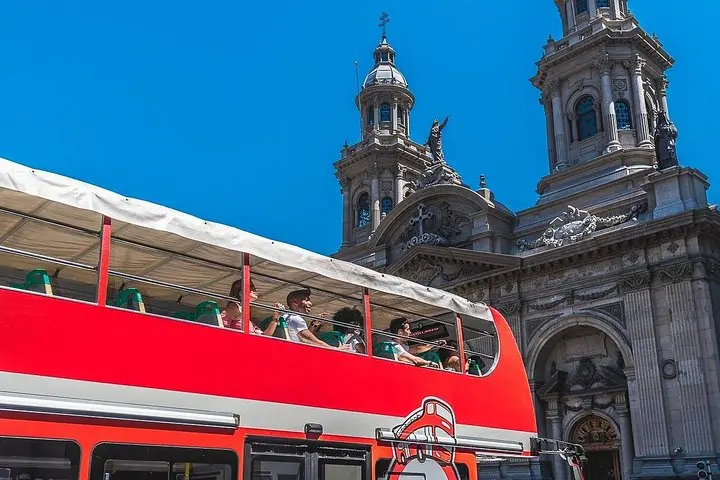
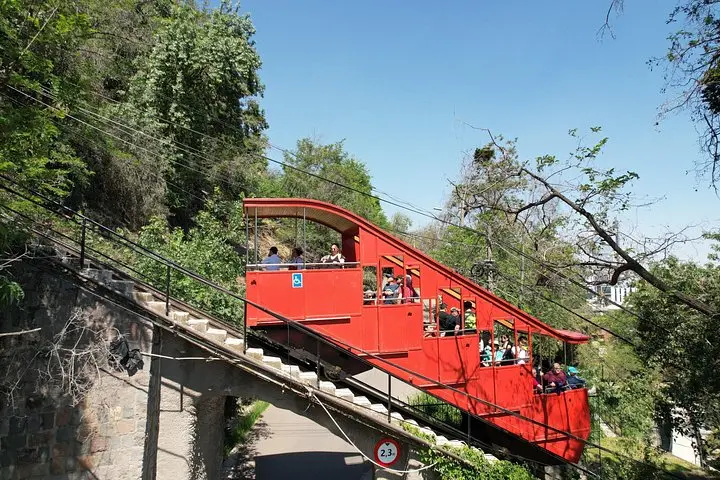
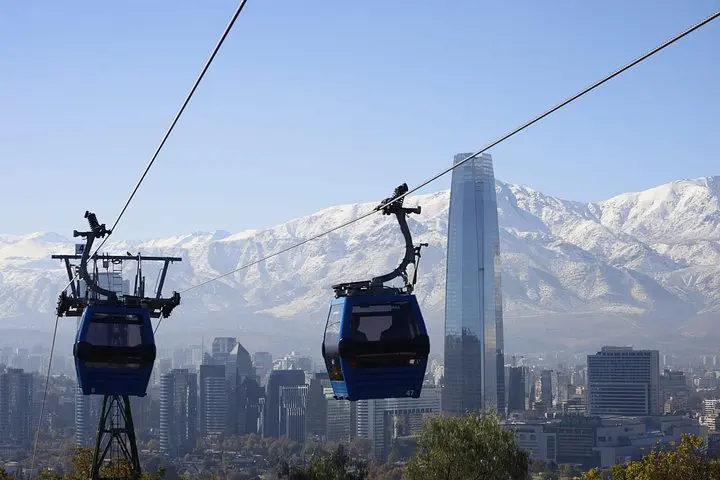
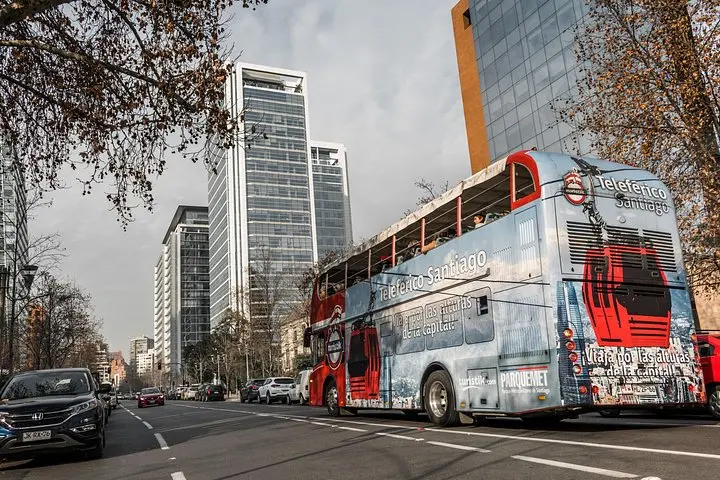
You step onto the cable car as the city yawns below, the Andes sharpening the horizon while the Mapocho River threads through glass and tile. The cable car lifts you toward Cerro San Cristóbal; the city unfolds in terraces and blocks, roofs and parks rearranging themselves with every meter of ascent. The funicular waits on the descent — a gentler, more historical ride that lets you spill into Bellavista’s bohemian streets.
You step onto the cable car as the city yawns below, the Andes sharpening the horizon while the Mapocho River threads through glass and tile. The cable car lifts you toward Cerro San Cristóbal; the city unfolds in terraces and blocks, roofs and parks rearranging themselves with every meter of ascent. The funicular waits on the descent — a gentler, more historical ride that lets you spill into Bellavista’s bohemian streets.
Santiago’s urban fabric dates to 1541, laid out in a Spanish grid around Plaza de Armas. The passes link geometric colonial history to modern glass — La Moneda’s sober façade, Costanera Center’s skyline, and the green lungs of Parque Bicentenario. Geologically, you’re in the Andes’ western foothills; the city’s angle and light change as the mountain presses close. Culture here is tactile: murals in Bellavista, the changing guard at La Moneda, cafés where poetry and activism still mix.
Practically, the pass is a one-day city tool: panoramic cable car views, a historic funicular ride, and hop-on hop-off bus access with stops at Santa Lucía, Plaza de Armas, Costanera, and more. Buses run roughly every 20 minutes; plan for 9–10 hours if you intend to sample several stops. Start early for the clearest vistas and fewer crowds, bring sun protection and a water bottle, and download the Turistik Chile app to follow stops and timetables. Note: cable car, funicular and panoramic buses do not operate on Mondays; always confirm operating days and weather advisories before you go.