THE ADVENTURE COLLECTIVE® · Independent discovery and booking for outdoor travel

Walk both the Zimbabwe and Zambia sides of Victoria Falls in a single guided day trip. Expect rainforest trails, bridge crossings, close-up spray at Knife-Edge Bridge, and clear interpretation of the geology and cultural history that shape the Zambezi.
Walk both the Zimbabwe and Zambia sides of Victoria Falls in a single guided day trip. Expect rainforest trails, bridge crossings, close-up spray at Knife-Edge Bridge, and clear interpretation of the geology and cultural history that shape the Zambezi.
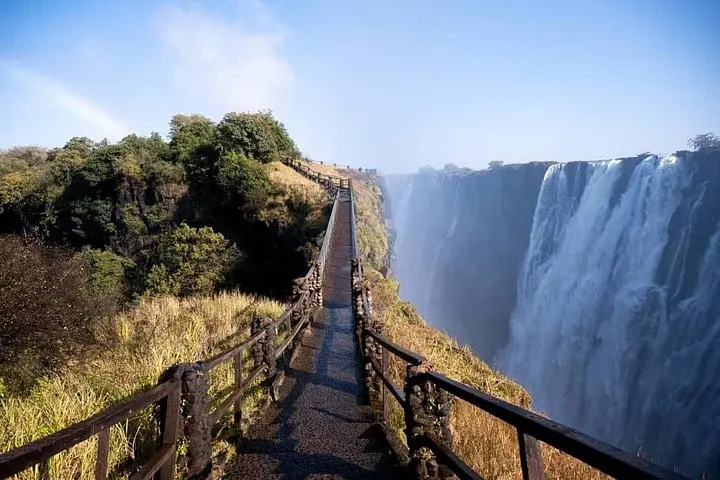
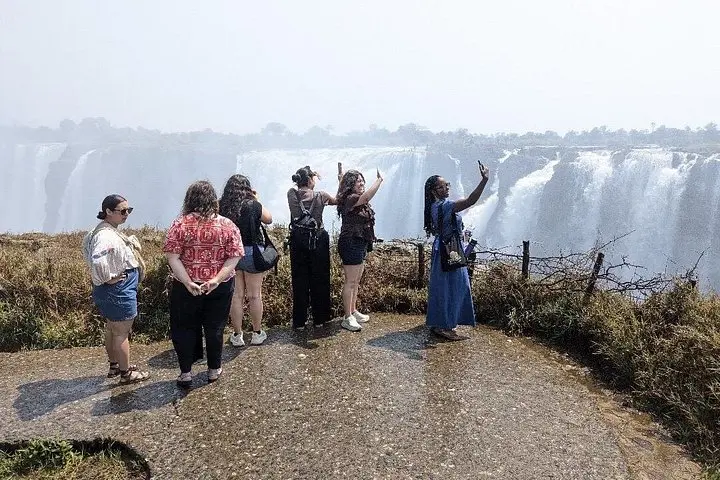
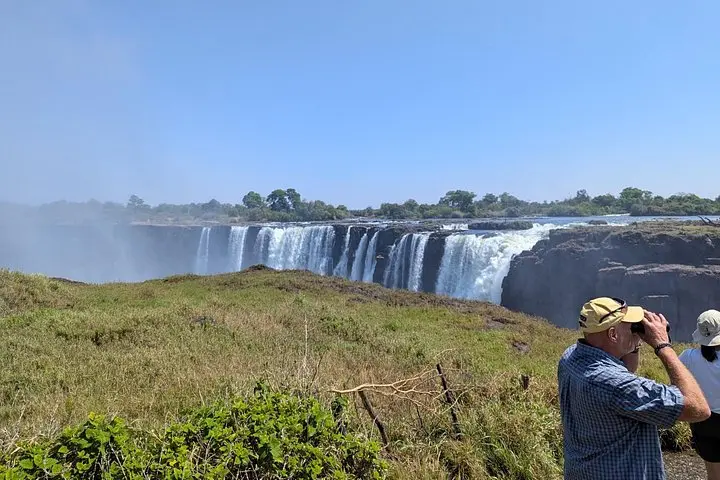
You step from an air-conditioned vehicle into a cloud of fine spray—the Falls announce themselves before you see them. On the Zimbabwe side, paths thread through rainforest to viewpoints that put the main curtain of water directly in front of you; across the historic bridge the Zambesi changes character and the gorge pinches the river into a thunderhead you can almost touch.
Verified experiences and guided adventures in the surrounding area.
Operated by RUACH TRAVEL AGENCY PRIVATE BUSINESS CORPORATION · Victoria Falls, Matabeleland North
You step from an air-conditioned vehicle into a cloud of fine spray—the Falls announce themselves before you see them. On the Zimbabwe side, paths thread through rainforest to viewpoints that put the main curtain of water directly in front of you; across the historic bridge the Zambesi changes character and the gorge pinches the river into a thunderhead you can almost touch.
Geology here is raw and readable: the Zambezi cuts through basalt and volcanic rock, carving the Batoka Gorge over millennia so the river can fall in a continuous curtain nearly 1.7 kilometers wide. Culturally the place is Mosi-oa-Tunya—"The Smoke That Thunders"—a name that predates David Livingstone's arrival and carries spiritual significance for local Tonga and Lozi communities.
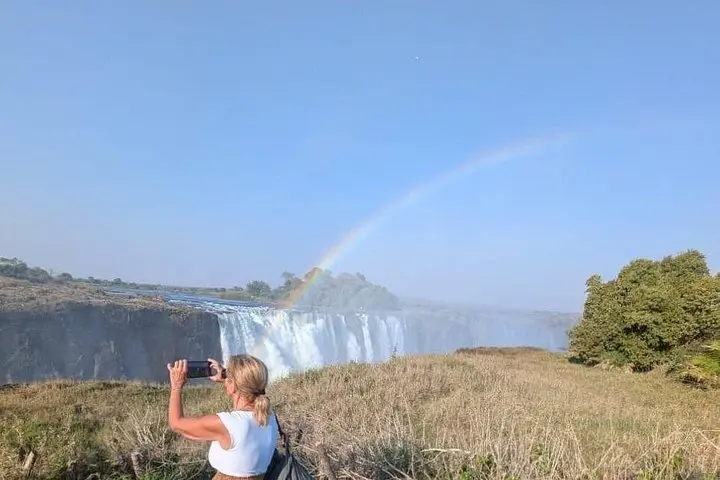
The guided route moves naturally from Zimbabwe’s panoramic viewpoints—Main Falls, Horseshoe, Rainbow—to Zambia’s closer, wetter perspectives at Knife-Edge Bridge and the Boiling Pot. Your guide explains seasonal flow, erosion processes and cross-border history while pointing out birds and the occasional hippo downstream.
Practical edge: this is a 5–6 hour walking tour with wet, slippery surfaces and short stair sections; bring waterproof layers, a secure daypack, and passport/visa documents for the border crossing. Arrive early for clearer views and rainbows, or go after peak flow if you want the full roar. Keep electronics protected, wear sturdy shoes with traction, and factor in separate park entry fees and possible visa charges. With preparation, seeing both sides in one day is a compact way to read the Falls from every angle.
Visa requirements vary by nationality; you must carry a valid passport and check current visa rules before travel—some visitors can obtain visas on arrival, others need advance permission.
Park entrance fees are typically not included in this itinerary; expect to pay separate national park fees for Victoria Falls National Park (Zimbabwe) and Mosi-oa-Tunya (Zambia) if required.
Expect significant spray near Knife-Edge Bridge and certain viewpoints—waterproof outer layers and protective covers for cameras are recommended.
Parts of the Zimbabwe side include accessible pathways, but the Zambia viewpoints and Knife-Edge Bridge have stairs and wet surfaces that may limit access; check with the operator for specific mobility accommodations.
RUACH TRAVEL AGENCY PRIVATE BUSINESS CORPORATION operates guided outdoor trips and adventures with an emphasis on safety, stewardship, and memorable experiences.
You step from an air-conditioned vehicle into a cloud of fine spray—the Falls announce themselves before you see them. On the Zimbabwe side, paths thread through rainforest to viewpoints that put the main curtain of water directly in front of you; across the historic bridge the Zambesi changes character and the gorge pinches the river into a thunderhead you can almost touch.
You step from an air-conditioned vehicle into a cloud of fine spray—the Falls announce themselves before you see them. On the Zimbabwe side, paths thread through rainforest to viewpoints that put the main curtain of water directly in front of you; across the historic bridge the Zambesi changes character and the gorge pinches the river into a thunderhead you can almost touch.
Geology here is raw and readable: the Zambezi cuts through basalt and volcanic rock, carving the Batoka Gorge over millennia so the river can fall in a continuous curtain nearly 1.7 kilometers wide. Culturally the place is Mosi-oa-Tunya—"The Smoke That Thunders"—a name that predates David Livingstone's arrival and carries spiritual significance for local Tonga and Lozi communities.
The guided route moves naturally from Zimbabwe’s panoramic viewpoints—Main Falls, Horseshoe, Rainbow—to Zambia’s closer, wetter perspectives at Knife-Edge Bridge and the Boiling Pot. Your guide explains seasonal flow, erosion processes and cross-border history while pointing out birds and the occasional hippo downstream.
Practical edge: this is a 5–6 hour walking tour with wet, slippery surfaces and short stair sections; bring waterproof layers, a secure daypack, and passport/visa documents for the border crossing. Arrive early for clearer views and rainbows, or go after peak flow if you want the full roar. Keep electronics protected, wear sturdy shoes with traction, and factor in separate park entry fees and possible visa charges. With preparation, seeing both sides in one day is a compact way to read the Falls from every angle.