THE ADVENTURE COLLECTIVE® · Independent discovery and booking for outdoor travel

Spend a full day from Madrid exploring two UNESCO World Heritage cities: the towering Roman aqueduct and Alcázar of Segovia, then Ávila’s intact medieval walls and panoramic viewpoint. This practical day tour combines guided history with free time to wander.
Spend a full day from Madrid exploring two UNESCO World Heritage cities: the towering Roman aqueduct and Alcázar of Segovia, then Ávila’s intact medieval walls and panoramic viewpoint. This practical day tour combines guided history with free time to wander.
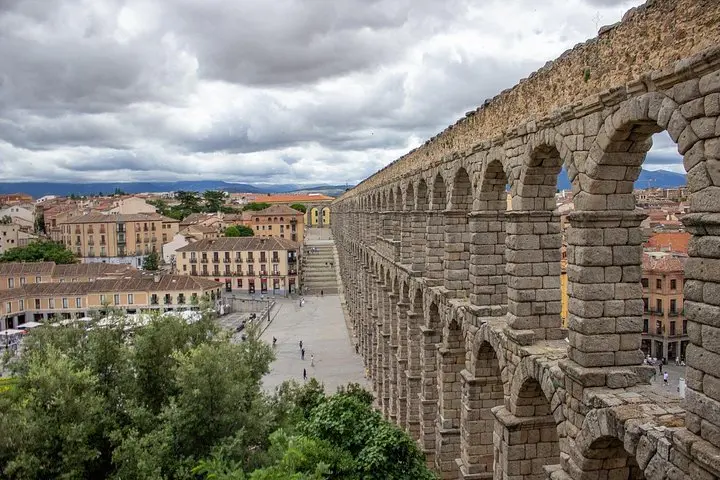
You step out of Madrid’s Ópera square and the city’s bustle thins as the coach hums northwest toward Castile. Within an hour and a half the road opens onto granite rooftops and the blind arches of a Roman aqueduct that seems to hold the sky—Segovia’s aqueduct dares you to measure its age with a single glance.
Verified experiences and guided adventures in the surrounding area.
Operated by Amigo Tours Spain · Madrid, Community of Madrid
You step out of Madrid’s Ópera square and the city’s bustle thins as the coach hums northwest toward Castile. Within an hour and a half the road opens onto granite rooftops and the blind arches of a Roman aqueduct that seems to hold the sky—Segovia’s aqueduct dares you to measure its age with a single glance.
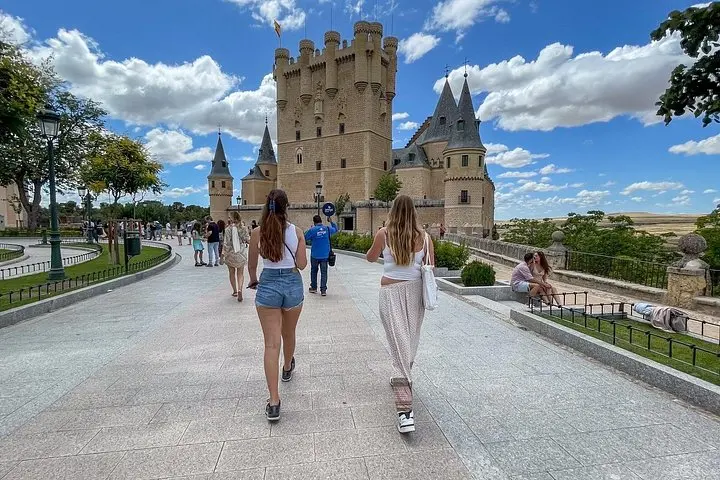
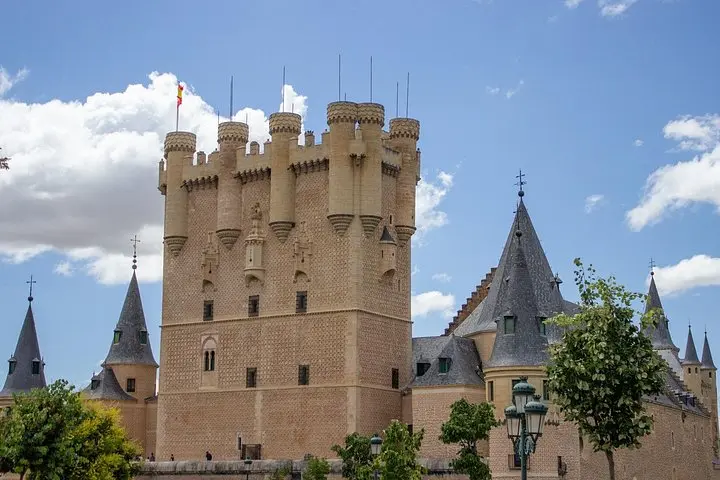
Segovia and Ávila are UNESCO-listed pages of medieval Spain. Segovia’s aqueduct (2nd–3rd century) and the fairytale Alcázar combine Roman engineering and later Gothic-Moorish embellishment; nearby, the Guadarrama foothills give the castle its sweeping vantage. Ávila’s 11th-century curtain wall rings the old town in near-complete form; at Los Cuatro Postes the wall’s crenellations cut the plateau’s wind like the edge of history.
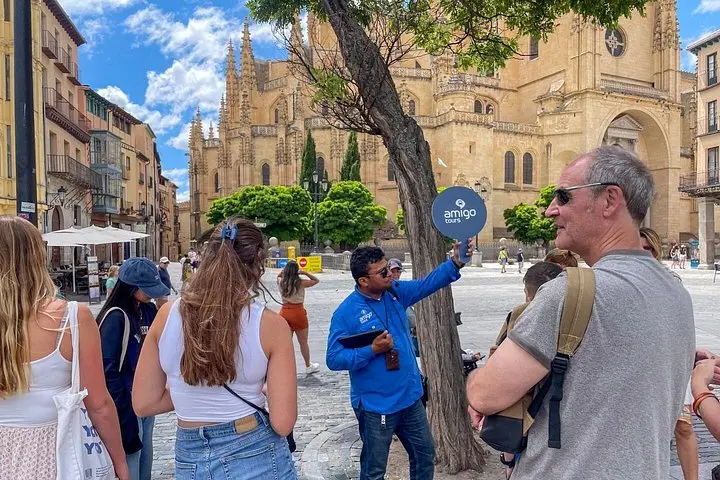
Expect guided walks through compact historic cores, an included entry option to the Alcázar, and time to stroll Segovia’s plazas and Ávila’s ramparts. The terrain is urban cobbles, short steep streets and stair sections on castle battlements—not technical, but moderately strenuous on feet and knees.
Practicalities: meet your guide by the Statue of Isabel II at Plaza de Ópera (Ópera metro exit). The full-day circuit is about 9 hours with coach transfers, breaks, and two main stop blocks: Segovia (including aqueduct and optional Alcázar visit) and Ávila (walls and viewpoint). Wear sturdy walking shoes, carry water and sun protection, and plan for variable weather higher on the plateau. Children under 11 must have their own car seat.
This is a day built around history and access—ideal for travelers who want two of central Spain’s most intact medieval monuments without self-driving logistics.
The tour offers optional entrance to the Alcázar and access to parts of Ávila’s wall; check your booking option to confirm whether admission is included.
Meet and finish at the Statue of Isabel II in Plaza de Ópera (Ópera metro). Return to the same point in the evening.
Children under 11 must use a car seat you supply. The tour involves cobbles and some stairs; it is not recommended for travelers with serious spinal or mobility problems.
Full refund available if you cancel at least 24 hours before departure; no refund within 24 hours of the tour.
Amigo Tours Spain operates guided outdoor trips and adventures with an emphasis on safety, stewardship, and memorable experiences.
You step out of Madrid’s Ópera square and the city’s bustle thins as the coach hums northwest toward Castile. Within an hour and a half the road opens onto granite rooftops and the blind arches of a Roman aqueduct that seems to hold the sky—Segovia’s aqueduct dares you to measure its age with a single glance.
You step out of Madrid’s Ópera square and the city’s bustle thins as the coach hums northwest toward Castile. Within an hour and a half the road opens onto granite rooftops and the blind arches of a Roman aqueduct that seems to hold the sky—Segovia’s aqueduct dares you to measure its age with a single glance.
Segovia and Ávila are UNESCO-listed pages of medieval Spain. Segovia’s aqueduct (2nd–3rd century) and the fairytale Alcázar combine Roman engineering and later Gothic-Moorish embellishment; nearby, the Guadarrama foothills give the castle its sweeping vantage. Ávila’s 11th-century curtain wall rings the old town in near-complete form; at Los Cuatro Postes the wall’s crenellations cut the plateau’s wind like the edge of history.
Expect guided walks through compact historic cores, an included entry option to the Alcázar, and time to stroll Segovia’s plazas and Ávila’s ramparts. The terrain is urban cobbles, short steep streets and stair sections on castle battlements—not technical, but moderately strenuous on feet and knees.
Practicalities: meet your guide by the Statue of Isabel II at Plaza de Ópera (Ópera metro exit). The full-day circuit is about 9 hours with coach transfers, breaks, and two main stop blocks: Segovia (including aqueduct and optional Alcázar visit) and Ávila (walls and viewpoint). Wear sturdy walking shoes, carry water and sun protection, and plan for variable weather higher on the plateau. Children under 11 must have their own car seat.
This is a day built around history and access—ideal for travelers who want two of central Spain’s most intact medieval monuments without self-driving logistics.