THE ADVENTURE COLLECTIVE® · Independent discovery and booking for outdoor travel

A compact afternoon escape from Madrid, this guided tour places you under the arches of Segovia’s Roman aqueduct and along cobbled streets toward the Alcázar and Gothic cathedral. Expect a relaxed, 3–4 hour walking circuit through the city’s main sights with local stories and optional cathedral entry.
A compact afternoon escape from Madrid, this guided tour places you under the arches of Segovia’s Roman aqueduct and along cobbled streets toward the Alcázar and Gothic cathedral. Expect a relaxed, 3–4 hour walking circuit through the city’s main sights with local stories and optional cathedral entry.
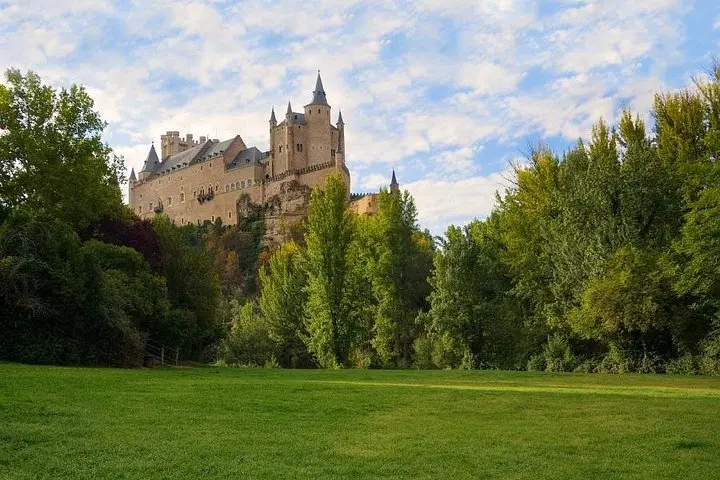
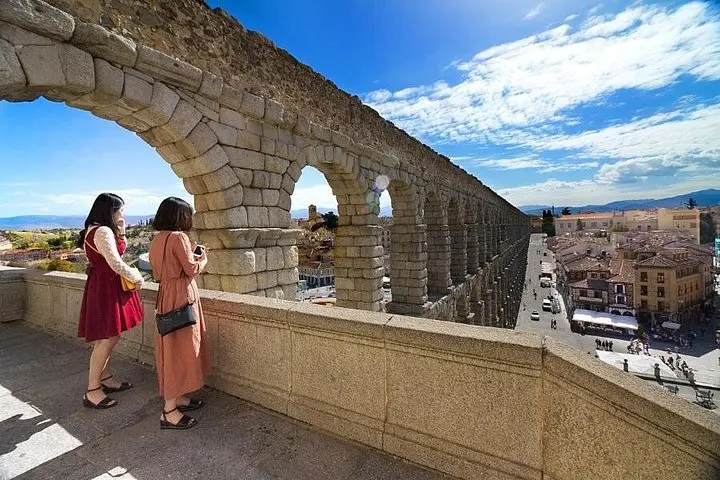
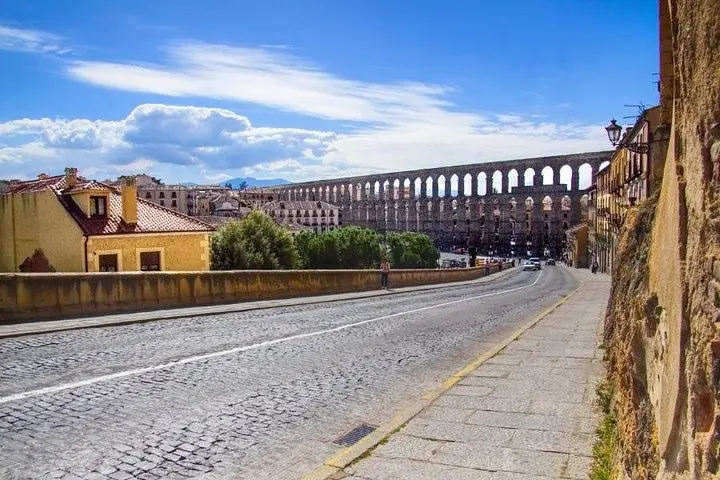
The bus eases out of Madrid and, as the skyline thins, open Castilian plains give way to the compact silhouette of Segovia. You step off near the Roman aqueduct — its granite arches curve overhead like a stone-made spine — and the city's layered history becomes immediately legible in narrow streets, church towers, and a fortress perched above the river.
Verified experiences and guided adventures in the surrounding area.
Operated by VPT Tours · Segovia, Castile and León
The bus eases out of Madrid and, as the skyline thins, open Castilian plains give way to the compact silhouette of Segovia. You step off near the Roman aqueduct — its granite arches curve overhead like a stone-made spine — and the city's layered history becomes immediately legible in narrow streets, church towers, and a fortress perched above the river.
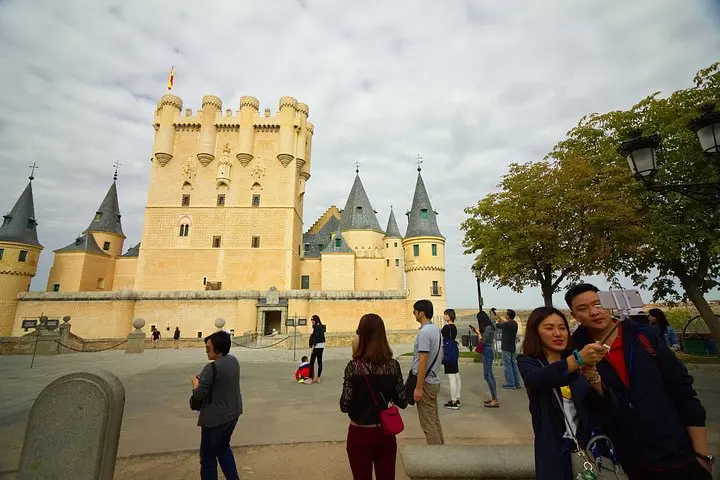
Segovia wears its past plainly: a two-millennia-old aqueduct built without mortar, a Gothic cathedral that crowns the Plaza Mayor, and the Alcázar, whose turrets recall medieval warfare and later royal residence. Geologically, the town sits on a plateau of Mesozoic limestones and sandstones; the aqueduct’s blocks are local granite, quarried and set to resist centuries of freeze-thaw. Culturally, the city reflects Roman, Jewish, and Christian chapters — each quarter yields different textures, from stone-cut facades to narrow alleyways once walked by tradespeople and pilgrims.
On this half-day, expect a guided, largely flat walking circuit of the Old Town (roughly 1–2 miles of on-foot exploration), stops at key viewpoints like Mirador de la Canaleja, and external views of the Cathedral and Alcázar; cathedral entry is optional and may add time. The pace is conversational: history interwoven with practical pointers on where to grab roasted cochinillo or a café con leche.
Practical tips: arrive 20 minutes early at the meeting point, bring layered clothing for gusts on the plateau, wear supportive shoes for cobbles, and carry a small bottle of water — services are available but lines can form. Evening light flatters the stone; aim for afternoon departures to see Segovia in warm tones.
The guided visit in Segovia is about 1.5–2 hours of on-foot exploration within the 3–4 hour stop; total tour duration including transport is around 5 hours.
No—cathedral entry is optional and not included; if it is closed for events, the guide will offer an alternative stop such as the Alcázar exterior or a local monument.
No food is included, but the itinerary allows time to purchase snacks or a meal in Plaza Mayor or nearby cafés.
The tour involves cobblestones and some uneven ground; it’s labeled physically easy but not recommended for those with serious spinal, heart, or mobility problems.
VPT Tours operates guided outdoor trips and adventures with an emphasis on safety, stewardship, and memorable experiences.
The bus eases out of Madrid and, as the skyline thins, open Castilian plains give way to the compact silhouette of Segovia. You step off near the Roman aqueduct — its granite arches curve overhead like a stone-made spine — and the city's layered history becomes immediately legible in narrow streets, church towers, and a fortress perched above the river.
The bus eases out of Madrid and, as the skyline thins, open Castilian plains give way to the compact silhouette of Segovia. You step off near the Roman aqueduct — its granite arches curve overhead like a stone-made spine — and the city's layered history becomes immediately legible in narrow streets, church towers, and a fortress perched above the river.
Segovia wears its past plainly: a two-millennia-old aqueduct built without mortar, a Gothic cathedral that crowns the Plaza Mayor, and the Alcázar, whose turrets recall medieval warfare and later royal residence. Geologically, the town sits on a plateau of Mesozoic limestones and sandstones; the aqueduct’s blocks are local granite, quarried and set to resist centuries of freeze-thaw. Culturally, the city reflects Roman, Jewish, and Christian chapters — each quarter yields different textures, from stone-cut facades to narrow alleyways once walked by tradespeople and pilgrims.
On this half-day, expect a guided, largely flat walking circuit of the Old Town (roughly 1–2 miles of on-foot exploration), stops at key viewpoints like Mirador de la Canaleja, and external views of the Cathedral and Alcázar; cathedral entry is optional and may add time. The pace is conversational: history interwoven with practical pointers on where to grab roasted cochinillo or a café con leche.
Practical tips: arrive 20 minutes early at the meeting point, bring layered clothing for gusts on the plateau, wear supportive shoes for cobbles, and carry a small bottle of water — services are available but lines can form. Evening light flatters the stone; aim for afternoon departures to see Segovia in warm tones.